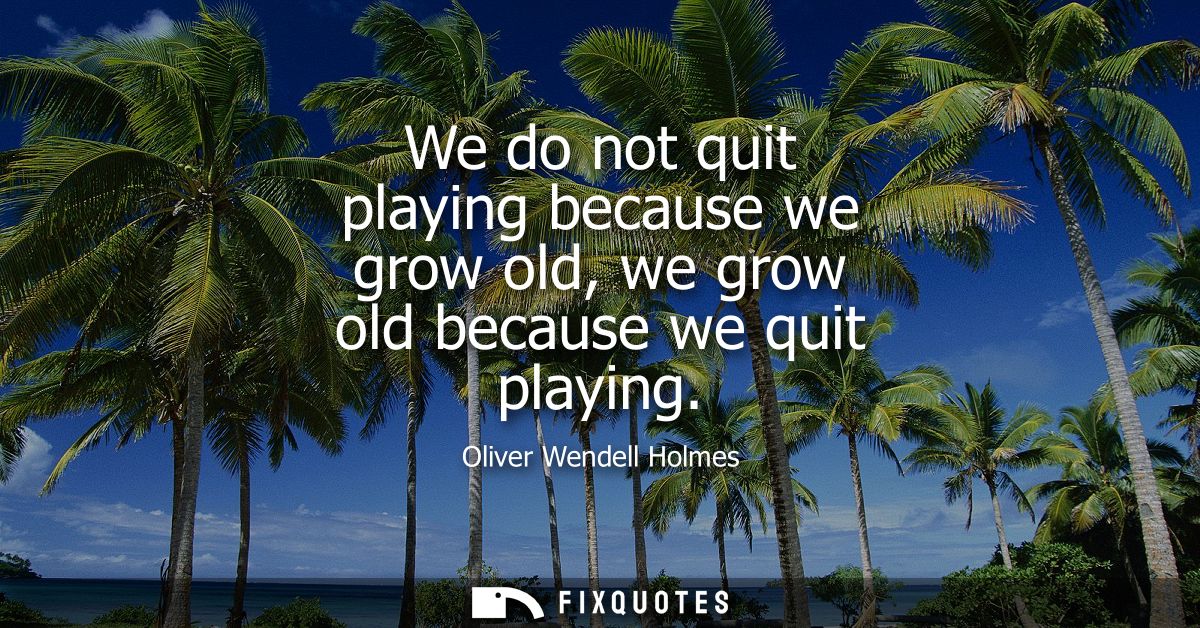
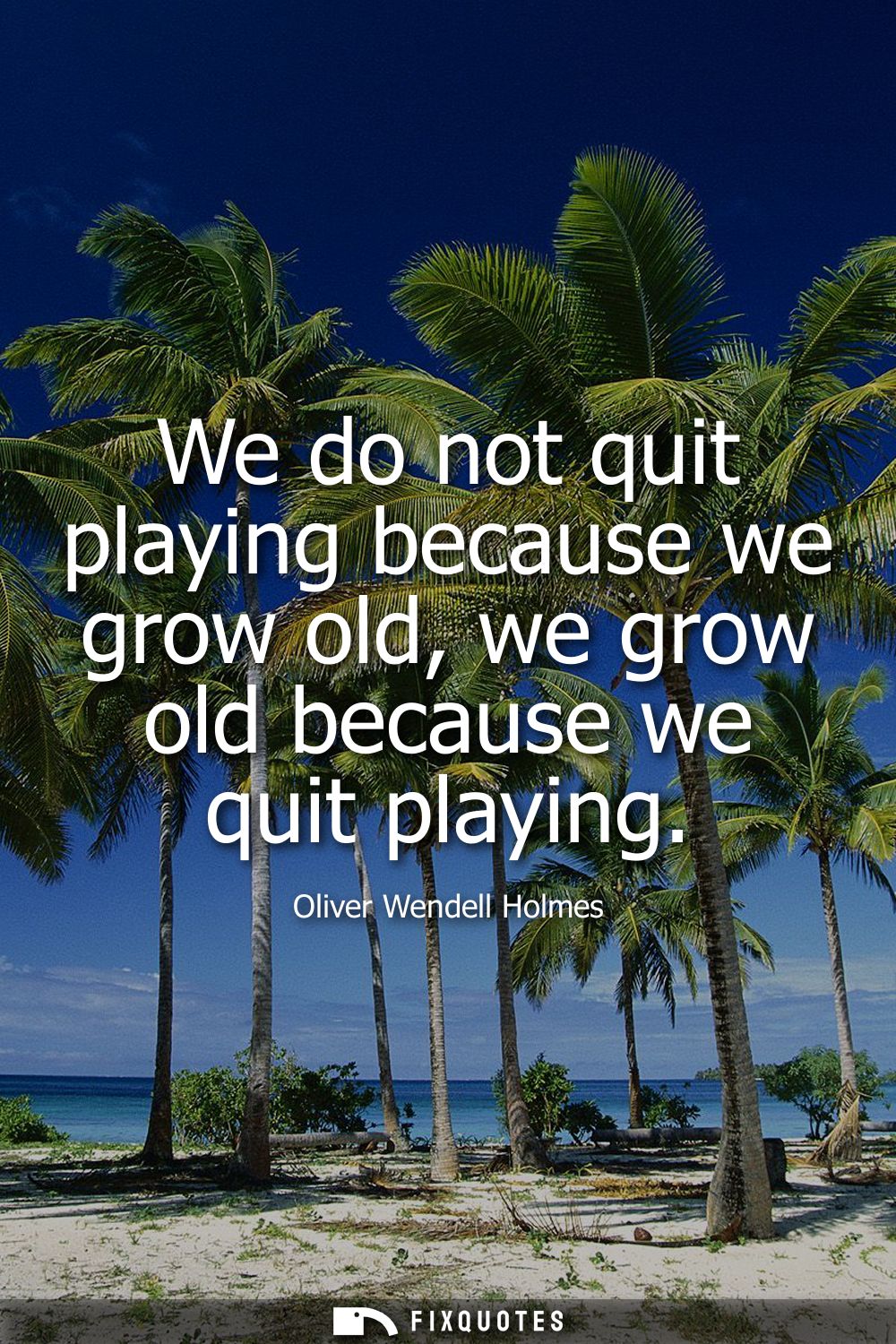
"We do not quit playing because we grow old, we grow old because we quit playing"
About this Quote
The word “playing” does most of the heavy lifting. It’s childlike, but not childish; it suggests experimentation, appetite, improvisation, social risk. In a culture that prizes productivity, “play” also functions as a quiet rebuke. If adulthood is defined by seriousness, then seriousness becomes a kind of premature senility. Holmes is insisting that curiosity is not a leisure activity but a maintenance plan for the self.
Context matters. Holmes Sr. wrote from the long 19th century, when industrial modernity was tightening schedules and narrowing lives into roles: worker, parent, respectable citizen. As a poet-physician-public intellectual, he had a front-row seat to how quickly “grown-up” can become “given up.” The aphorism has the snap of a parlor maxim, but its subtext is combative: keep moving, keep trying, keep making room for delight, or the culture will age you on your behalf. In that sense, the sentence isn’t sentimental. It’s a warning dressed as encouragement.
Quote Details
| Topic | Aging |
|---|---|
| Source | Help us find the source |
| Cite |
Citation Formats
APA Style (7th ed.)
Sr., Oliver Wendell Holmes. (2026, January 18). We do not quit playing because we grow old, we grow old because we quit playing. FixQuotes. https://fixquotes.com/quotes/we-do-not-quit-playing-because-we-grow-old-we-9374/
Chicago Style
Sr., Oliver Wendell Holmes. "We do not quit playing because we grow old, we grow old because we quit playing." FixQuotes. January 18, 2026. https://fixquotes.com/quotes/we-do-not-quit-playing-because-we-grow-old-we-9374/.
MLA Style (9th ed.)
"We do not quit playing because we grow old, we grow old because we quit playing." FixQuotes, 18 Jan. 2026, https://fixquotes.com/quotes/we-do-not-quit-playing-because-we-grow-old-we-9374/. Accessed 6 Mar. 2026.