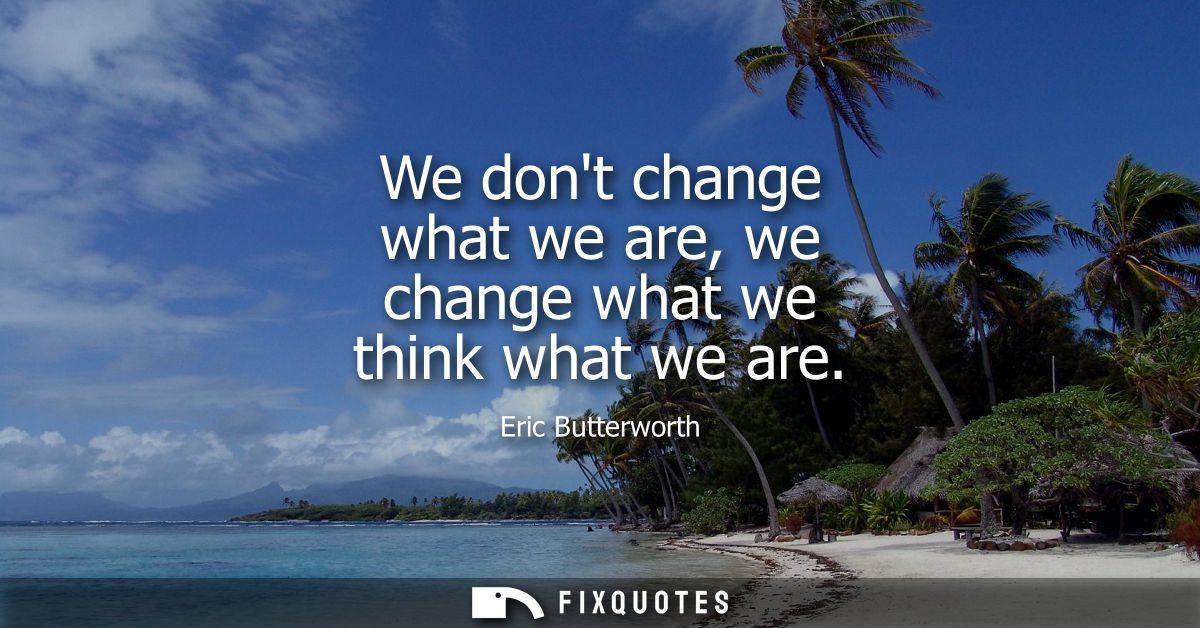
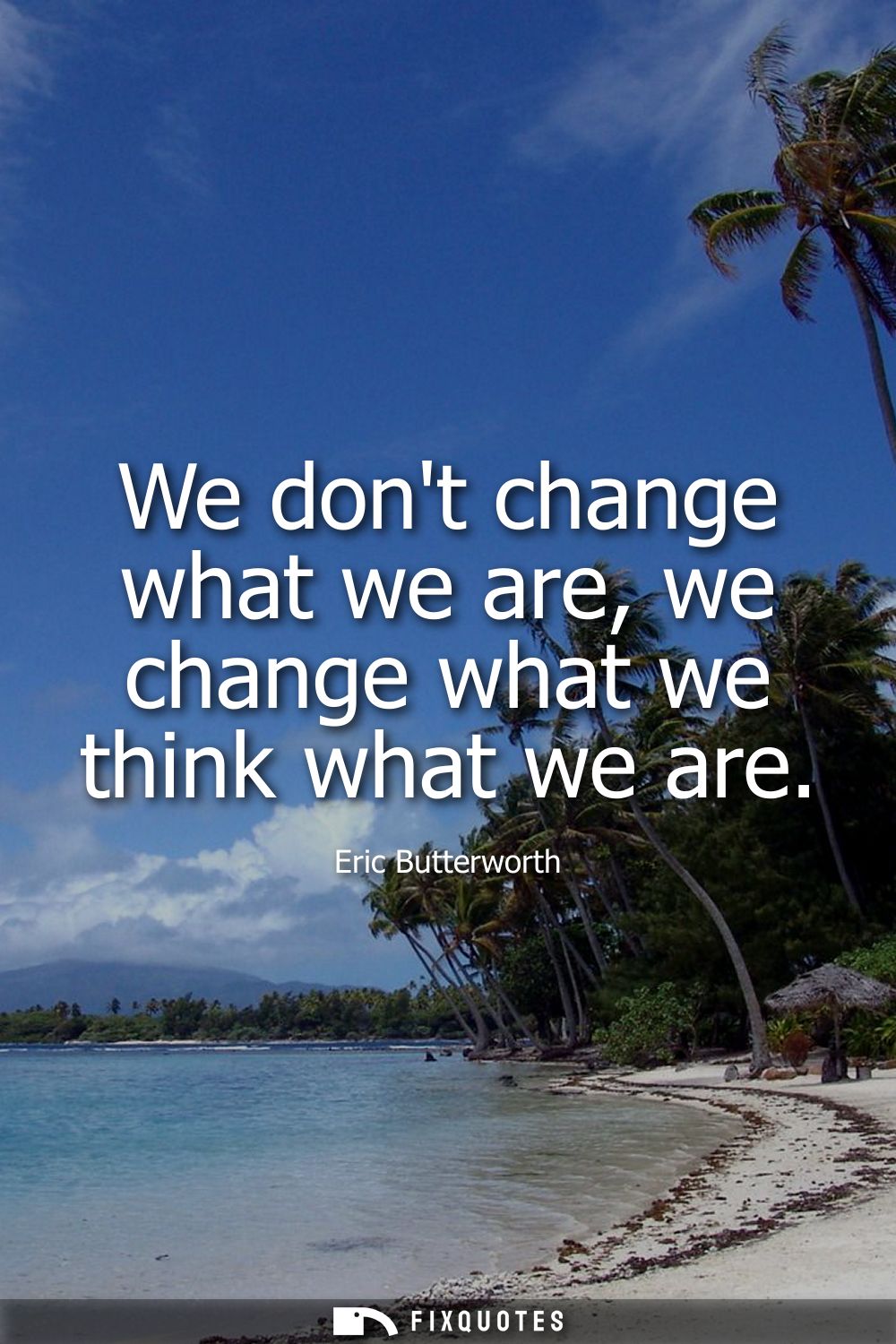
"We don't change what we are, we change what we think, what we are"
About this Quote
Butterworth’s line lands like a gentle correction to the self-help industry’s favorite myth: that personal change requires a total personality demolition. He’s not selling reinvention; he’s re-aiming perception. The first clause, “We don’t change what we are,” posits an underlying stability - a core self that isn’t as malleable as our anxieties claim. The second clause pivots: what actually shifts is the story we tell about that core. The repetition of “what” and the deliberately awkward “think what we are” reads almost like a verbal stumble, which is the point: the confusion is inside the thought-loop. Our identity isn’t a fact; it’s a running commentary.
As an educator (and, in Butterworth’s case, a prominent New Thought minister), he’s working in a context where language and belief are treated as instruments. The intent is practical: change the mental frame, and behavior follows without needing to wage war on the self. The subtext is both liberating and risky. Liberating, because it relocates agency from “fixing yourself” to interrogating the assumptions that define you: “I’m bad at this,” “I’m not lovable,” “I always screw up.” Risky, because it can slide into the idea that suffering is just a mindset problem, a move that can ignore material conditions and trauma.
Rhetorically, the quote works because it refuses melodrama. It doesn’t demand you become someone new; it asks you to stop mislabeling who you already are. That’s a quieter revolution: not self-erasure, but self-editing.
As an educator (and, in Butterworth’s case, a prominent New Thought minister), he’s working in a context where language and belief are treated as instruments. The intent is practical: change the mental frame, and behavior follows without needing to wage war on the self. The subtext is both liberating and risky. Liberating, because it relocates agency from “fixing yourself” to interrogating the assumptions that define you: “I’m bad at this,” “I’m not lovable,” “I always screw up.” Risky, because it can slide into the idea that suffering is just a mindset problem, a move that can ignore material conditions and trauma.
Rhetorically, the quote works because it refuses melodrama. It doesn’t demand you become someone new; it asks you to stop mislabeling who you already are. That’s a quieter revolution: not self-erasure, but self-editing.
Quote Details
| Topic | Reinvention |
|---|---|
| Source | Help us find the source |
| Cite |
Citation Formats
APA Style (7th ed.)
Butterworth, Eric. (2026, February 17). We don't change what we are, we change what we think, what we are. FixQuotes. https://fixquotes.com/quotes/we-dont-change-what-we-are-we-change-what-we-123357/
Chicago Style
Butterworth, Eric. "We don't change what we are, we change what we think, what we are." FixQuotes. February 17, 2026. https://fixquotes.com/quotes/we-dont-change-what-we-are-we-change-what-we-123357/.
MLA Style (9th ed.)
"We don't change what we are, we change what we think, what we are." FixQuotes, 17 Feb. 2026, https://fixquotes.com/quotes/we-dont-change-what-we-are-we-change-what-we-123357/. Accessed 30 Mar. 2026.
More Quotes by Eric
Add to List