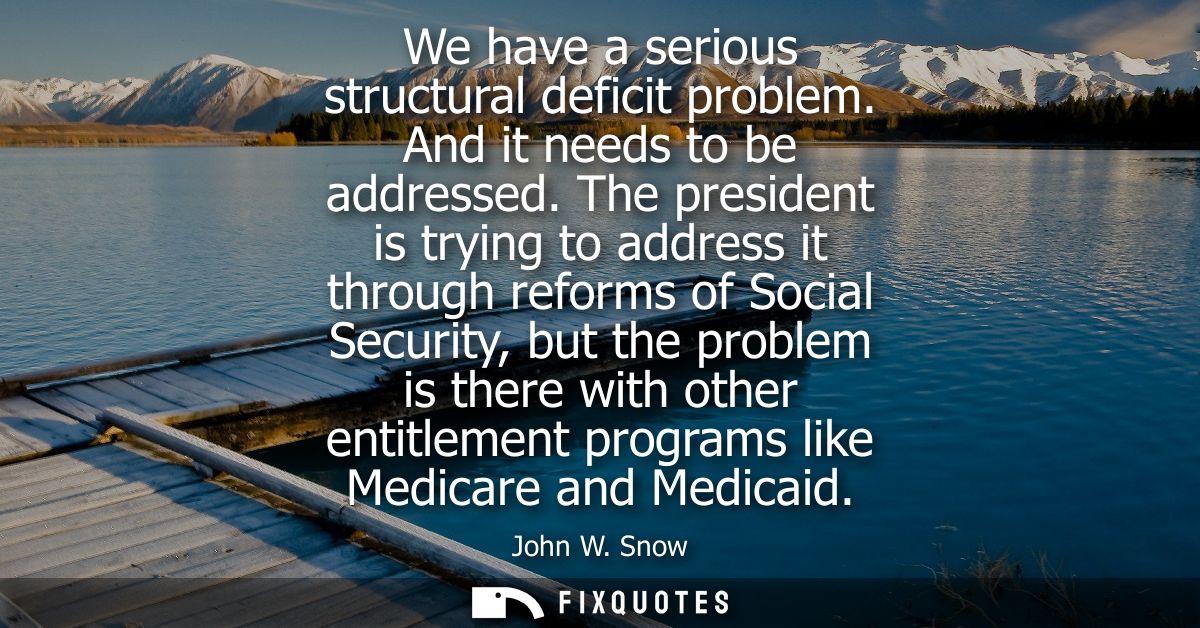
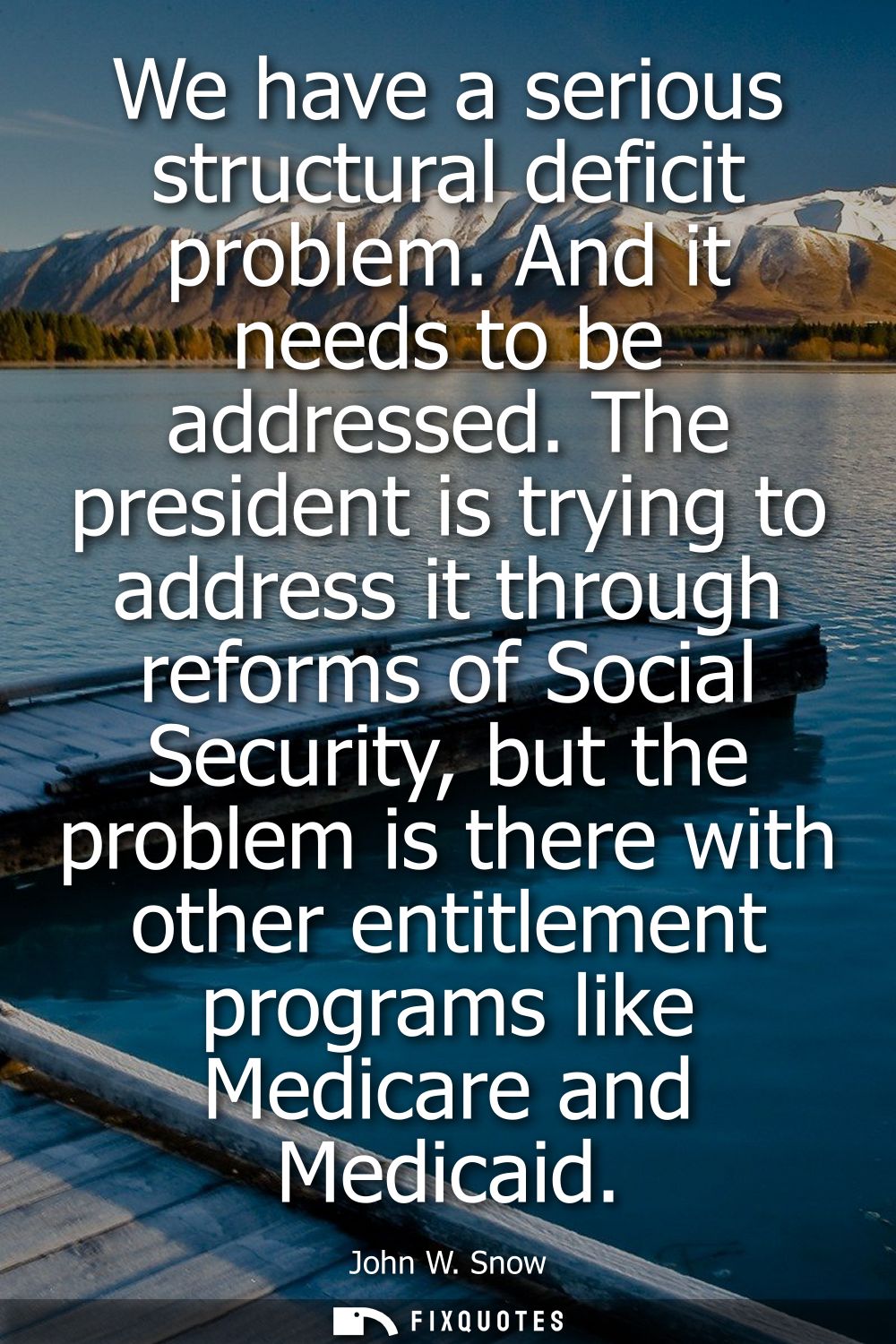
"We have a serious structural deficit problem. And it needs to be addressed. The president is trying to address it through reforms of Social Security, but the problem is there with other entitlement programs like Medicare and Medicaid"
About this Quote
The context matters: Snow was Treasury Secretary under George W. Bush, in an era when the administration pushed partial privatization of Social Security while also cutting taxes and financing expensive overseas commitments. His phrasing sidesteps that tension. He doesn’t mention revenue at all, even as he gestures at the biggest long-term cost drivers: aging demographics and health-care inflation. By pivoting from Social Security to “other entitlement programs like Medicare and Medicaid,” he’s also preparing the audience for the next, harder argument: Social Security is politically sensitive, but health entitlements are where the real fiscal math becomes brutal.
The subtext is a framing contest. “Entitlement programs” is not neutral; it subtly recasts earned-benefit systems as automatic claims on the treasury, inviting skepticism and reform-minded austerity. Snow’s intent is to establish a technocratic moral high ground: responsible adults confront arithmetic. The rhetorical move is to make reform feel like inevitability rather than ideology, even though the choices underneath it (benefit cuts, eligibility changes, privatization, or new revenue) are deeply partisan.
Quote Details
| Topic | Money |
|---|---|
| Source | Help us find the source |
| Cite |
Citation Formats
APA Style (7th ed.)
Snow, John W. (2026, January 18). We have a serious structural deficit problem. And it needs to be addressed. The president is trying to address it through reforms of Social Security, but the problem is there with other entitlement programs like Medicare and Medicaid. FixQuotes. https://fixquotes.com/quotes/we-have-a-serious-structural-deficit-problem-and-20502/
Chicago Style
Snow, John W. "We have a serious structural deficit problem. And it needs to be addressed. The president is trying to address it through reforms of Social Security, but the problem is there with other entitlement programs like Medicare and Medicaid." FixQuotes. January 18, 2026. https://fixquotes.com/quotes/we-have-a-serious-structural-deficit-problem-and-20502/.
MLA Style (9th ed.)
"We have a serious structural deficit problem. And it needs to be addressed. The president is trying to address it through reforms of Social Security, but the problem is there with other entitlement programs like Medicare and Medicaid." FixQuotes, 18 Jan. 2026, https://fixquotes.com/quotes/we-have-a-serious-structural-deficit-problem-and-20502/. Accessed 5 Apr. 2026.