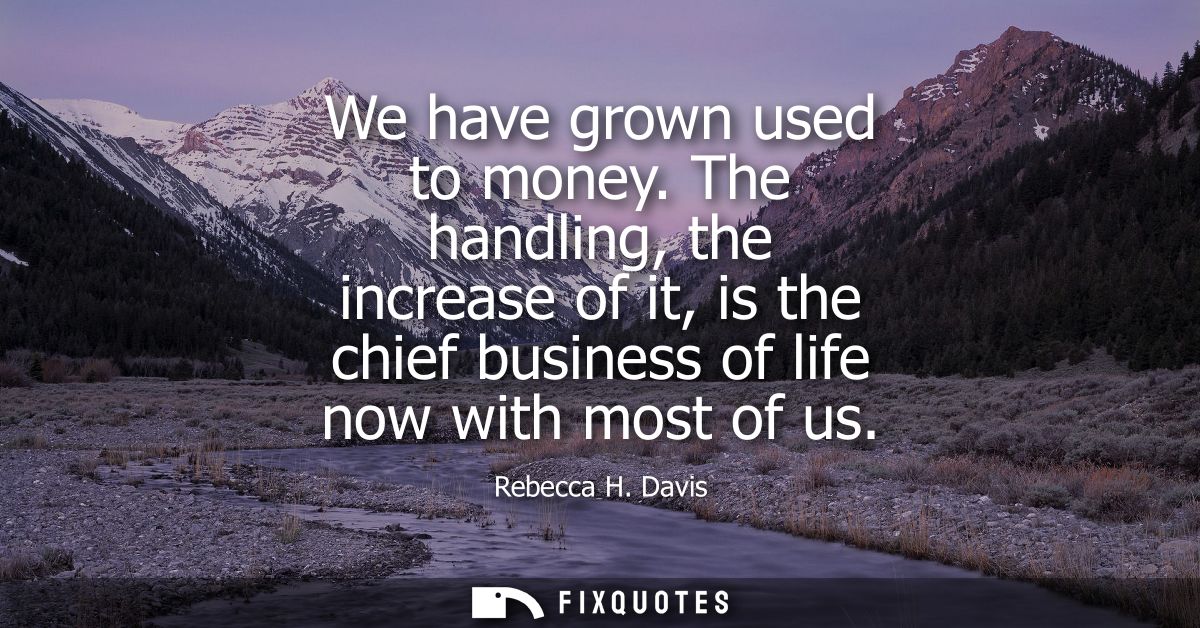
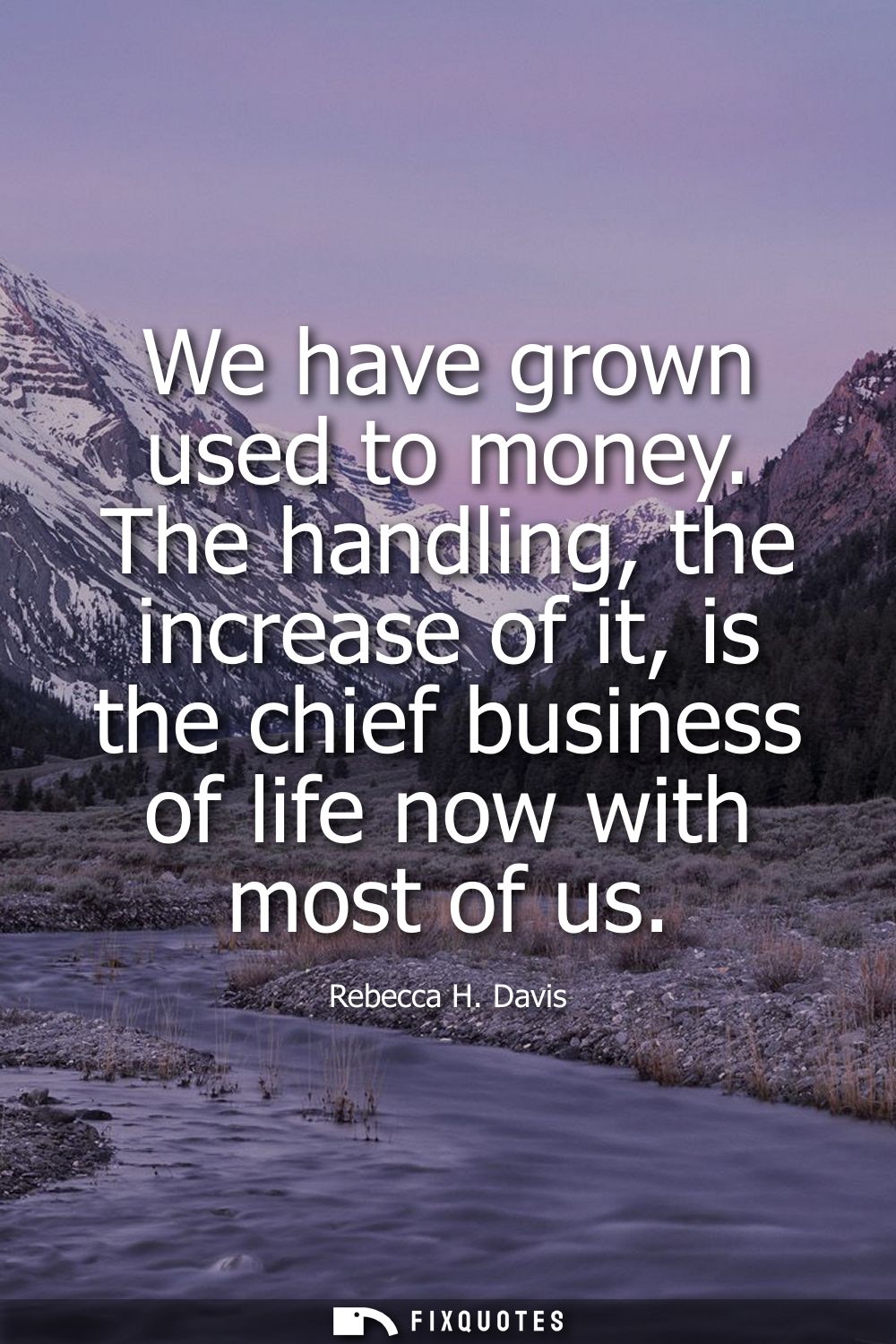
"We have grown used to money. The handling, the increase of it, is the chief business of life now with most of us"
About this Quote
The subtext is less sermon than diagnosis. “Handling” suggests constant contact: counting, budgeting, bargaining, worrying. It’s the managerial mindset applied to existence itself. “Increase” adds the growth imperative - not enough to have, you must scale. Davis’s phrasing implies a culture where stability feels like failure and sufficiency looks naive.
Context matters: Davis wrote from within the pressures of a rapidly industrializing America, where wage labor, urban life, and financial speculation were remaking class identity. Her line catches the moment when capitalism stops being a system you live under and becomes a personality you live as. The “most of us” is the sharpest edge: she refuses to isolate greed as an individual flaw. This is a collective adaptation, a social weather pattern. The critique lands because it’s not dramatic; it’s domestic. It reads like a weary observation from someone watching people confuse survival with striving - and then call it normal.
Quote Details
| Topic | Money |
|---|---|
| Source | Help us find the source |
| Cite |
Citation Formats
APA Style (7th ed.)
Davis, Rebecca H. (2026, January 16). We have grown used to money. The handling, the increase of it, is the chief business of life now with most of us. FixQuotes. https://fixquotes.com/quotes/we-have-grown-used-to-money-the-handling-the-84717/
Chicago Style
Davis, Rebecca H. "We have grown used to money. The handling, the increase of it, is the chief business of life now with most of us." FixQuotes. January 16, 2026. https://fixquotes.com/quotes/we-have-grown-used-to-money-the-handling-the-84717/.
MLA Style (9th ed.)
"We have grown used to money. The handling, the increase of it, is the chief business of life now with most of us." FixQuotes, 16 Jan. 2026, https://fixquotes.com/quotes/we-have-grown-used-to-money-the-handling-the-84717/. Accessed 1 Apr. 2026.