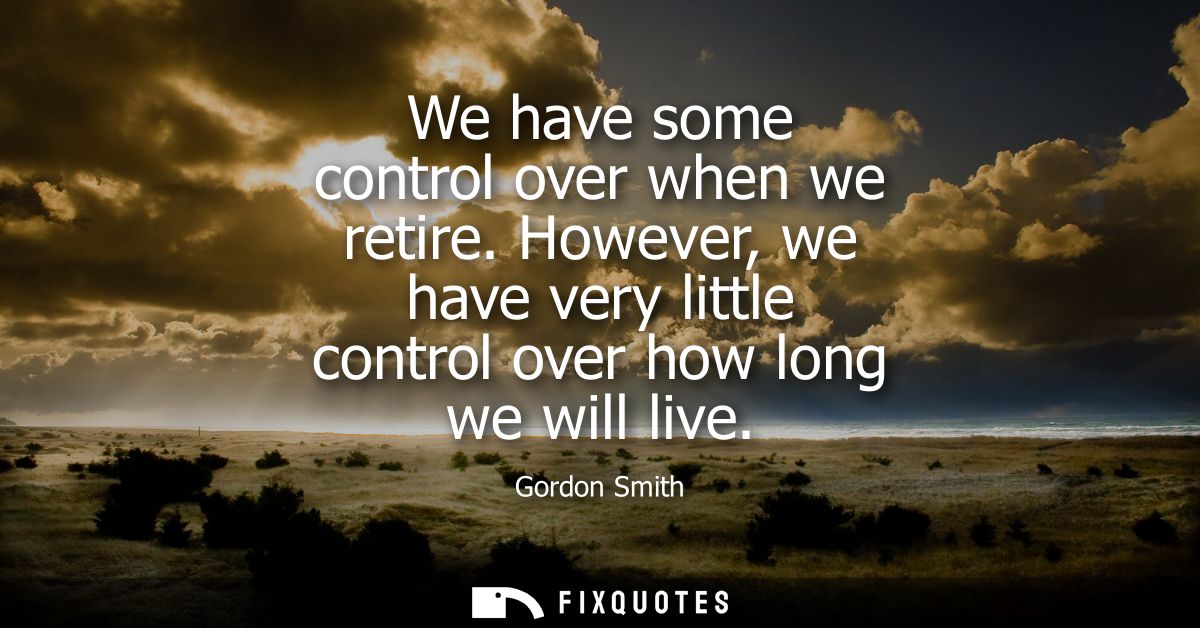
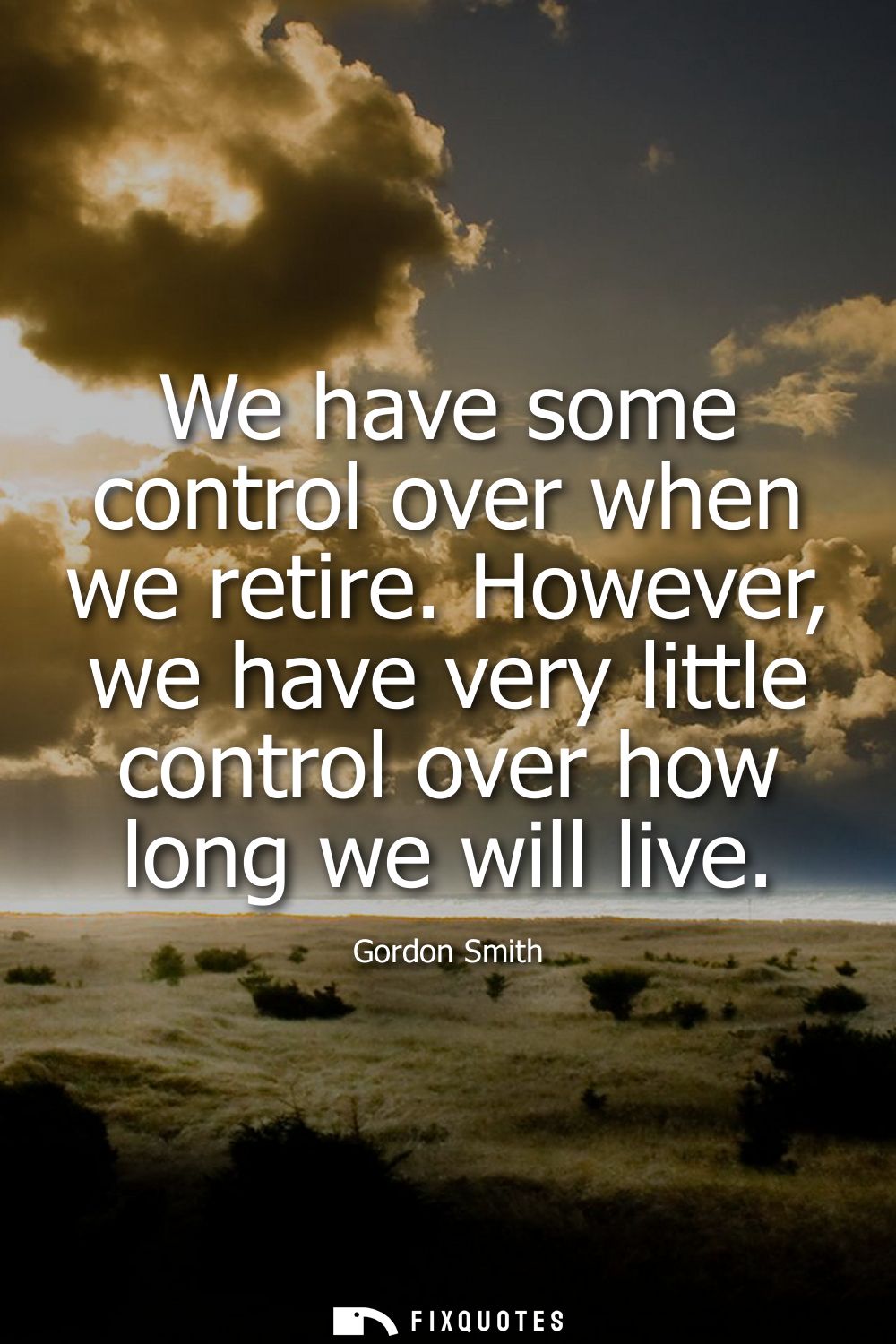
"We have some control over when we retire. However, we have very little control over how long we will live"
About this Quote
Smith’s intent reads as both warning and policy nudge. Coming from a public figure, this isn’t just dinner-table wisdom; it’s an argument against assuming the future will politely wait. Subtext: retirement planning can become a moralized form of procrastination, where “later” feels responsible and “now” feels indulgent. He’s telling constituents, and maybe colleagues, that the cultural script of delayed life is a gamble people don’t realize they’re taking.
Contextually, this line sits comfortably in late-20th/early-21st century anxieties: longer lifespans for some, shorter healthy years for others; pensions disappearing; healthcare costs ballooning; a workforce pushed to work longer while being promised a golden age at the end. Smith’s sentence is a small piece of rhetoric designed to re-balance the ledger: don’t only save for retirement, build a life you’d be willing to live even if you never reach it.
Quote Details
| Topic | Mortality |
|---|---|
| Source | Help us find the source |
| Cite |
Citation Formats
APA Style (7th ed.)
Smith, Gordon. (2026, January 16). We have some control over when we retire. However, we have very little control over how long we will live. FixQuotes. https://fixquotes.com/quotes/we-have-some-control-over-when-we-retire-however-93239/
Chicago Style
Smith, Gordon. "We have some control over when we retire. However, we have very little control over how long we will live." FixQuotes. January 16, 2026. https://fixquotes.com/quotes/we-have-some-control-over-when-we-retire-however-93239/.
MLA Style (9th ed.)
"We have some control over when we retire. However, we have very little control over how long we will live." FixQuotes, 16 Jan. 2026, https://fixquotes.com/quotes/we-have-some-control-over-when-we-retire-however-93239/. Accessed 27 Mar. 2026.