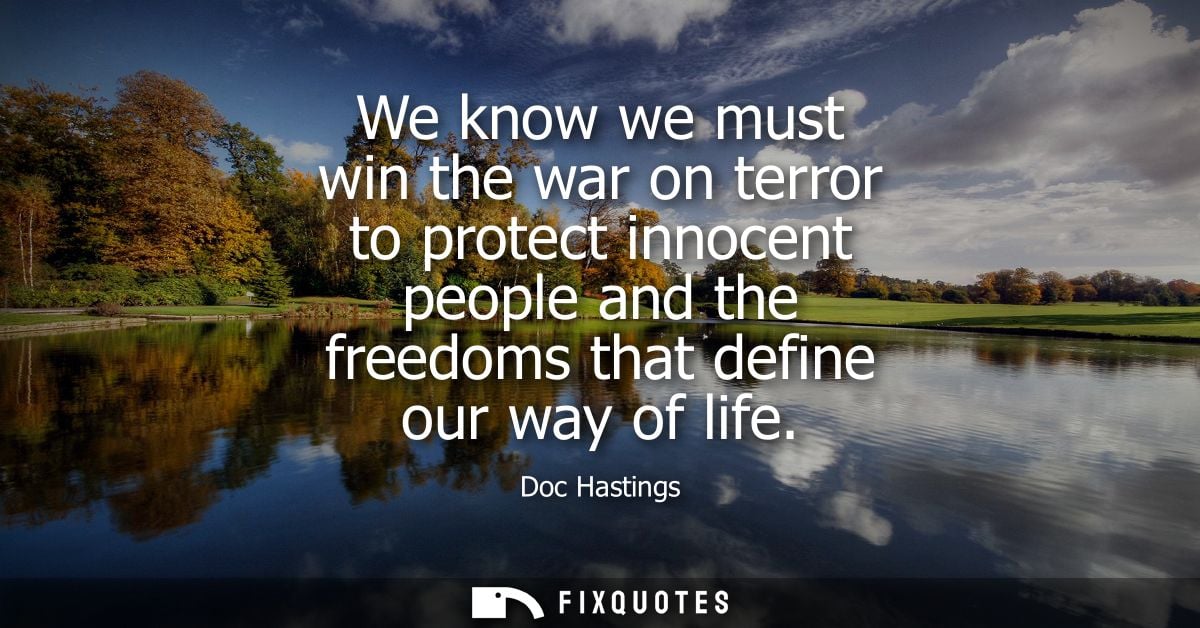
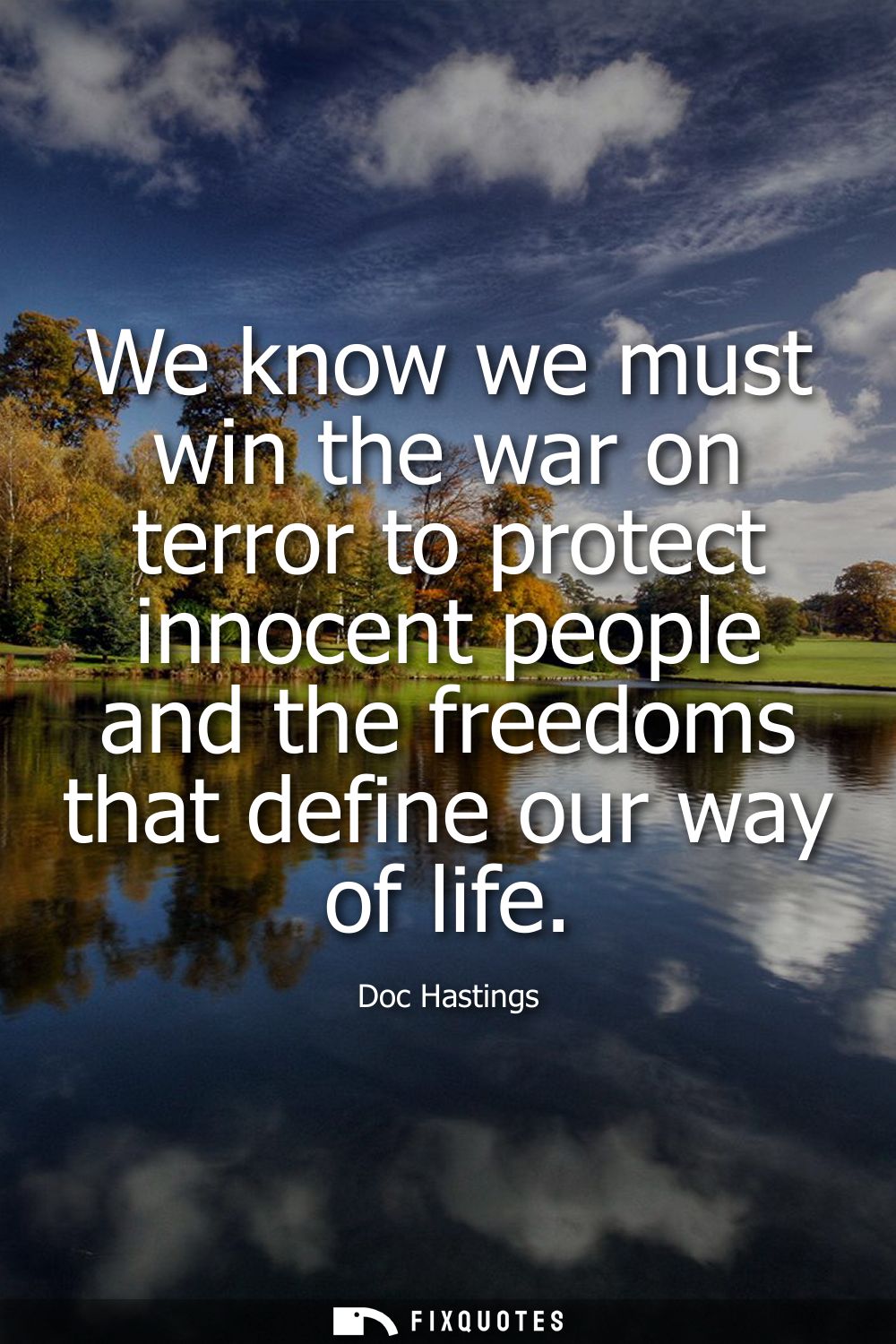
"We know we must win the war on terror to protect innocent people and the freedoms that define our way of life"
About this Quote
The line’s emotional core is “innocent people,” a phrase that quietly sorts the world into those worth protecting and those who will be discussed as collateral, suspects, or regrettable necessities. It’s not just empathy; it’s a shield against scrutiny. Once the stakes are innocence, the policy details recede: surveillance, detention, military force, expanded executive power. The quote doesn’t need to name them because “terror” does the rhetorical work of smuggling them in.
Then comes the sacred American pairing: “freedoms” and “our way of life.” It’s a cultural password, summoning everything from the First Amendment to suburban normalcy, while staying conveniently vague about which freedoms are actually on the table. The subtext is paradoxical but politically potent: to preserve liberty, we may need to curtail it.
Context matters: Hastings, a mainstream Republican voice in the post-9/11 ecosystem, is speaking into an electorate primed for resolve and allergic to nuance. The sentence is less a map than a mood: unity, urgency, and a pre-emptive rebuttal to civil-liberties objections, all packaged as patriotism.
Quote Details
| Topic | War |
|---|---|
| Source | Help us find the source |
| Cite |
Citation Formats
APA Style (7th ed.)
Hastings, Doc. (2026, January 17). We know we must win the war on terror to protect innocent people and the freedoms that define our way of life. FixQuotes. https://fixquotes.com/quotes/we-know-we-must-win-the-war-on-terror-to-protect-60784/
Chicago Style
Hastings, Doc. "We know we must win the war on terror to protect innocent people and the freedoms that define our way of life." FixQuotes. January 17, 2026. https://fixquotes.com/quotes/we-know-we-must-win-the-war-on-terror-to-protect-60784/.
MLA Style (9th ed.)
"We know we must win the war on terror to protect innocent people and the freedoms that define our way of life." FixQuotes, 17 Jan. 2026, https://fixquotes.com/quotes/we-know-we-must-win-the-war-on-terror-to-protect-60784/. Accessed 3 Apr. 2026.