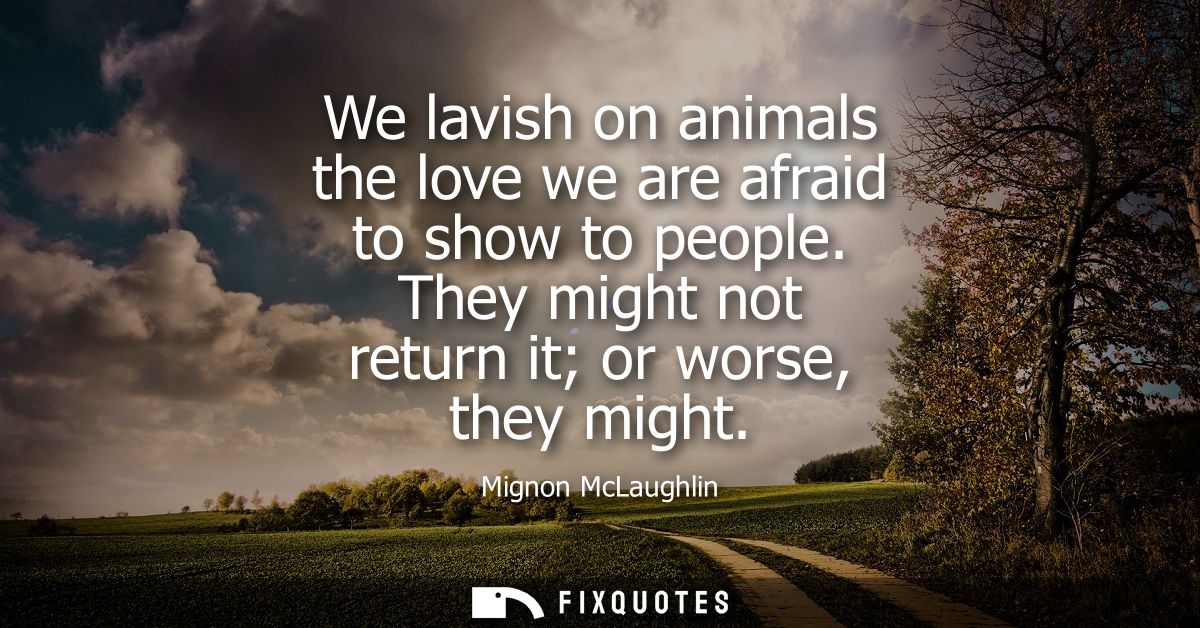
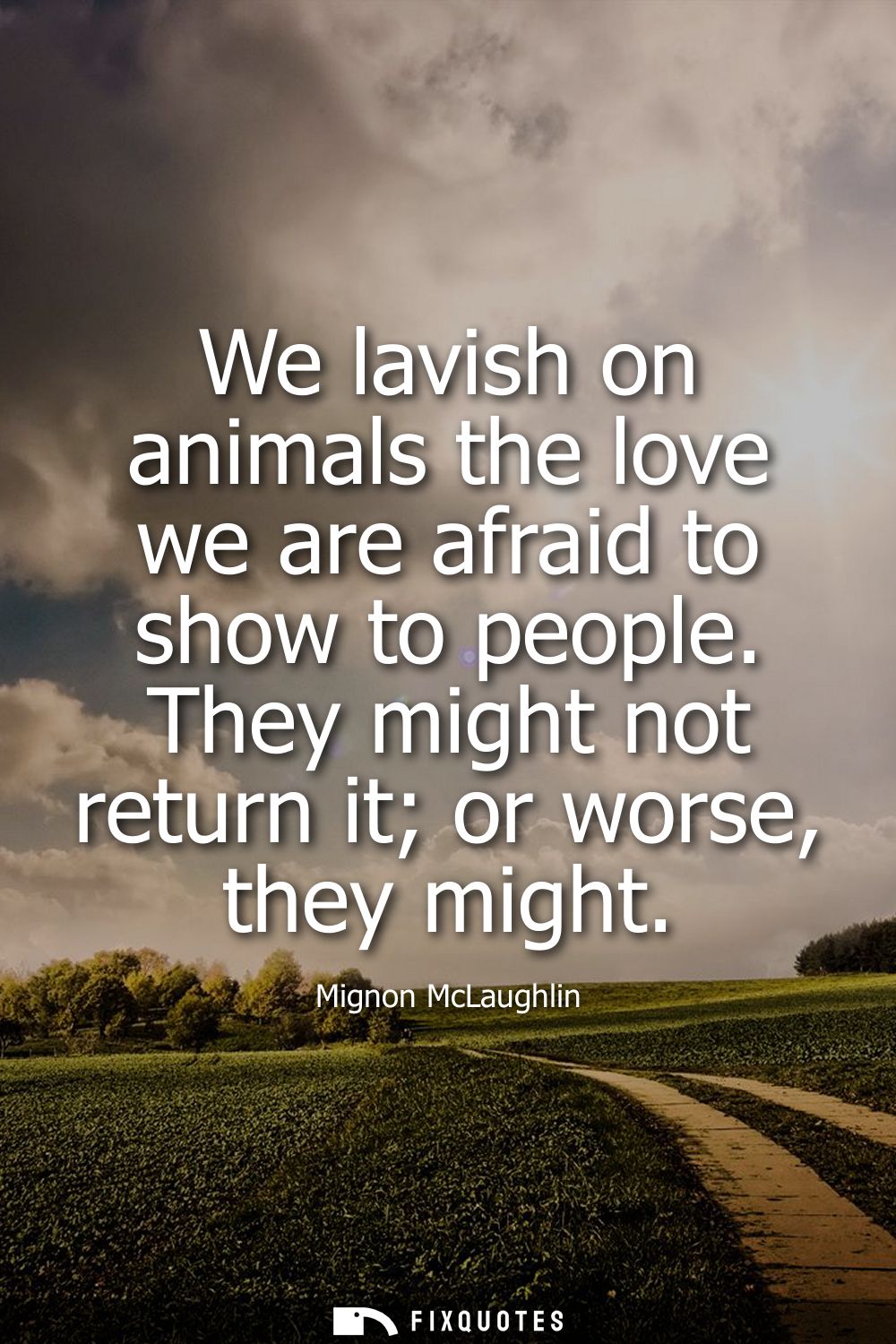
"We lavish on animals the love we are afraid to show to people. They might not return it; or worse, they might"
About this Quote
Her first sentence lands like a quiet confession. “Lavish” implies excess, even compensation, as if the emotional budget is real and we’re overspending it where the return is predictable. Then she pivots to the real sting: the problem with people isn’t that they’re unlovable, it’s that they’re agents. They can refuse, misunderstand, leave, demand more than we offered. The syntax is doing psychological work: “They might not return it” is the tidy fear, the one we admit at dinner parties. “Or worse, they might” trails off into the unsayable possibilities - not just rejection but retaliation, exposure, obligation, the sudden revelation that love makes you legible and therefore vulnerable.
Written by a mid-century journalist who specialized in aphorisms, McLaughlin is operating in a culture that prized composure and distrusted neediness. The quote reads like a small act of rebellion against that era’s emotional etiquette. It’s witty, yes, but the wit is a scalpel: she’s diagnosing how tenderness gets rerouted into safer channels when the real risk isn’t loving - it’s being seen.
Quote Details
| Topic | Pet Love |
|---|---|
| Source | Help us find the source |
| Cite |
Citation Formats
APA Style (7th ed.)
McLaughlin, Mignon. (2026, January 17). We lavish on animals the love we are afraid to show to people. They might not return it; or worse, they might. FixQuotes. https://fixquotes.com/quotes/we-lavish-on-animals-the-love-we-are-afraid-to-70506/
Chicago Style
McLaughlin, Mignon. "We lavish on animals the love we are afraid to show to people. They might not return it; or worse, they might." FixQuotes. January 17, 2026. https://fixquotes.com/quotes/we-lavish-on-animals-the-love-we-are-afraid-to-70506/.
MLA Style (9th ed.)
"We lavish on animals the love we are afraid to show to people. They might not return it; or worse, they might." FixQuotes, 17 Jan. 2026, https://fixquotes.com/quotes/we-lavish-on-animals-the-love-we-are-afraid-to-70506/. Accessed 4 Feb. 2026.