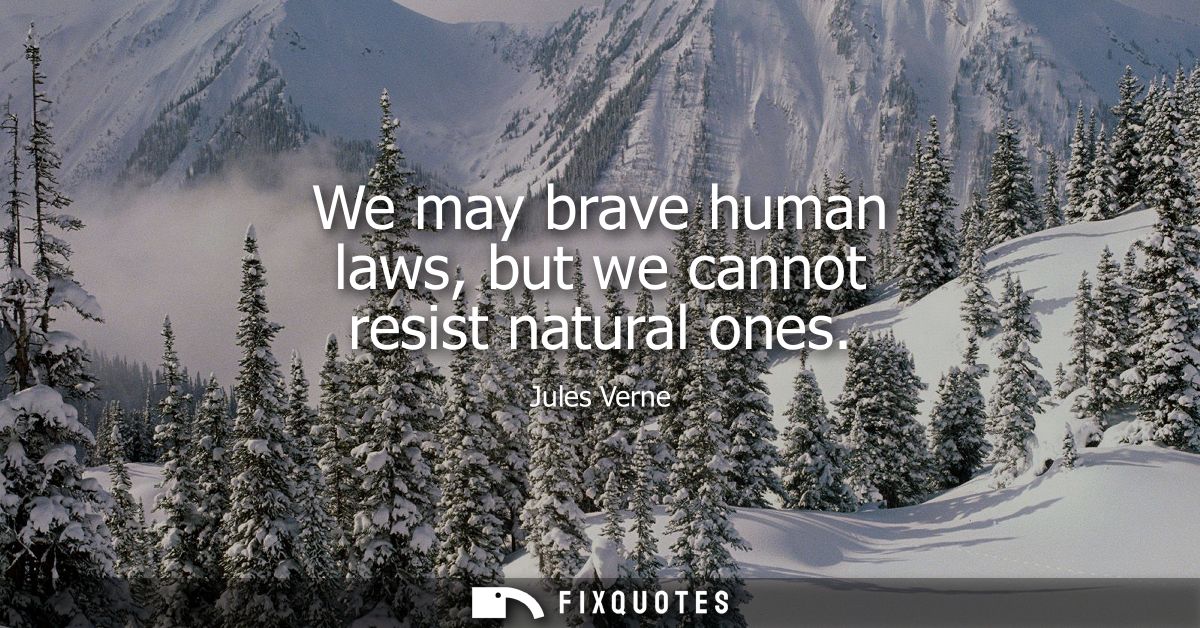
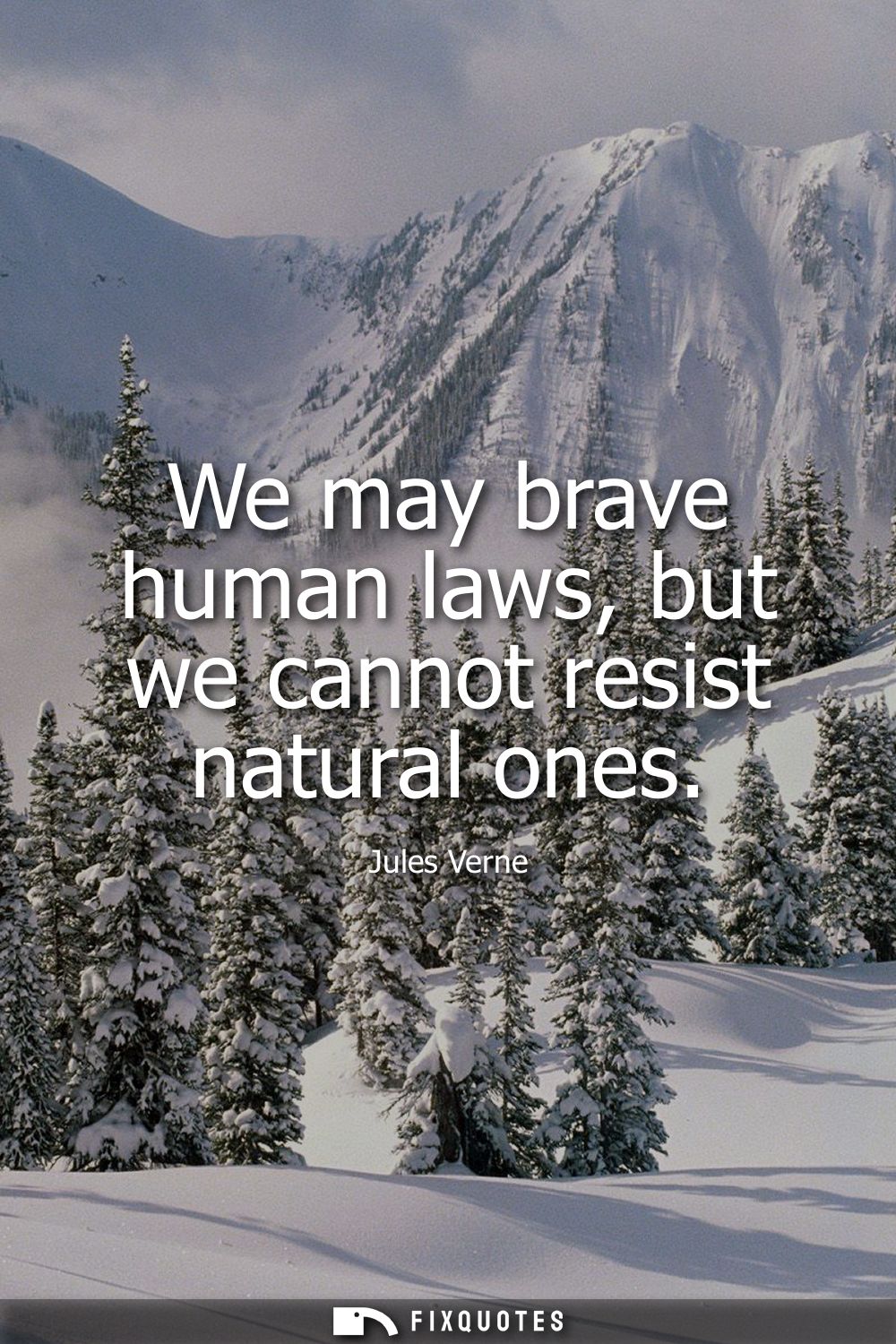
"We may brave human laws, but we cannot resist natural ones"
About this Quote
Verne slips a quiet threat into a neat aphorism: you can cheat the courtroom, but you will not cheat the cosmos. The line carries the Victorian-era confidence that nature is legible, measurable, and ultimately in charge - a worldview that powered Verne's fiction even when it flirted with fantasy. His characters regularly outrun borders, navies, and bureaucrats; they build submarines, balloons, and cannons big enough to insult the state. Yet the plot always reasserts a higher jurisdiction: pressure crushes, gravity pulls, storms don't negotiate, oxygen runs out. Human institutions are portrayed as flexible, corruptible, occasionally absurd. Physics is not.
The subtext is almost moral without being preachy. "Brave" frames human laws as something to defy with swagger - the posture of the modern hero and the modern entrepreneur. "Cannot resist" drains that swagger. Nature isn't an adversary you defeat; it's a system you either understand and work with, or you lose to. Verne, writing at the height of industrial expansion, is also warning against the period's techno-triumphalism: progress can make you feel sovereign, but it also amplifies the penalties for ignorance. The more daring your machinery, the more absolute the margins.
Read now, the quote lands as an early template for our climate-and-tech era. We can litigate emissions, launder responsibility through policy, and delay consequences with rhetoric. Natural laws keep the receipts. Verne's genius is framing that reality not as doom, but as narrative discipline: the most thrilling adventures still answer to the planet.
The subtext is almost moral without being preachy. "Brave" frames human laws as something to defy with swagger - the posture of the modern hero and the modern entrepreneur. "Cannot resist" drains that swagger. Nature isn't an adversary you defeat; it's a system you either understand and work with, or you lose to. Verne, writing at the height of industrial expansion, is also warning against the period's techno-triumphalism: progress can make you feel sovereign, but it also amplifies the penalties for ignorance. The more daring your machinery, the more absolute the margins.
Read now, the quote lands as an early template for our climate-and-tech era. We can litigate emissions, launder responsibility through policy, and delay consequences with rhetoric. Natural laws keep the receipts. Verne's genius is framing that reality not as doom, but as narrative discipline: the most thrilling adventures still answer to the planet.
Quote Details
| Topic | Wisdom |
|---|---|
| Source | Help us find the source |
| Cite |
Citation Formats
APA Style (7th ed.)
Verne, Jules. (2026, January 18). We may brave human laws, but we cannot resist natural ones. FixQuotes. https://fixquotes.com/quotes/we-may-brave-human-laws-but-we-cannot-resist-8814/
Chicago Style
Verne, Jules. "We may brave human laws, but we cannot resist natural ones." FixQuotes. January 18, 2026. https://fixquotes.com/quotes/we-may-brave-human-laws-but-we-cannot-resist-8814/.
MLA Style (9th ed.)
"We may brave human laws, but we cannot resist natural ones." FixQuotes, 18 Jan. 2026, https://fixquotes.com/quotes/we-may-brave-human-laws-but-we-cannot-resist-8814/. Accessed 12 Feb. 2026.
More Quotes by Jules
Add to List