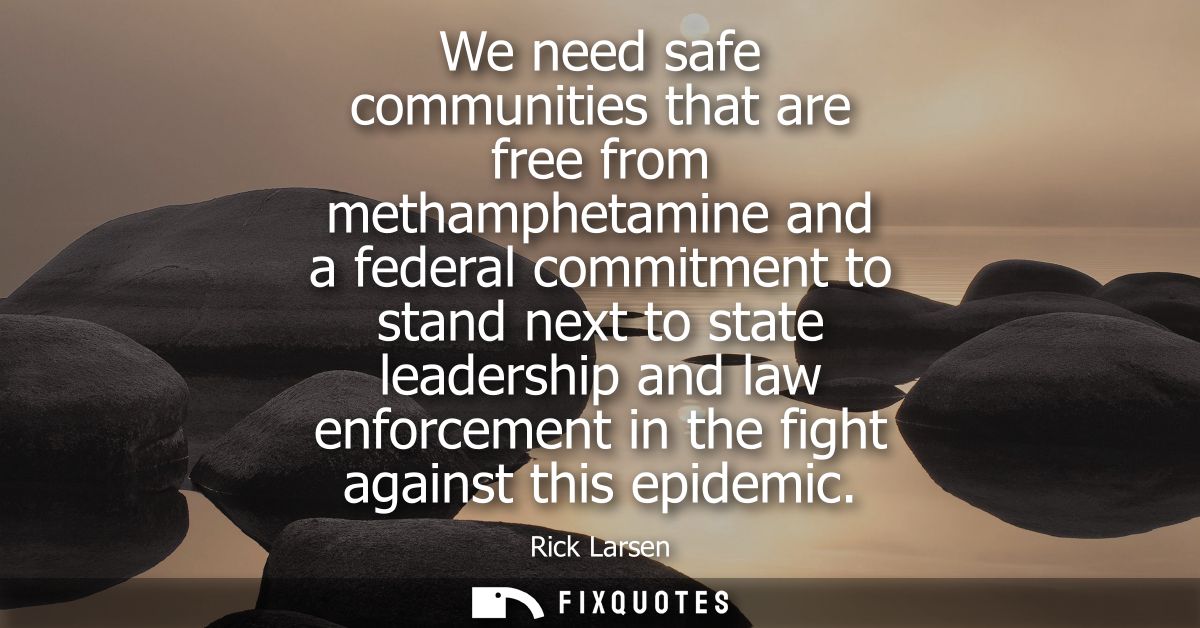
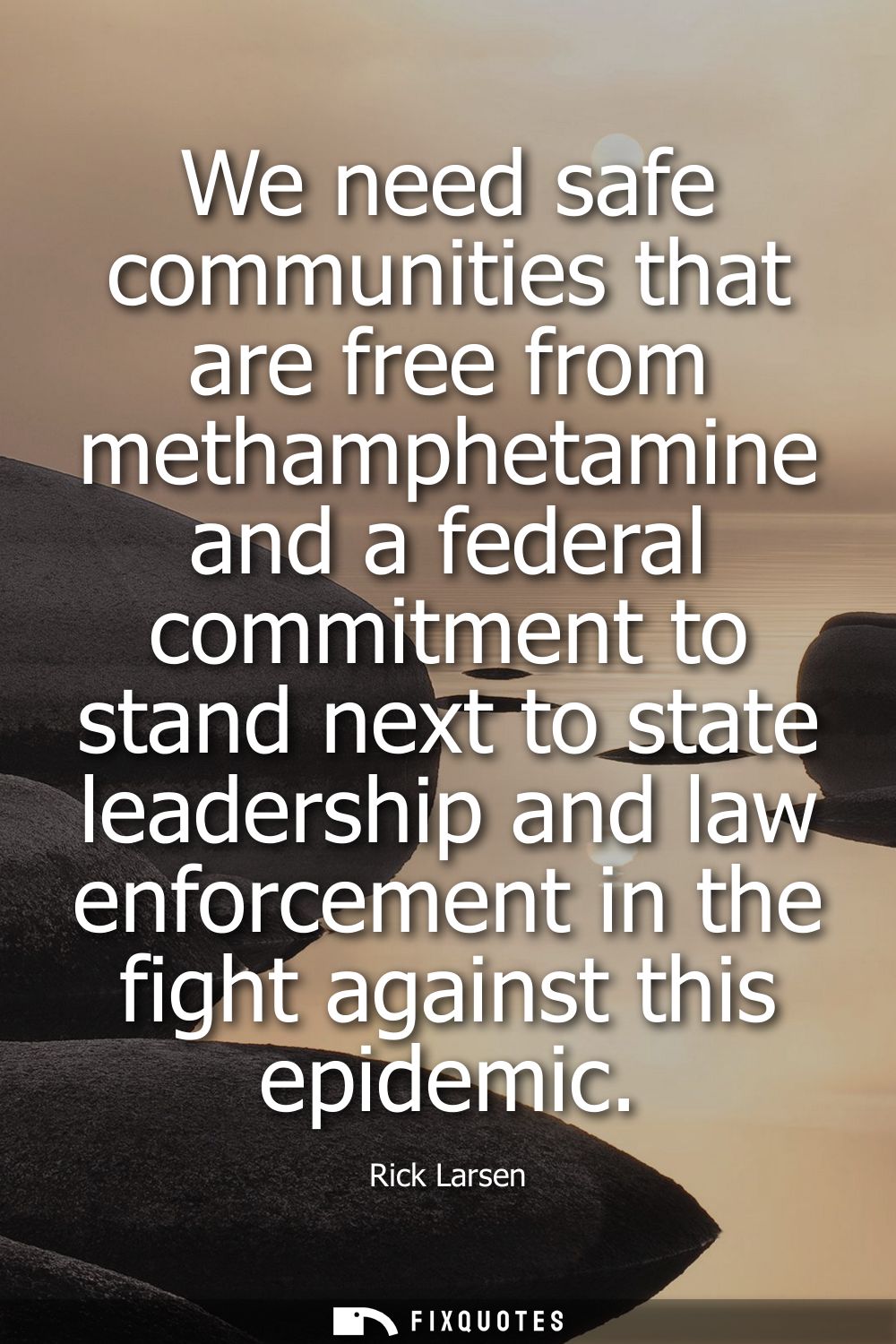
"We need safe communities that are free from methamphetamine, and a federal commitment to stand next to state leadership and law enforcement in the fight against this epidemic"
About this Quote
The subtext is triage. Meth is framed as an “epidemic,” borrowing public-health urgency while steering the solution toward policing infrastructure. It’s a rhetorical two-for-one: the moral clarity of protecting families, plus the operational clarity of funding and backing enforcement. Calling it an epidemic also helps launder political choices into necessity. If it’s a contagion, then escalation feels like a responsible response, not a partisan preference.
Contextually, this kind of line lives in the overlap between real suffering (addiction, overdoses, crime) and the incentives of governance (budgets, jurisdiction, optics). It reassures constituents that their fear isn’t being dismissed, and it reassures cops and state officials that Washington will be a force multiplier, not a scold. The intent isn’t just to stop meth; it’s to position the speaker as the adult in the room: compassionate enough to say “epidemic,” tough enough to say “fight,” and pragmatic enough to promise the federal government will show up with resources.
Quote Details
| Topic | Justice |
|---|---|
| Source | Help us find the source |
| Cite |
Citation Formats
APA Style (7th ed.)
Larsen, Rick. (2026, February 18). We need safe communities that are free from methamphetamine, and a federal commitment to stand next to state leadership and law enforcement in the fight against this epidemic. FixQuotes. https://fixquotes.com/quotes/we-need-safe-communities-that-are-free-from-90776/
Chicago Style
Larsen, Rick. "We need safe communities that are free from methamphetamine, and a federal commitment to stand next to state leadership and law enforcement in the fight against this epidemic." FixQuotes. February 18, 2026. https://fixquotes.com/quotes/we-need-safe-communities-that-are-free-from-90776/.
MLA Style (9th ed.)
"We need safe communities that are free from methamphetamine, and a federal commitment to stand next to state leadership and law enforcement in the fight against this epidemic." FixQuotes, 18 Feb. 2026, https://fixquotes.com/quotes/we-need-safe-communities-that-are-free-from-90776/. Accessed 27 Mar. 2026.