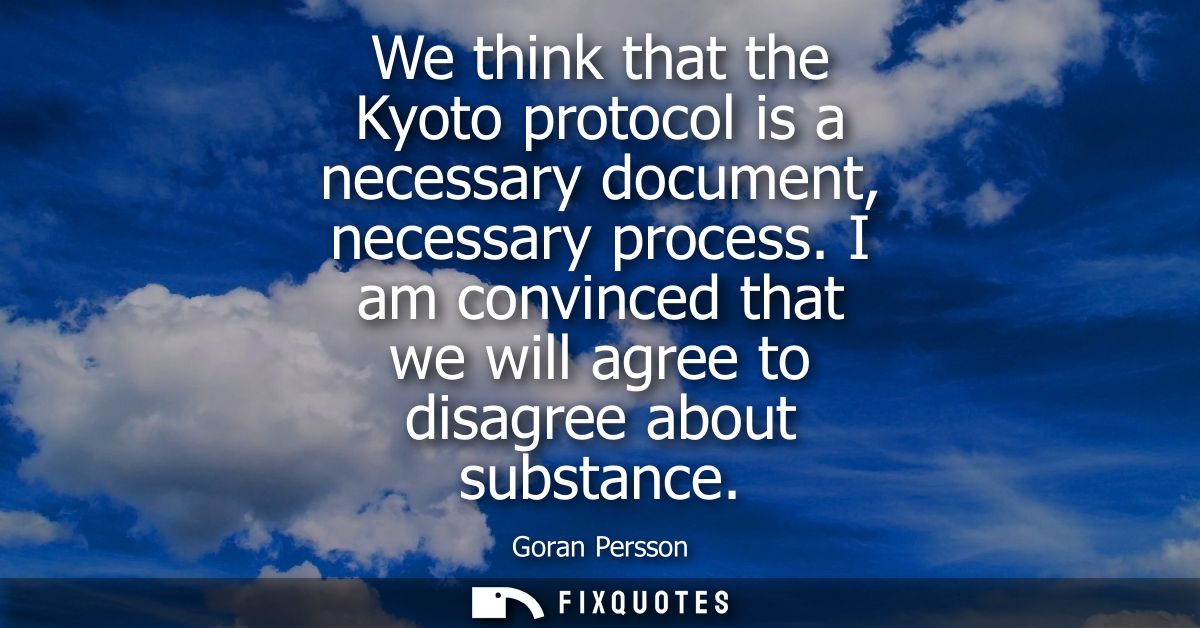
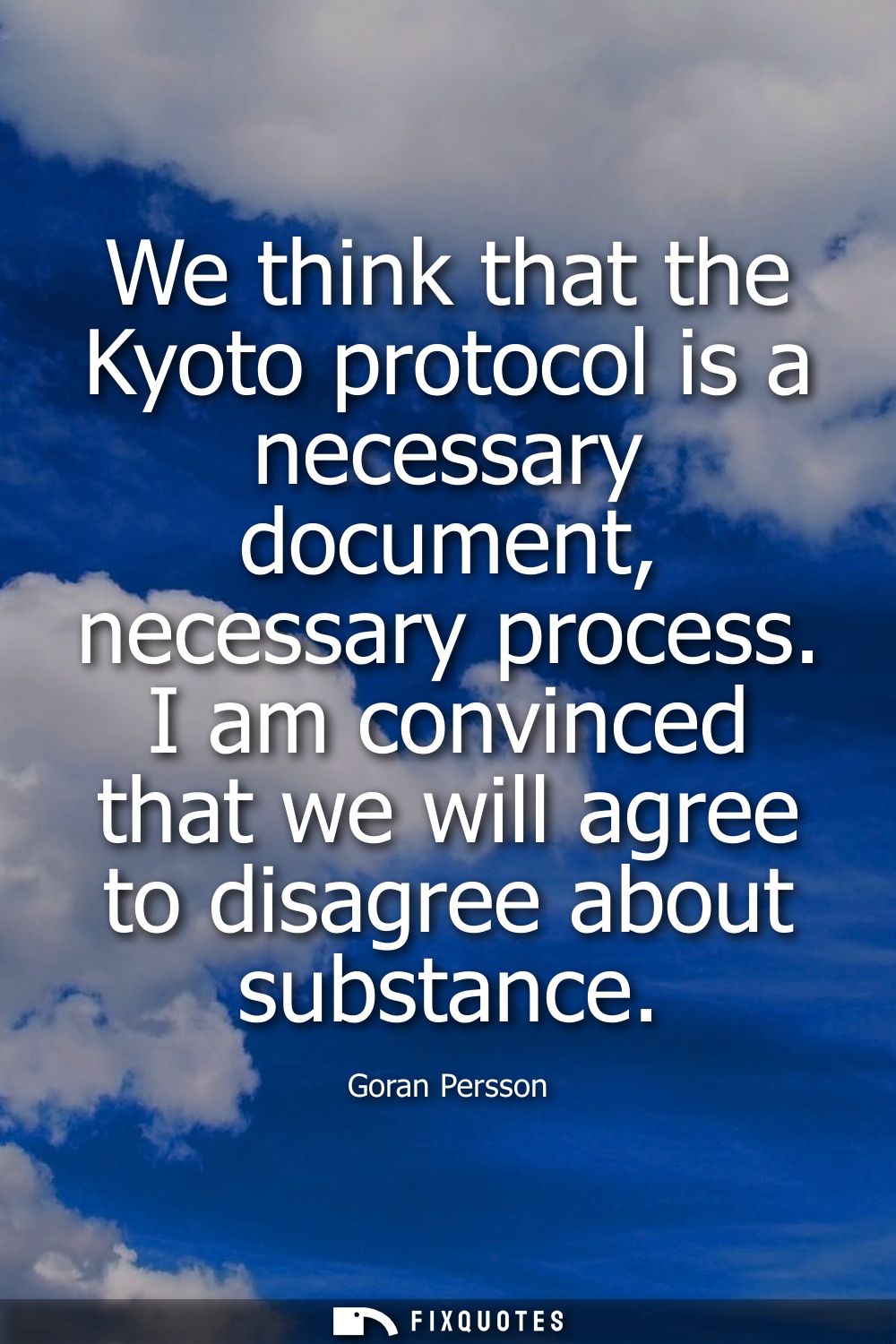
"We think that the Kyoto Protocol is a necessary document, necessary process. I am convinced that we will agree to disagree about substance"
About this Quote
Then comes the real move: “I am convinced that we will agree to disagree about substance.” It’s almost a parody of consensus politics, but Persson delivers it as a sober expectation. The subtext is that the fight won’t be about whether climate change deserves attention (the process is “necessary”), but about who pays, how fast, and under what enforcement. “Substance” is code for commitments: binding caps, timelines, penalties, and the distributional politics that make climate policy radioactive. In one sentence, he pre-emptively lowers the bar from “we will solve this” to “we will keep the machinery running.”
Context matters: Kyoto-era negotiations were defined by asymmetry and suspicion - rich nations asked for cuts, developing nations demanded equity, and major emitters looked for escape hatches. Persson, a Swedish Social Democrat, speaks from a country culturally primed for environmental leadership but still constrained by the reality that treaties live or die in other capitals. The intent is not to sound visionary; it’s to make disagreement survivable. Keep the protocol alive, keep the argument contained, keep the headlines saying “progress” even when the substance is stalled.
Quote Details
| Topic | Peace |
|---|---|
| Source | Help us find the source |
| Cite |
Citation Formats
APA Style (7th ed.)
Persson, Goran. (2026, February 16). We think that the Kyoto Protocol is a necessary document, necessary process. I am convinced that we will agree to disagree about substance. FixQuotes. https://fixquotes.com/quotes/we-think-that-the-kyoto-protocol-is-a-necessary-125131/
Chicago Style
Persson, Goran. "We think that the Kyoto Protocol is a necessary document, necessary process. I am convinced that we will agree to disagree about substance." FixQuotes. February 16, 2026. https://fixquotes.com/quotes/we-think-that-the-kyoto-protocol-is-a-necessary-125131/.
MLA Style (9th ed.)
"We think that the Kyoto Protocol is a necessary document, necessary process. I am convinced that we will agree to disagree about substance." FixQuotes, 16 Feb. 2026, https://fixquotes.com/quotes/we-think-that-the-kyoto-protocol-is-a-necessary-125131/. Accessed 6 Apr. 2026.