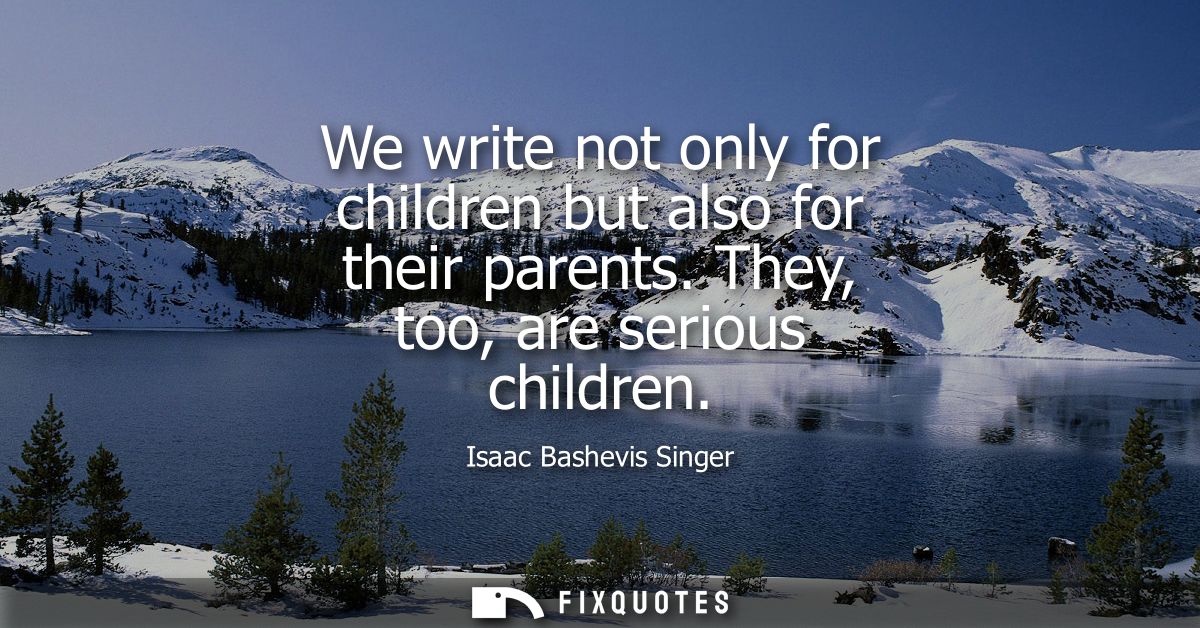
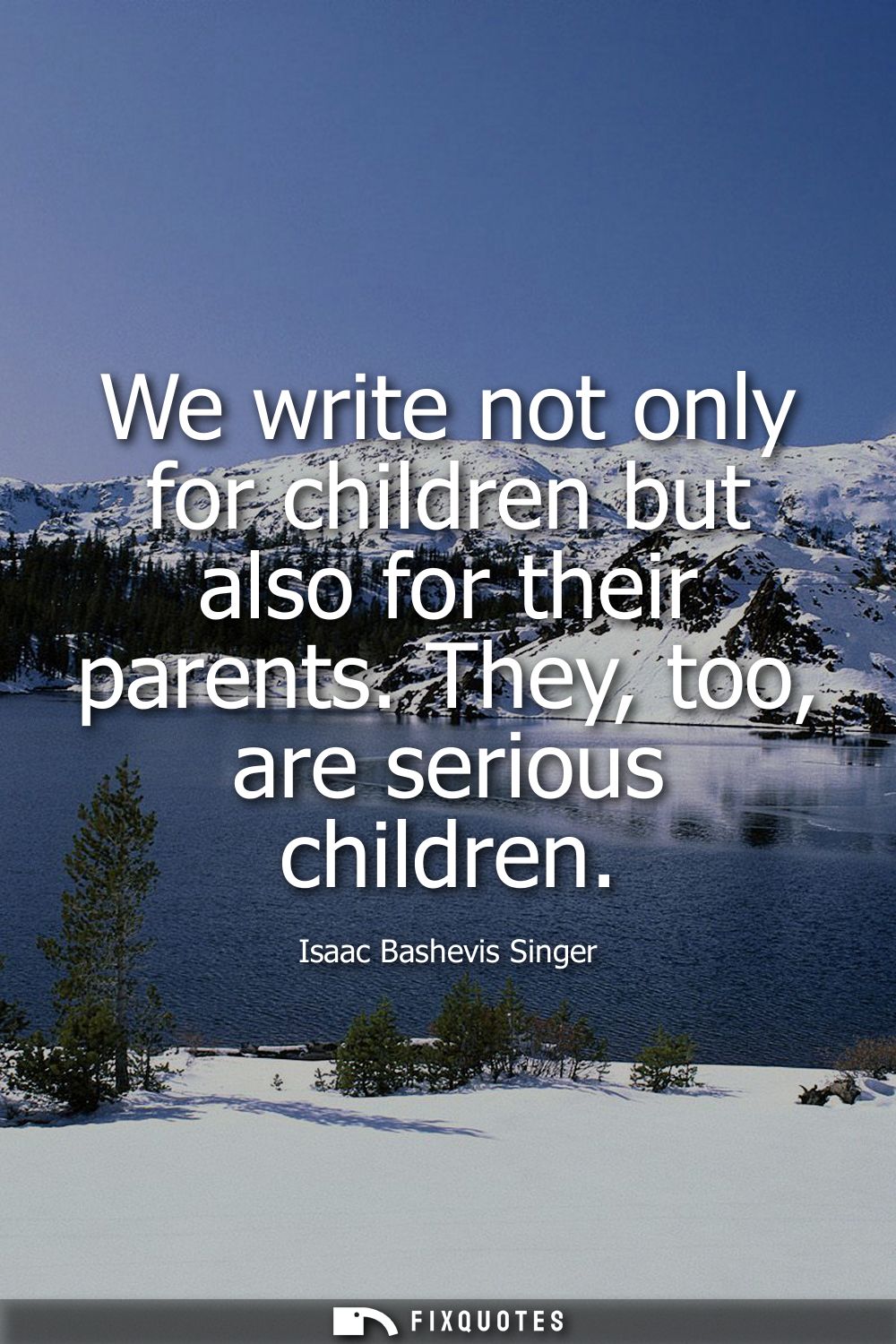
"We write not only for children but also for their parents. They, too, are serious children"
About this Quote
Singer smuggles a whole theory of adulthood into a single, sly compliment. By calling parents "serious children", he punctures the modern pose that grown-ups have graduated into rationality while kids live in a separate, lesser world. The line flatters parents just enough to disarm them, then quietly yanks the mask off: you may have mortgages and manners, but your inner life still runs on the same engines - fear, wonder, jealousy, longing for reassurance. The difference is that adults have learned to disguise it and call the disguise maturity.
The intent is partly artistic and partly tactical. Singer wrote in a tradition (Yiddish storytelling, folktale, moral fable) often branded as "for the young" or "simple". He refuses that downgrade. Children get the story on its surface; parents get the same story as a mirror, catching what the child cannot name yet - the compromises, the erotic undercurrents, the spiritual bargaining, the comedy of self-justification. "Serious" is doing double duty: parents take themselves seriously, and they carry serious burdens. Either way, they remain, psychologically, unfinished.
The subtext is almost a rebuke to gatekeeping. If adults need permission to read tales of ghosts, dybbuks, and talking animals, Singer gives it to them without apologizing. Great stories, he implies, do not sort audiences by age; they sort them by attentiveness. The sharpest irony is that the parent reading "for the child" may be the one most in need of the lesson.
The intent is partly artistic and partly tactical. Singer wrote in a tradition (Yiddish storytelling, folktale, moral fable) often branded as "for the young" or "simple". He refuses that downgrade. Children get the story on its surface; parents get the same story as a mirror, catching what the child cannot name yet - the compromises, the erotic undercurrents, the spiritual bargaining, the comedy of self-justification. "Serious" is doing double duty: parents take themselves seriously, and they carry serious burdens. Either way, they remain, psychologically, unfinished.
The subtext is almost a rebuke to gatekeeping. If adults need permission to read tales of ghosts, dybbuks, and talking animals, Singer gives it to them without apologizing. Great stories, he implies, do not sort audiences by age; they sort them by attentiveness. The sharpest irony is that the parent reading "for the child" may be the one most in need of the lesson.
Quote Details
| Topic | Parenting |
|---|
More Quotes by Isaac
Add to List