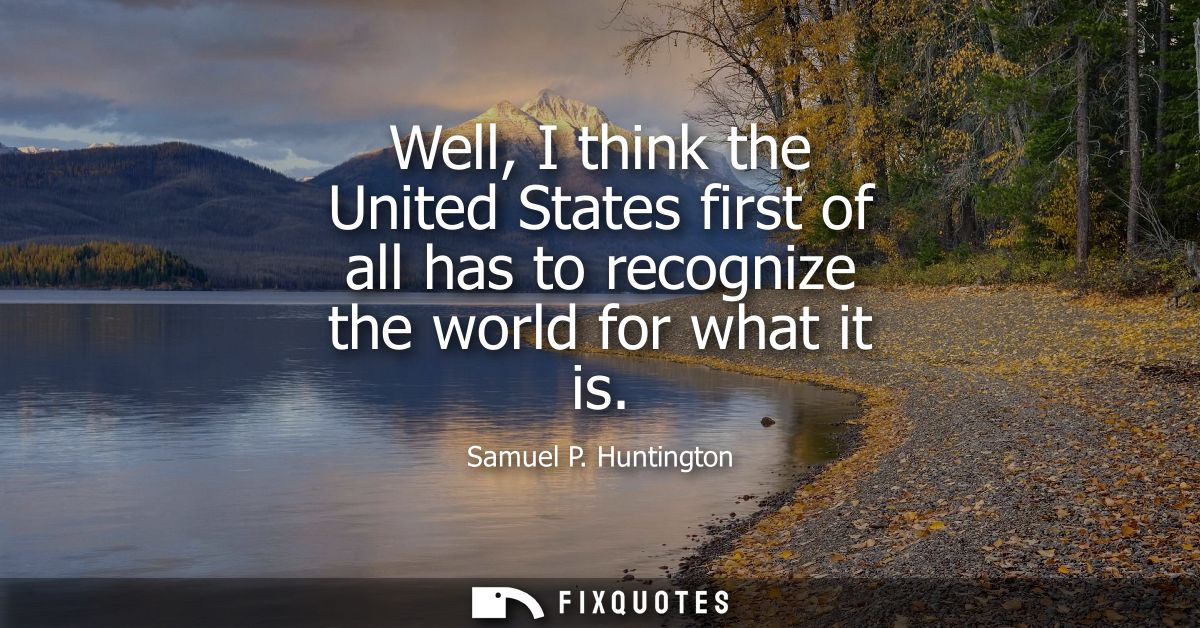
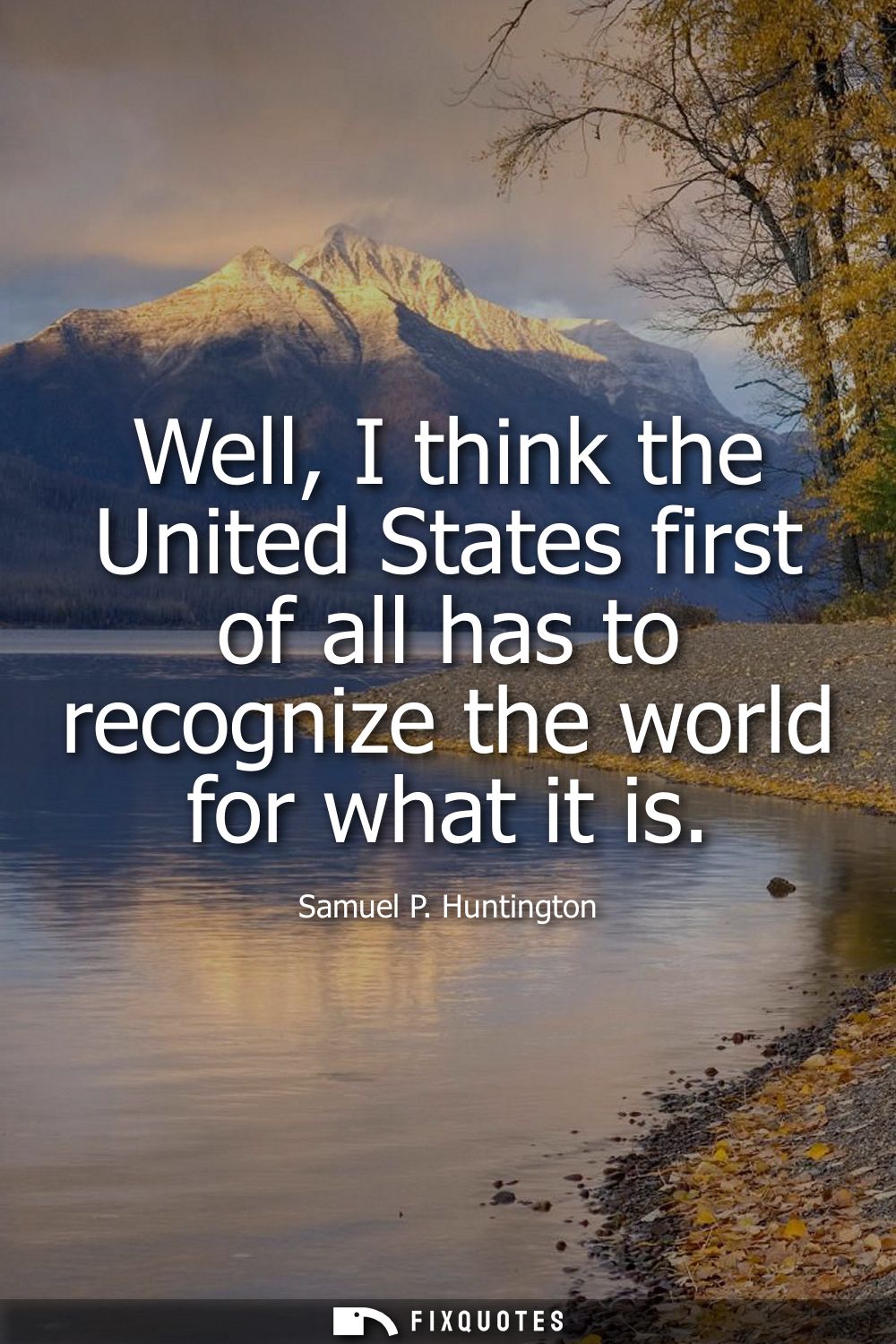
"Well, I think the United States first of all has to recognize the world for what it is"
About this Quote
Context matters because Huntington made a career out of puncturing post-Cold War optimism. Whether read alongside The Clash of Civilizations or his broader skepticism about universalist projects, the line functions like a reset button: stop assuming convergence, stop assuming everyone wants to become a version of “us,” stop assuming institutions and markets will smooth away deep cultural and political fault lines. Under the surface is a critique of elite consensus-making, the kind that treats the world as a solvable managerial problem instead of a persistent arena of identity, power, and conflict.
What makes the sentence work is its studied plainness. It sounds like common sense, which is precisely how it gains authority. By presenting his premise as mere “recognition,” Huntington frames his rivals as naïve or willfully blind. The rhetorical move is classic: define realism as adulthood, then dare the audience to argue for childhood.
Quote Details
| Topic | Vision & Strategy |
|---|---|
| Source | Help us find the source |
| Cite |
Citation Formats
APA Style (7th ed.)
Huntington, Samuel P. (2026, January 18). Well, I think the United States first of all has to recognize the world for what it is. FixQuotes. https://fixquotes.com/quotes/well-i-think-the-united-states-first-of-all-has-13505/
Chicago Style
Huntington, Samuel P. "Well, I think the United States first of all has to recognize the world for what it is." FixQuotes. January 18, 2026. https://fixquotes.com/quotes/well-i-think-the-united-states-first-of-all-has-13505/.
MLA Style (9th ed.)
"Well, I think the United States first of all has to recognize the world for what it is." FixQuotes, 18 Jan. 2026, https://fixquotes.com/quotes/well-i-think-the-united-states-first-of-all-has-13505/. Accessed 12 Feb. 2026.