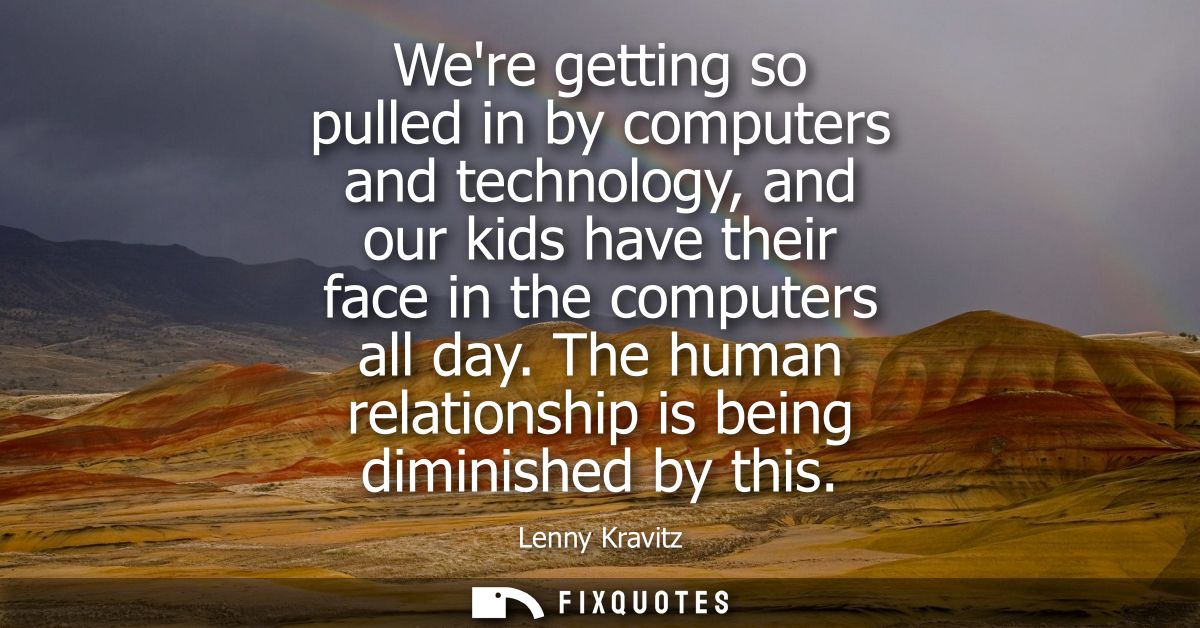
"We're getting so pulled in by computers and technology, and our kids have their face in the computers all day. The human relationship is being diminished by this"
About this Quote
The intent is less “ban devices” than name a quiet theft: time and presence slipping away in tiny increments until relationship becomes background noise. “Pulled in” suggests seduction, not choice. Technology isn’t neutral here; it’s an engine designed to capture, hold, and monetize focus. By centering “our kids,” he taps a parental dread that’s also a generational guilt: adults built this ecosystem, then act surprised when children live inside it.
Subtextually, he’s defending the idea of culture as something you do with other people, not just consume alone. That matters coming from an artist whose formative model was the live circuit and the communal ritual of music. The worry isn’t only that kids are online; it’s that they’re rehearsing a version of social life where frictionless connection replaces the messy, formative skills of being with someone - boredom, patience, reading a room, repair after conflict.
Context helps: this is a familiar refrain from celebrities, but Kravitz’s version is pointedly relational rather than moralistic. He’s asking what happens when the default posture of daily life is downward-facing, and what kind of adults that posture produces.
Quote Details
| Topic | Technology |
|---|---|
| Source | Help us find the source |
| Cite |
Citation Formats
APA Style (7th ed.)
Kravitz, Lenny. (2026, January 14). We're getting so pulled in by computers and technology, and our kids have their face in the computers all day. The human relationship is being diminished by this. FixQuotes. https://fixquotes.com/quotes/were-getting-so-pulled-in-by-computers-and-149389/
Chicago Style
Kravitz, Lenny. "We're getting so pulled in by computers and technology, and our kids have their face in the computers all day. The human relationship is being diminished by this." FixQuotes. January 14, 2026. https://fixquotes.com/quotes/were-getting-so-pulled-in-by-computers-and-149389/.
MLA Style (9th ed.)
"We're getting so pulled in by computers and technology, and our kids have their face in the computers all day. The human relationship is being diminished by this." FixQuotes, 14 Jan. 2026, https://fixquotes.com/quotes/were-getting-so-pulled-in-by-computers-and-149389/. Accessed 5 Mar. 2026.