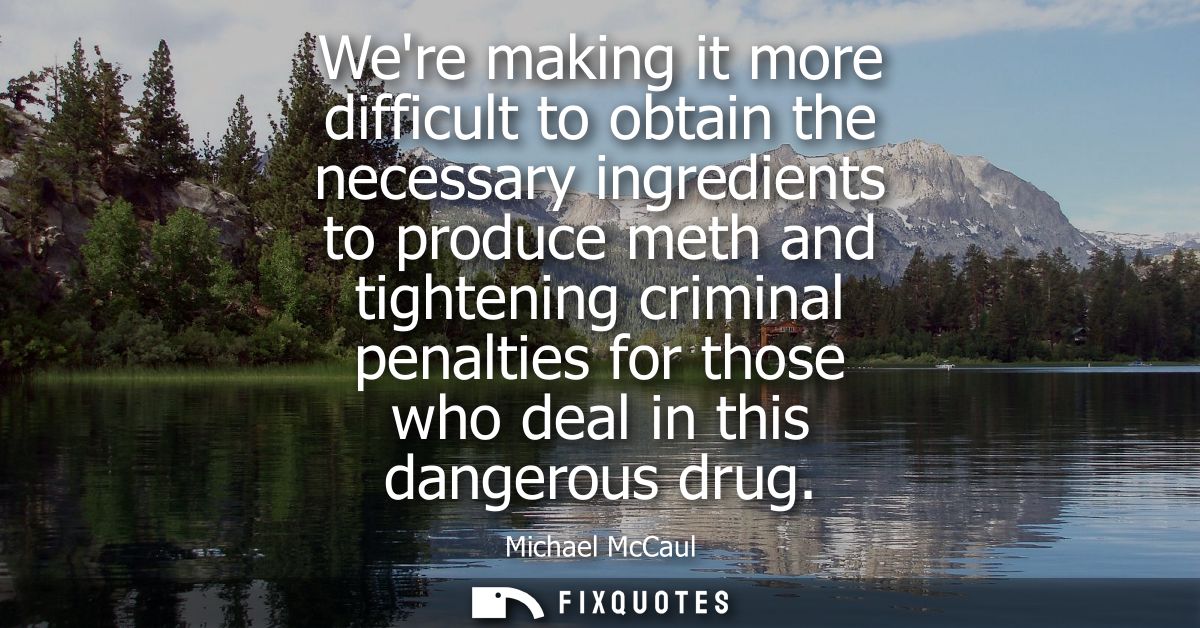
"We're making it more difficult to obtain the necessary ingredients to produce meth and tightening criminal penalties for those who deal in this dangerous drug"
About this Quote
The subtext is reassurance through control. “We’re making it more difficult” implies progress without having to prove outcomes. “Those who deal” draws a clean villain line, avoiding the messier reality that meth economies often involve coercion, poverty, and addiction. The phrase “this dangerous drug” is a linguistic permission slip for exceptional measures; danger becomes the justification for harder policing, longer sentences, broader enforcement powers.
Context matters here: McCaul comes from the post-9/11 Republican security wing, and his politics often frame domestic problems as threats to be contained. In the era when meth panic surged and “precursor control” became bipartisan common sense, this language fit neatly with a legislative trend: regulate pseudoephedrine, expand interdiction, and treat deterrence as the main metric of compassion. What it doesn’t say is the quiet trade-off: restriction tends to push markets toward new chemicals, new routes, and new harms, while harsher penalties reliably expand the carceral footprint. The line works because it lets the speaker sound pragmatic and punitive in the same breath.
Quote Details
| Topic | Justice |
|---|---|
| Source | Help us find the source |
| Cite |
Citation Formats
APA Style (7th ed.)
McCaul, Michael. (2026, January 17). We're making it more difficult to obtain the necessary ingredients to produce meth and tightening criminal penalties for those who deal in this dangerous drug. FixQuotes. https://fixquotes.com/quotes/were-making-it-more-difficult-to-obtain-the-74783/
Chicago Style
McCaul, Michael. "We're making it more difficult to obtain the necessary ingredients to produce meth and tightening criminal penalties for those who deal in this dangerous drug." FixQuotes. January 17, 2026. https://fixquotes.com/quotes/were-making-it-more-difficult-to-obtain-the-74783/.
MLA Style (9th ed.)
"We're making it more difficult to obtain the necessary ingredients to produce meth and tightening criminal penalties for those who deal in this dangerous drug." FixQuotes, 17 Jan. 2026, https://fixquotes.com/quotes/were-making-it-more-difficult-to-obtain-the-74783/. Accessed 25 Mar. 2026.