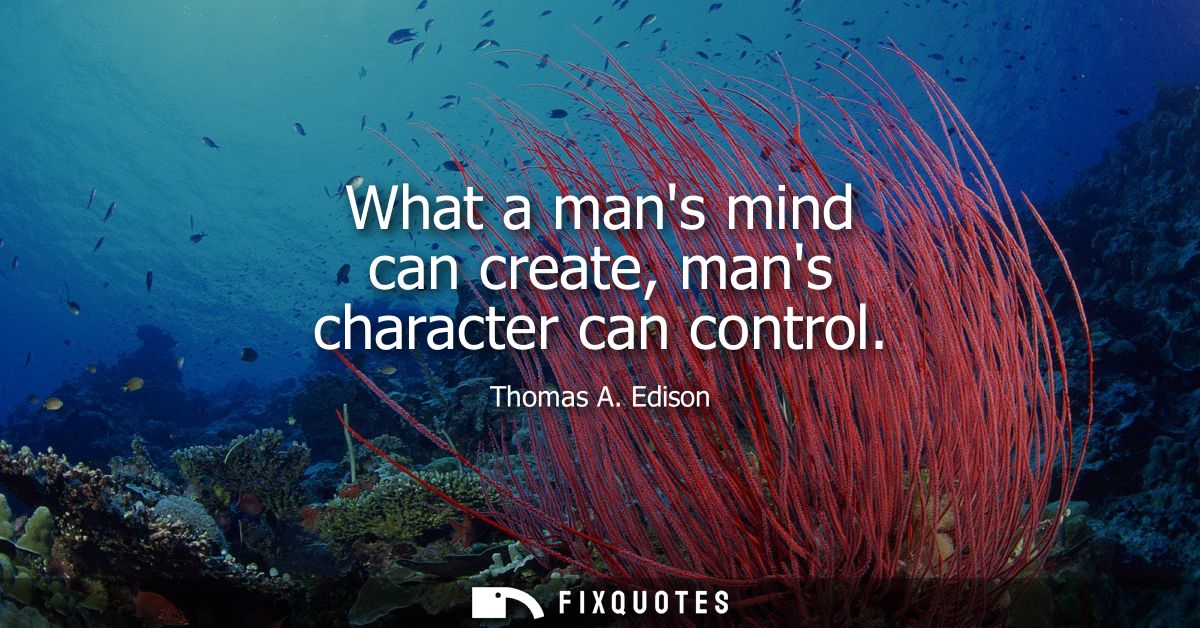
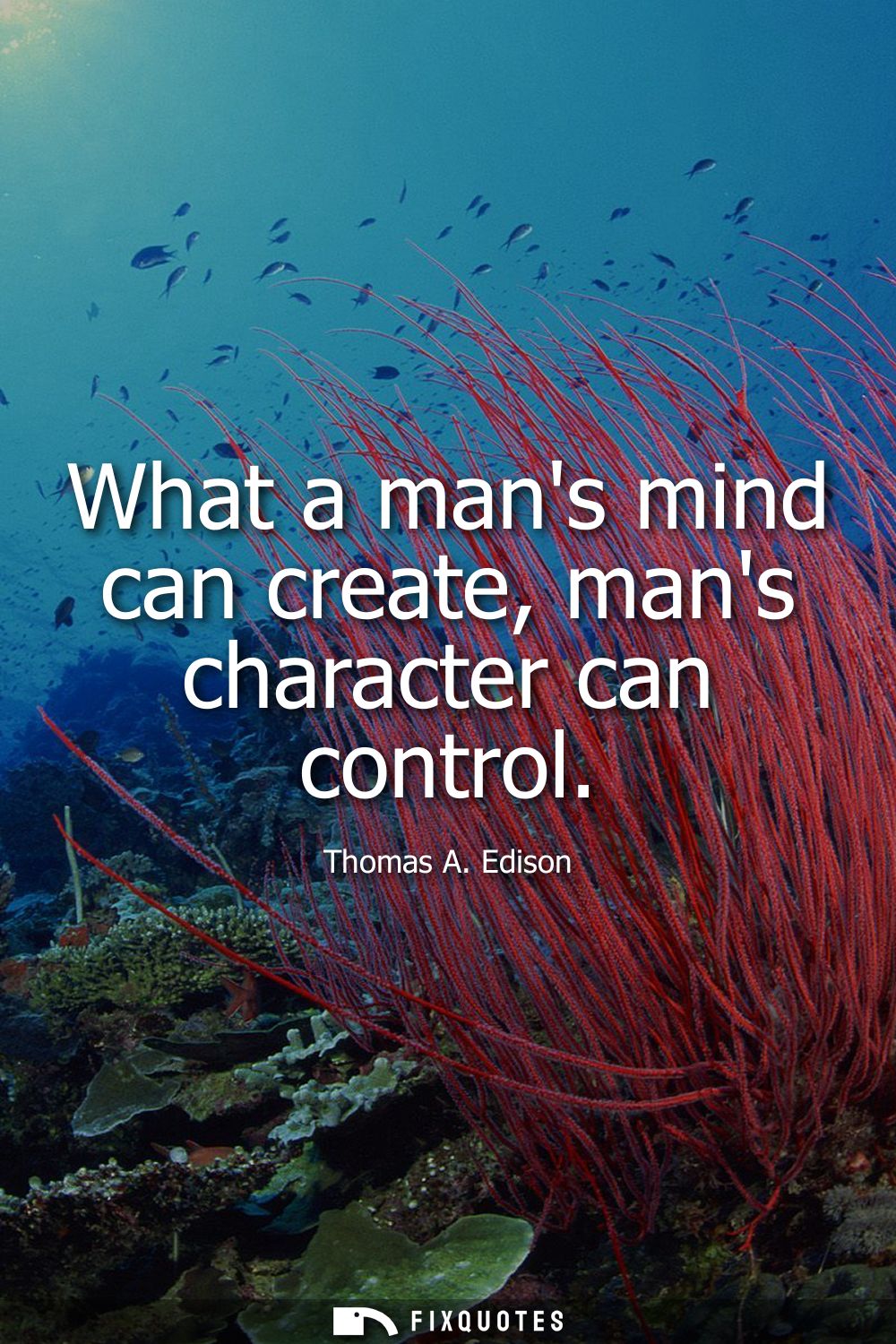
"What a man's mind can create, man's character can control"
About this Quote
Edison is selling a moral chassis for the machine age: ingenuity is thrilling, but it only counts if you can steer it. The line flatters the modern ego (your mind can make the future) while immediately tightening the leash (your character must keep it from making a mess). It’s a neat rhetorical pivot, moving from possibility to discipline in a single breath. The word “control” does the heavy lifting. Edison isn’t praising creativity as a free-floating muse; he’s treating it like horsepower that needs a governor.
The subtext is as Protestant as it is industrial: self-mastery is the real invention. Coming from a figure mythologized as the relentless tinkerer-businessman, it reads like a rebuke to romantic genius. The culture likes inventors as lone wizards; Edison preferred a story about grind, systems, and management - of labor, of competitors, of public perception, of the sprawling networks that turn an idea into infrastructure. “Mind” creates, yes, but “character” is the foreman that makes the factory run.
In context, it lands in an era when new technologies were arriving faster than ethical norms could keep up. Electrification, recorded sound, mass production: creation was no longer personal craft but societal force. Edison’s message is less kumbaya than caution: if you don’t govern your impulses - ego, greed, shortcuts, obsession - your inventions will govern you, or worse, everyone else. It’s aspiration with a hard hat on.
The subtext is as Protestant as it is industrial: self-mastery is the real invention. Coming from a figure mythologized as the relentless tinkerer-businessman, it reads like a rebuke to romantic genius. The culture likes inventors as lone wizards; Edison preferred a story about grind, systems, and management - of labor, of competitors, of public perception, of the sprawling networks that turn an idea into infrastructure. “Mind” creates, yes, but “character” is the foreman that makes the factory run.
In context, it lands in an era when new technologies were arriving faster than ethical norms could keep up. Electrification, recorded sound, mass production: creation was no longer personal craft but societal force. Edison’s message is less kumbaya than caution: if you don’t govern your impulses - ego, greed, shortcuts, obsession - your inventions will govern you, or worse, everyone else. It’s aspiration with a hard hat on.
Quote Details
| Topic | Self-Discipline |
|---|---|
| Source | Later attribution: Quotes To Remember (Volume 3) (Dr Purushothaman, 2014) modern compilationID: qoPiBAAAQBAJ
Evidence:
... What a man's mind can create , man's character can control . Thomas Edison The reputation of a thousand years may be determined by the conduct of one hour . Japanese Proverb good reputation is something you must pay for , but you can ... |
| Cite |
Citation Formats
APA Style (7th ed.)
Edison, Thomas. (2026, February 18). What a man's mind can create, man's character can control. FixQuotes. https://fixquotes.com/quotes/what-a-mans-mind-can-create-mans-character-can-10273/
Chicago Style
Edison, Thomas. "What a man's mind can create, man's character can control." FixQuotes. February 18, 2026. https://fixquotes.com/quotes/what-a-mans-mind-can-create-mans-character-can-10273/.
MLA Style (9th ed.)
"What a man's mind can create, man's character can control." FixQuotes, 18 Feb. 2026, https://fixquotes.com/quotes/what-a-mans-mind-can-create-mans-character-can-10273/. Accessed 25 Mar. 2026.
More Quotes by Thomas
Add to List