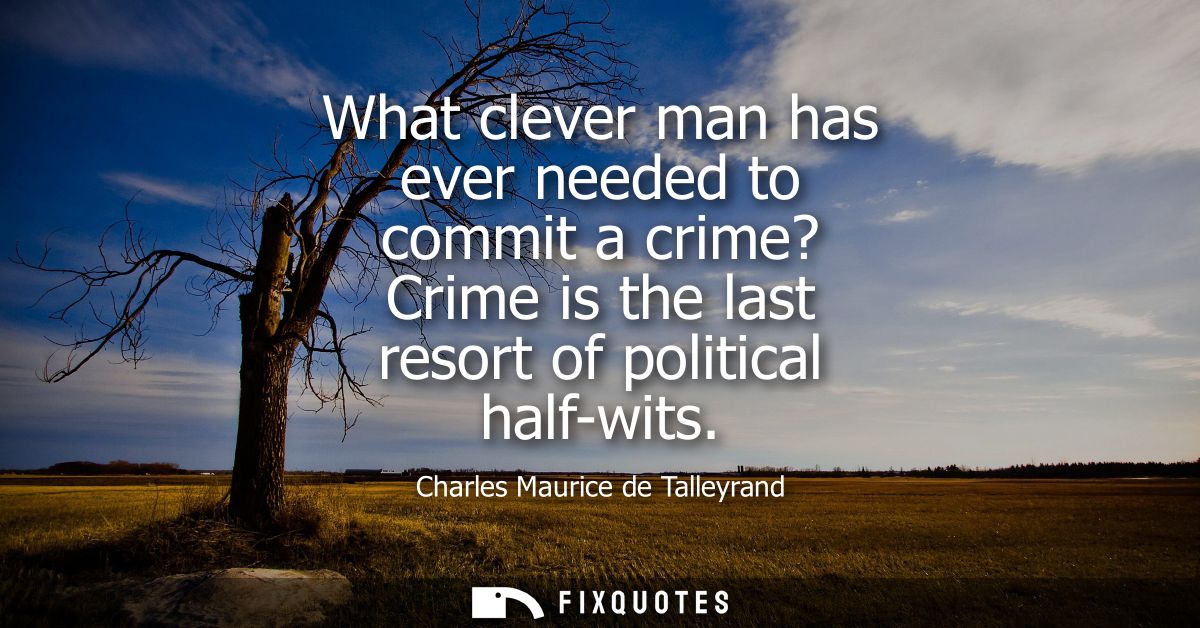
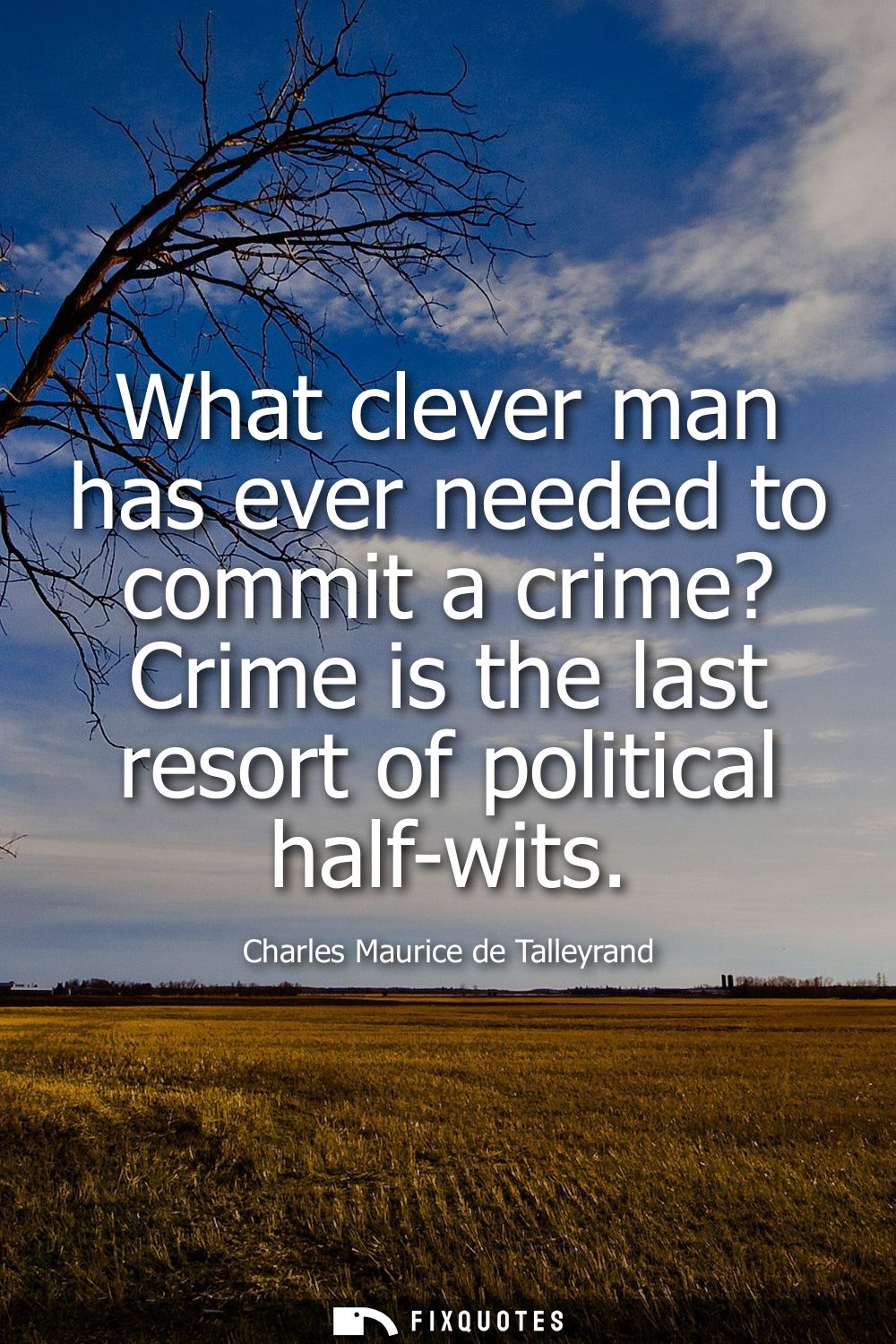
"What clever man has ever needed to commit a crime? Crime is the last resort of political half-wits"
About this Quote
The intent is to downgrade crime from grand transgression to tactical failure. “Last resort” frames illegality as what you do when you’ve run out of persuasion, bribery, patronage, procedural tricks, and backstage alliances. In other words: if you’re smart, you win inside the maze; if you’re not, you kick down the door and call it strategy.
The subtext is even colder. Talleyrand isn’t claiming politicians are virtuous; he’s claiming they’re effective when they’re indirect. It’s a defense of the diplomatic arts - secrecy, manipulation, bargaining - as the higher form of power. Crime is noisy, legible, and therefore punishable. Subtle coercion can be dressed up as necessity, order, or reason of state.
Context matters: this is the era when “political crime” was practically a genre - coups, purges, conspiracies, and the Revolutionary state’s legalized violence. Talleyrand’s cynicism reads as a survival lesson from that chaos: the real danger isn’t evil, it’s amateurs with authority who mistake blunt force for intelligence.
Quote Details
| Topic | Ethics & Morality |
|---|---|
| Source | Help us find the source |
| Cite |
Citation Formats
APA Style (7th ed.)
Talleyrand, Charles Maurice de. (2026, January 18). What clever man has ever needed to commit a crime? Crime is the last resort of political half-wits. FixQuotes. https://fixquotes.com/quotes/what-clever-man-has-ever-needed-to-commit-a-crime-5962/
Chicago Style
Talleyrand, Charles Maurice de. "What clever man has ever needed to commit a crime? Crime is the last resort of political half-wits." FixQuotes. January 18, 2026. https://fixquotes.com/quotes/what-clever-man-has-ever-needed-to-commit-a-crime-5962/.
MLA Style (9th ed.)
"What clever man has ever needed to commit a crime? Crime is the last resort of political half-wits." FixQuotes, 18 Jan. 2026, https://fixquotes.com/quotes/what-clever-man-has-ever-needed-to-commit-a-crime-5962/. Accessed 13 Feb. 2026.