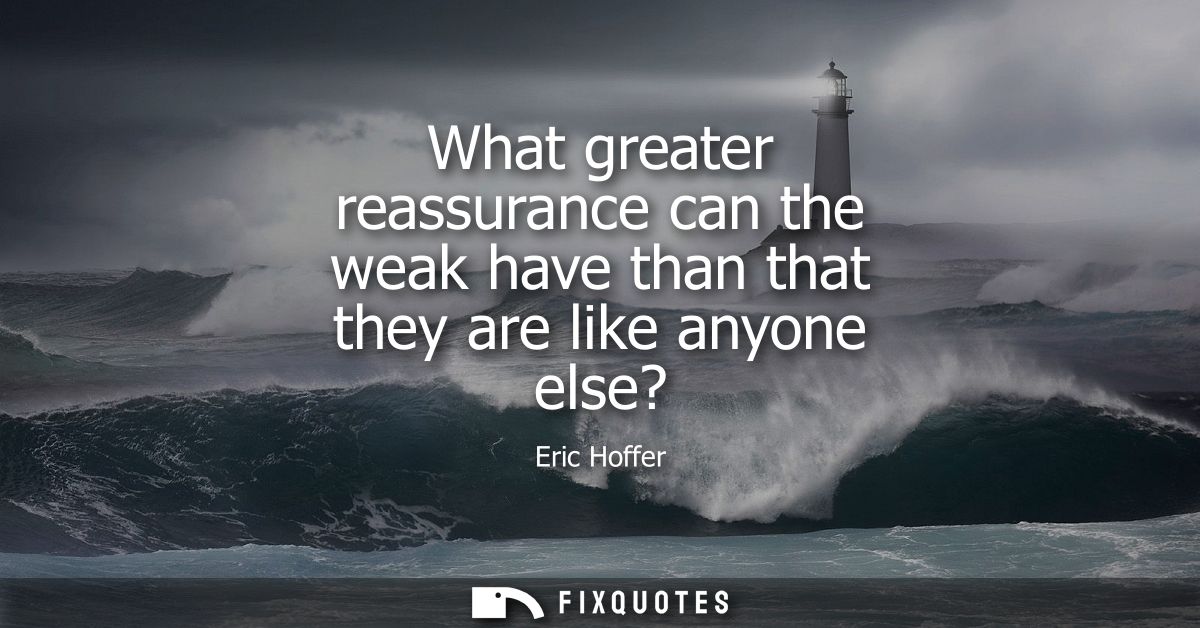
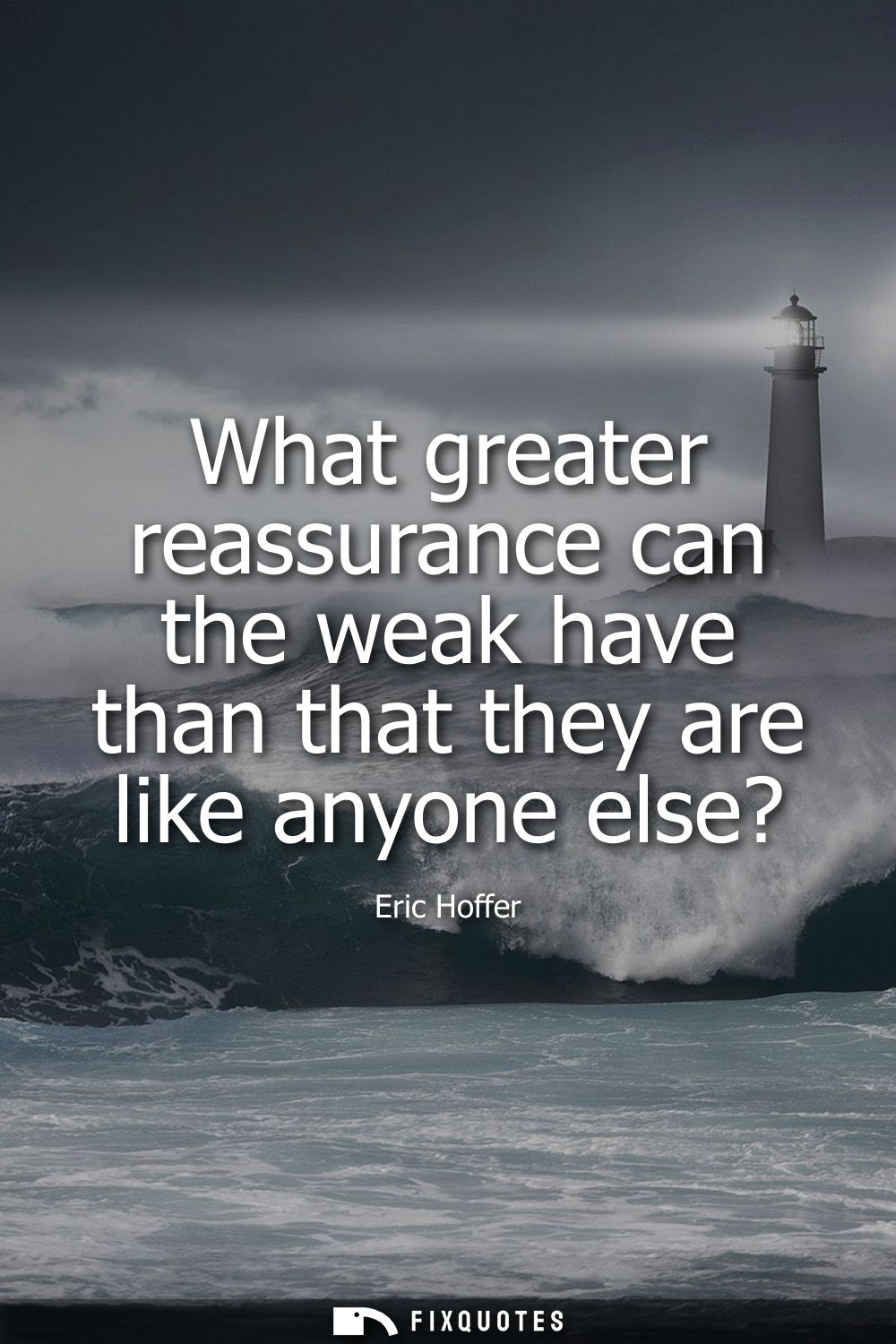
"What greater reassurance can the weak have than that they are like anyone else?"
About this Quote
The subtext is political as much as psychological. Hoffer, writing in the shadow of mass movements and ideological fanaticism, kept circling one insight: people who feel powerless are uniquely vulnerable to narratives that offer dignity without demanding transformation. “Like anyone else” becomes a moral anesthetic. It flattens differences in ability and effort, but also differences in culpability. If everyone is compromised, no one has to change.
There’s also a grim compassion here. Hoffer isn’t sneering at weakness so much as diagnosing its coping mechanism: belonging is easier than becoming. The quote works because it exposes how the language of equality can be repurposed as a refuge from self-scrutiny, turning the noble desire not to be alone into a quiet sabotage of growth.
Quote Details
| Topic | Wisdom |
|---|---|
| Source | Help us find the source |
| Cite |
Citation Formats
APA Style (7th ed.)
Hoffer, Eric. (2026, January 18). What greater reassurance can the weak have than that they are like anyone else? FixQuotes. https://fixquotes.com/quotes/what-greater-reassurance-can-the-weak-have-than-23522/
Chicago Style
Hoffer, Eric. "What greater reassurance can the weak have than that they are like anyone else?" FixQuotes. January 18, 2026. https://fixquotes.com/quotes/what-greater-reassurance-can-the-weak-have-than-23522/.
MLA Style (9th ed.)
"What greater reassurance can the weak have than that they are like anyone else?" FixQuotes, 18 Jan. 2026, https://fixquotes.com/quotes/what-greater-reassurance-can-the-weak-have-than-23522/. Accessed 1 Mar. 2026.