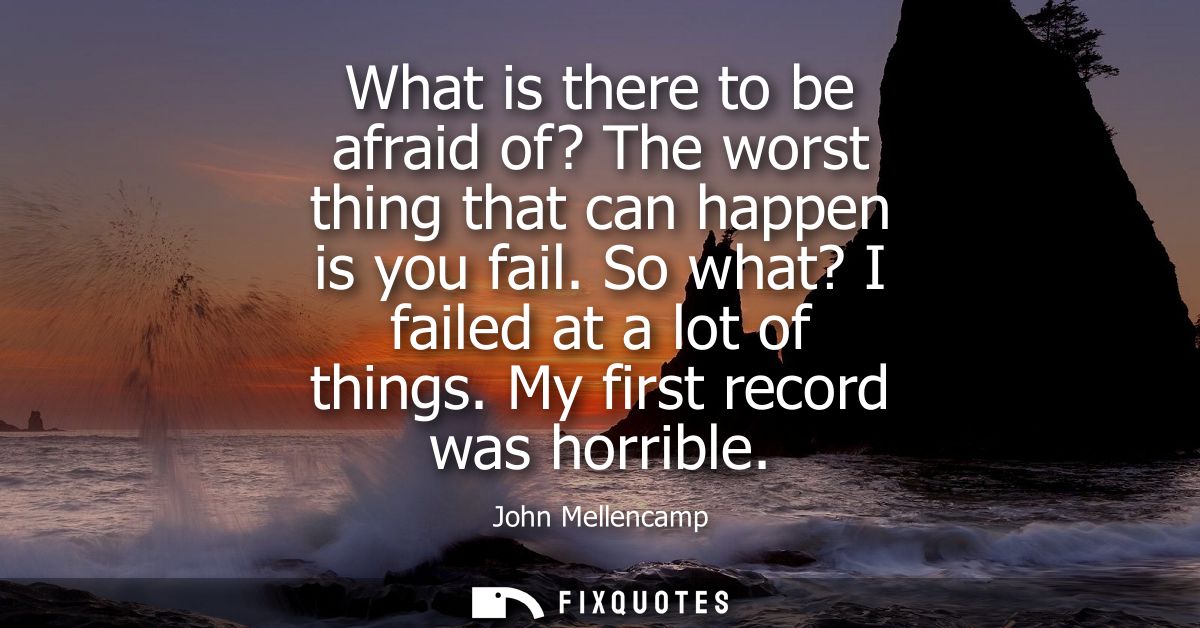
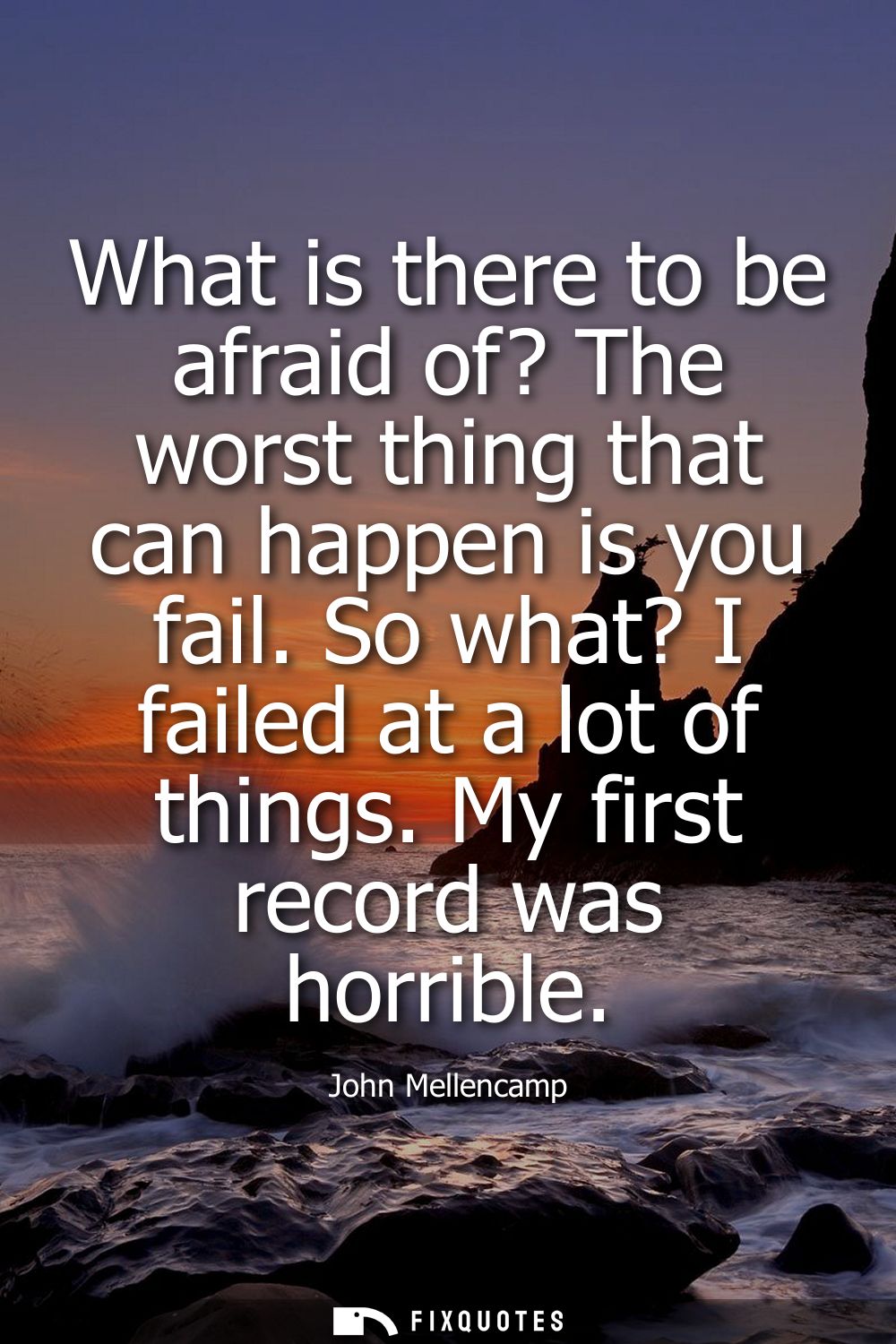
"What is there to be afraid of? The worst thing that can happen is you fail. So what? I failed at a lot of things. My first record was horrible"
About this Quote
The subtext is credibility through dirt-under-the-fingernails experience. By admitting “I failed at a lot of things” and, crucially, “My first record was horrible,” he rejects the polished origin story that pop culture prefers: the overnight breakout, the inevitable genius. Instead he offers a more useful narrative for anyone making anything: early work often stinks, and that’s not a moral verdict, it’s part of the process. Coming from an artist associated with heartland authenticity and a career built on persistence and reinvention, the confession doubles as a quiet critique of an industry that sells “effortless” talent while quietly demanding relentless iteration.
There’s also a generational practicality here. Mellencamp frames fear as a luxury emotion that keeps you static; failure becomes a tuition payment, not a scarlet letter. The intent is to hand permission back to the listener: stop guarding your ego, start accumulating reps. In his version of artistic survival, embarrassment is temporary, output is everything.
Quote Details
| Topic | Failure |
|---|---|
| Source | Help us find the source |
| Cite |
Citation Formats
APA Style (7th ed.)
Mellencamp, John. (2026, January 15). What is there to be afraid of? The worst thing that can happen is you fail. So what? I failed at a lot of things. My first record was horrible. FixQuotes. https://fixquotes.com/quotes/what-is-there-to-be-afraid-of-the-worst-thing-143132/
Chicago Style
Mellencamp, John. "What is there to be afraid of? The worst thing that can happen is you fail. So what? I failed at a lot of things. My first record was horrible." FixQuotes. January 15, 2026. https://fixquotes.com/quotes/what-is-there-to-be-afraid-of-the-worst-thing-143132/.
MLA Style (9th ed.)
"What is there to be afraid of? The worst thing that can happen is you fail. So what? I failed at a lot of things. My first record was horrible." FixQuotes, 15 Jan. 2026, https://fixquotes.com/quotes/what-is-there-to-be-afraid-of-the-worst-thing-143132/. Accessed 5 Apr. 2026.