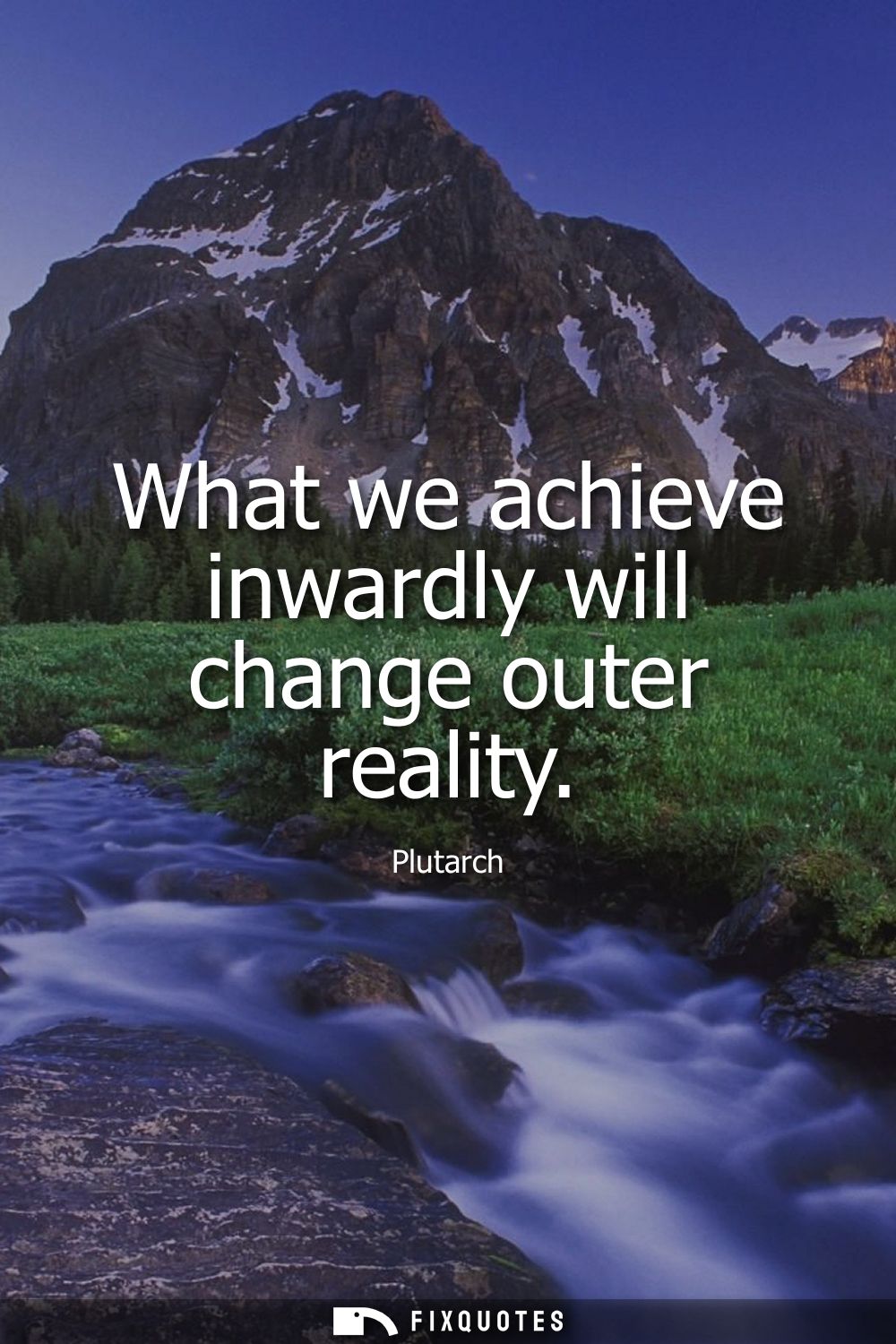
"What we achieve inwardly will change outer reality"
About this Quote
Plutarch is smuggling a radical politics into what sounds like self-help. "What we achieve inwardly" isn’t about vibes; it’s about character as a form of power. In the Greco-Roman world he inhabited, public life was a theater of status, patronage, and imperial constraint. You couldn’t vote your way out of Rome. You could, however, cultivate the only jurisdiction that couldn’t be annexed: the mind. The line works because it flips causality. Outer reality usually claims first rights on us - poverty, loss, humiliation, bad rulers. Plutarch insists the decisive movement runs the other direction: master the inner weather and the external climate shifts, not magically, but practically.
The subtext is moral strategy. "Achieve" implies labor, training, repeated effort - closer to athletic discipline than abstract contemplation. Plutarch, famous for Lives and moral essays, is preoccupied with how people become the kind of person who can withstand temptation, wield authority without corruption, and suffer without collapse. Inward achievement means shaping perception, desire, and judgment so that events can no longer commandeer your choices. Once that happens, "outer reality" changes because your behavior changes: you stop feeding the petty conflicts, you choose different alliances, you endure setbacks without self-sabotage. Even your enemies find less to grab onto.
There’s also a quiet rebuke to fatalism. Empires rise, markets crash, reputations sour; Plutarch doesn’t deny that. He denies that these forces get the final edit on who you are, which is how he turns ethics into a technology for living under pressure.
The subtext is moral strategy. "Achieve" implies labor, training, repeated effort - closer to athletic discipline than abstract contemplation. Plutarch, famous for Lives and moral essays, is preoccupied with how people become the kind of person who can withstand temptation, wield authority without corruption, and suffer without collapse. Inward achievement means shaping perception, desire, and judgment so that events can no longer commandeer your choices. Once that happens, "outer reality" changes because your behavior changes: you stop feeding the petty conflicts, you choose different alliances, you endure setbacks without self-sabotage. Even your enemies find less to grab onto.
There’s also a quiet rebuke to fatalism. Empires rise, markets crash, reputations sour; Plutarch doesn’t deny that. He denies that these forces get the final edit on who you are, which is how he turns ethics into a technology for living under pressure.
Quote Details
| Topic | Wisdom |
|---|---|
| Source | Help us find the source |
| Cite |
Citation Formats
APA Style (7th ed.)
Plutarch. (2026, January 17). What we achieve inwardly will change outer reality. FixQuotes. https://fixquotes.com/quotes/what-we-achieve-inwardly-will-change-outer-reality-37163/
Chicago Style
Plutarch. "What we achieve inwardly will change outer reality." FixQuotes. January 17, 2026. https://fixquotes.com/quotes/what-we-achieve-inwardly-will-change-outer-reality-37163/.
MLA Style (9th ed.)
"What we achieve inwardly will change outer reality." FixQuotes, 17 Jan. 2026, https://fixquotes.com/quotes/what-we-achieve-inwardly-will-change-outer-reality-37163/. Accessed 4 Apr. 2026.
More Quotes by Plutarch
Add to List