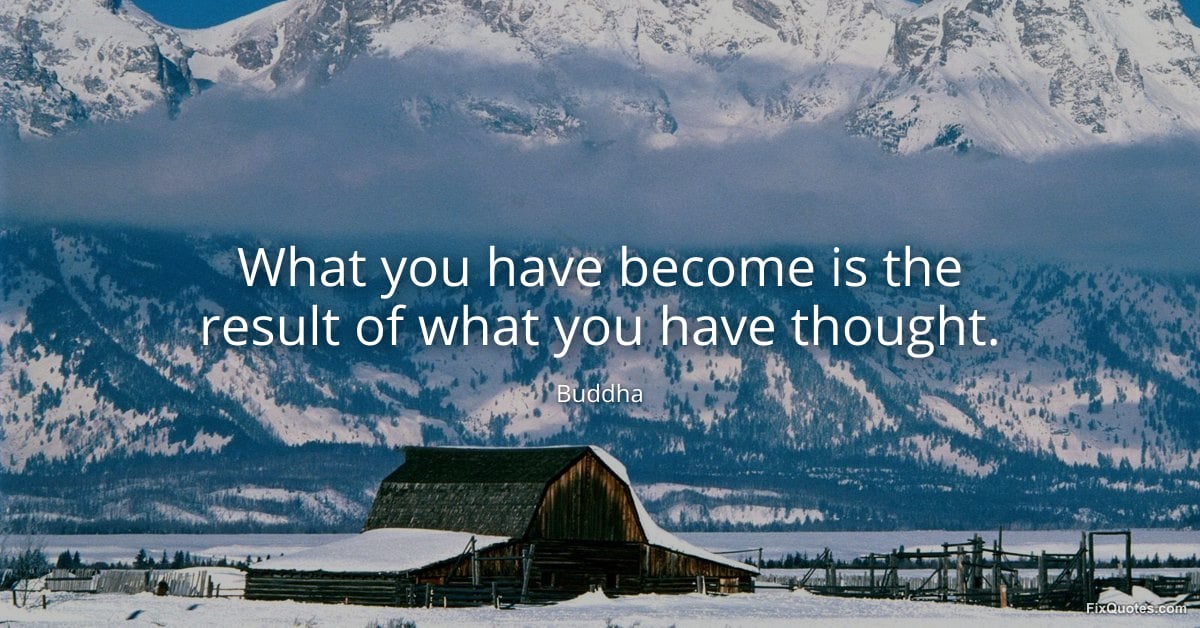
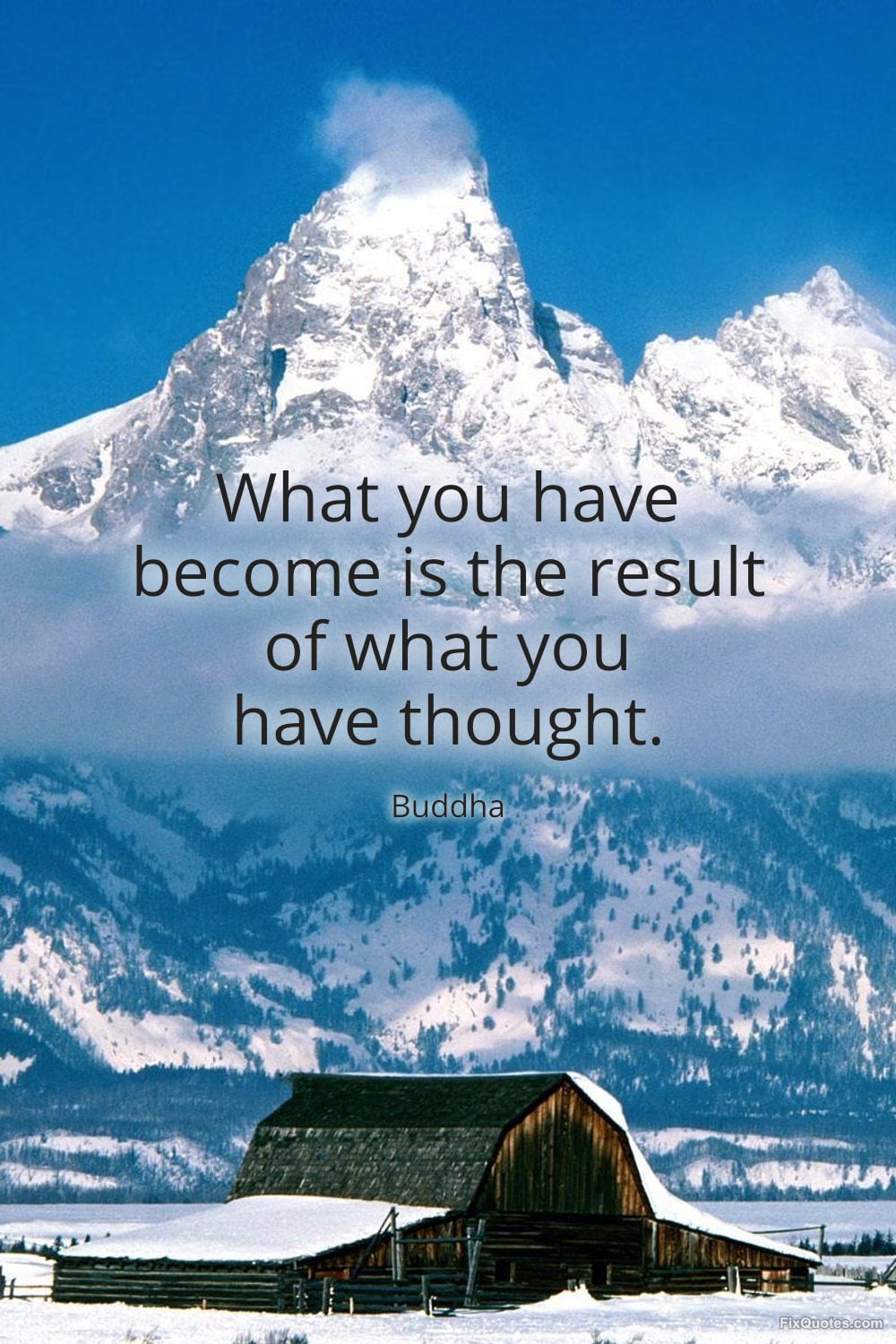
"What you have become is the result of what you have thought"
About this Quote
There is almost no slack in this line. It compresses an entire moral and spiritual worldview into a sentence that sounds calm but lands like a verdict. "What you have become" shifts attention away from passing moods or isolated acts and toward character: the accumulated shape of a life. Then Buddha places the burden of that formation not on fate, status, or divine whim, but on thought.
That move matters because it relocates power inward. In the context of early Buddhist teaching, thought is not just private mental chatter; it is the seedbed of action, desire, attachment, and suffering. The line reflects the larger Buddhist claim that the mind is not a neutral observer of reality but an engine that builds it. If your thoughts are ruled by greed, resentment, or illusion, your life will bear those marks. If they are disciplined, clear, and compassionate, that inner order becomes outer conduct.
The subtext is both liberating and severe. Liberating, because it suggests change is possible: alter the quality of thought, and you alter the person. Severe, because it strips away excuses. The statement does not flatter the listener with easy absolution. It insists that the self is a construction, and that we are implicated in building it.
Its rhetorical power comes from that stark causality. Buddha is not offering inspiration in the modern self-help sense. He is issuing a diagnosis of human formation. Long before neuroscience or wellness culture turned attention inward, this line argued that the deepest battleground is mental, and that destiny begins there.
That move matters because it relocates power inward. In the context of early Buddhist teaching, thought is not just private mental chatter; it is the seedbed of action, desire, attachment, and suffering. The line reflects the larger Buddhist claim that the mind is not a neutral observer of reality but an engine that builds it. If your thoughts are ruled by greed, resentment, or illusion, your life will bear those marks. If they are disciplined, clear, and compassionate, that inner order becomes outer conduct.
The subtext is both liberating and severe. Liberating, because it suggests change is possible: alter the quality of thought, and you alter the person. Severe, because it strips away excuses. The statement does not flatter the listener with easy absolution. It insists that the self is a construction, and that we are implicated in building it.
Its rhetorical power comes from that stark causality. Buddha is not offering inspiration in the modern self-help sense. He is issuing a diagnosis of human formation. Long before neuroscience or wellness culture turned attention inward, this line argued that the deepest battleground is mental, and that destiny begins there.
Quote Details
| Topic | Wisdom |
|---|---|
| Source | Help us find the source |
| Cite |
Citation Formats
APA Style (7th ed.)
Buddha. (2026, March 10). What you have become is the result of what you have thought. FixQuotes. https://fixquotes.com/quotes/what-you-have-become-is-the-result-of-what-you-185933/
Chicago Style
Buddha. "What you have become is the result of what you have thought." FixQuotes. March 10, 2026. https://fixquotes.com/quotes/what-you-have-become-is-the-result-of-what-you-185933/.
MLA Style (9th ed.)
"What you have become is the result of what you have thought." FixQuotes, 10 Mar. 2026, https://fixquotes.com/quotes/what-you-have-become-is-the-result-of-what-you-185933/. Accessed 2 Apr. 2026.
More Quotes by Buddha
Add to List