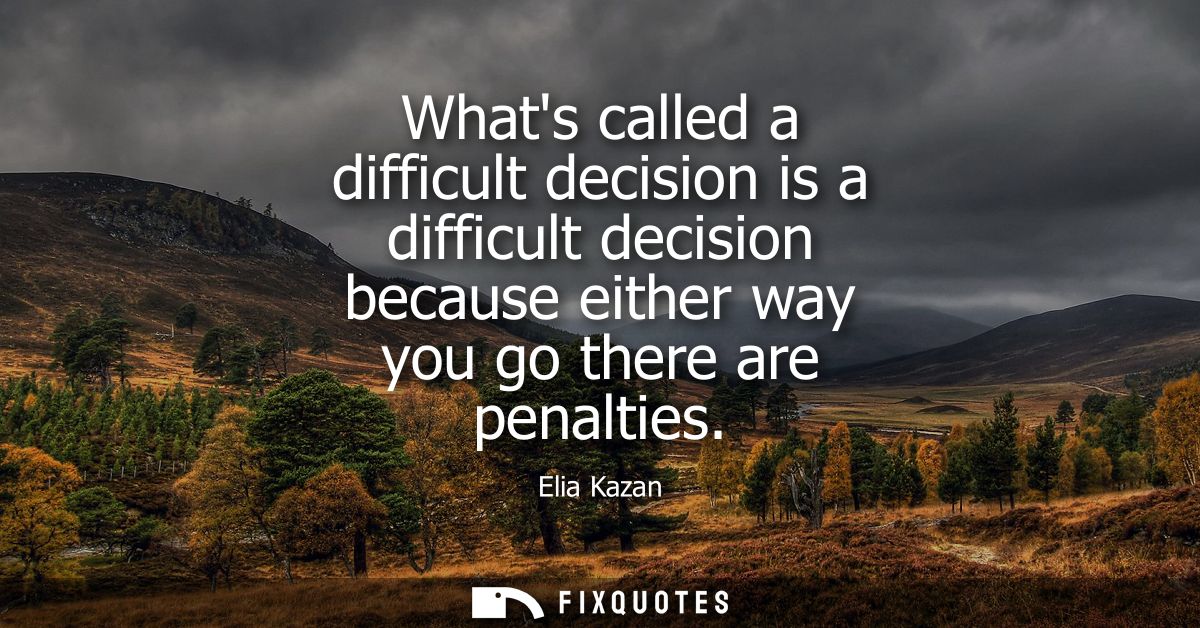
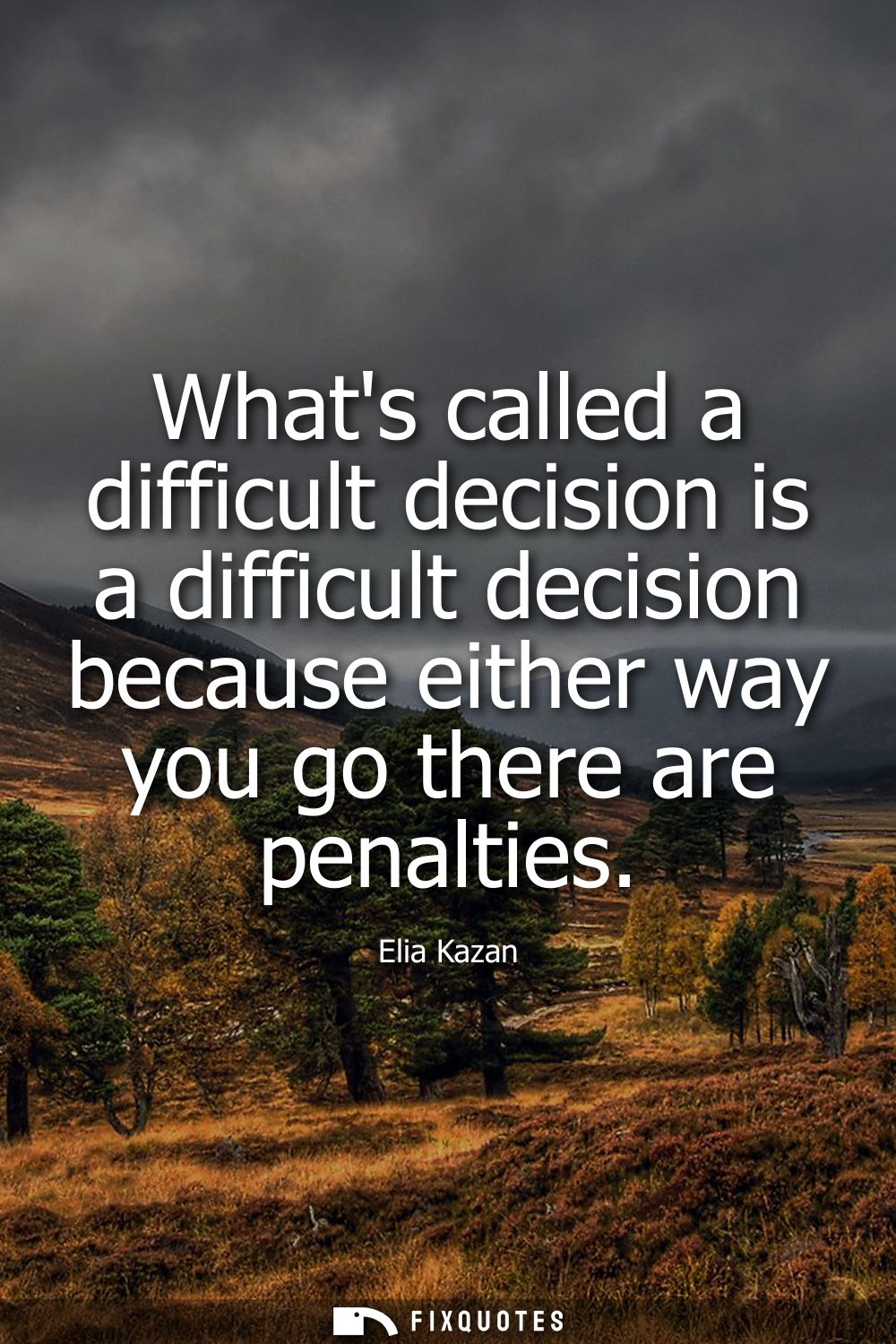
"What's called a difficult decision is a difficult decision because either way you go there are penalties"
About this Quote
Coming from Kazan, the context sharpens into something almost accusatory. His career is inseparable from the HUAC testimony that helped end colleagues’ livelihoods while preserving his own. “Either way you go there are penalties” reads less like abstract wisdom than a self-aware defense: silence carries one set of punishments (blacklisting, loss of work); cooperation carries another (betrayal, moral stain, permanent suspicion). He’s not claiming innocence. He’s arguing that purity was never on the menu.
As a director, Kazan also understood the dramaturgy of decisions: stories move when characters pick a loss. This line could be a filmmaking credo disguised as ethics - the compelling choice isn’t the one that’s “right,” it’s the one that reveals what a person values when the bill comes due.
Quote Details
| Topic | Decision-Making |
|---|---|
| Source | Help us find the source |
| Cite |
Citation Formats
APA Style (7th ed.)
Kazan, Elia. (2026, January 17). What's called a difficult decision is a difficult decision because either way you go there are penalties. FixQuotes. https://fixquotes.com/quotes/whats-called-a-difficult-decision-is-a-difficult-51363/
Chicago Style
Kazan, Elia. "What's called a difficult decision is a difficult decision because either way you go there are penalties." FixQuotes. January 17, 2026. https://fixquotes.com/quotes/whats-called-a-difficult-decision-is-a-difficult-51363/.
MLA Style (9th ed.)
"What's called a difficult decision is a difficult decision because either way you go there are penalties." FixQuotes, 17 Jan. 2026, https://fixquotes.com/quotes/whats-called-a-difficult-decision-is-a-difficult-51363/. Accessed 13 Feb. 2026.