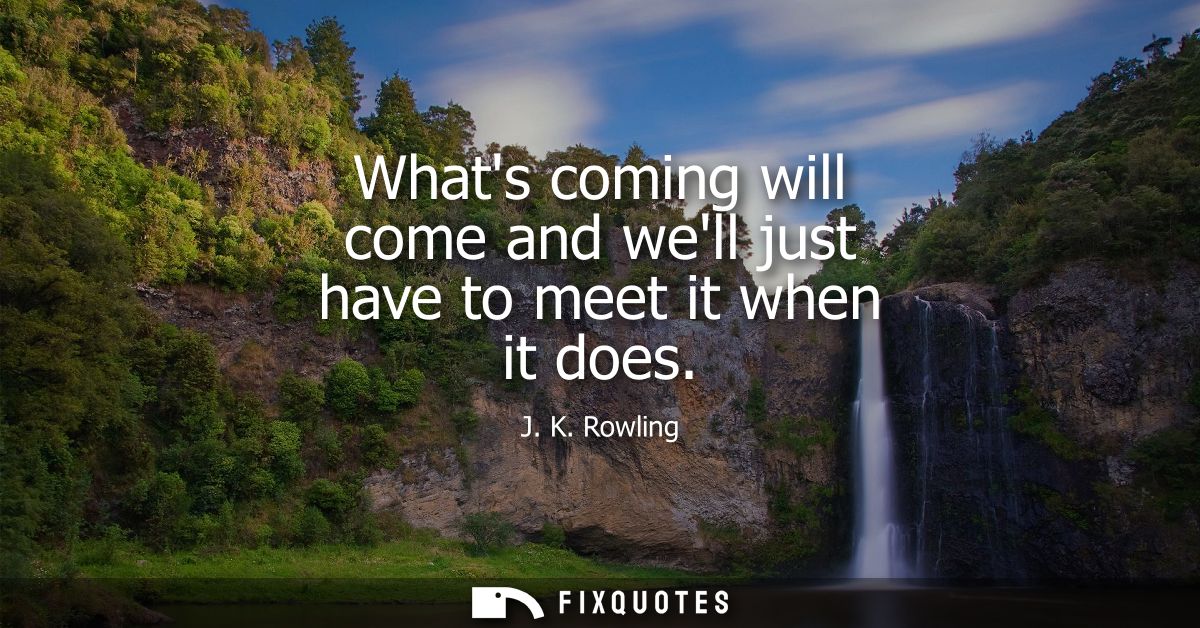
"What's coming will come, and we'll just have to meet it when it does"
About this Quote
The second half pivots from prophecy to posture. “We’ll just have to meet it” turns impending threat into an appointment, something you show up for rather than something that ambushes you. “Just” is the quiet tell: it minimizes without dismissing. Not “it’s nothing,” but “it’s not optional,” which is a bracing kind of comfort. The line doesn’t promise safety; it promises composure.
In the Harry Potter context, it fits a world where adults traffic in visions, omens, and elaborate preventative schemes, yet the decisive moments still arrive on schedule. Rowling’s broader thematic engine is choice under pressure: courage not as swagger but as a decision made in advance, before the fear arrives. The subtext is also communal. “We’ll” matters. Catastrophe isolates; this sentence re-stitches the social fabric by insisting the future is faced collectively.
It works because it resists both panic and denial. It offers the only agency that’s real: how you stand when the door finally opens.
Quote Details
| Topic | Free Will & Fate |
|---|---|
| Source | Help us find the source |
| Cite |
Citation Formats
APA Style (7th ed.)
Rowling, J. K. (2026, February 19). What's coming will come, and we'll just have to meet it when it does. FixQuotes. https://fixquotes.com/quotes/whats-coming-will-come-and-well-just-have-to-meet-41374/
Chicago Style
Rowling, J. K. "What's coming will come, and we'll just have to meet it when it does." FixQuotes. February 19, 2026. https://fixquotes.com/quotes/whats-coming-will-come-and-well-just-have-to-meet-41374/.
MLA Style (9th ed.)
"What's coming will come, and we'll just have to meet it when it does." FixQuotes, 19 Feb. 2026, https://fixquotes.com/quotes/whats-coming-will-come-and-well-just-have-to-meet-41374/. Accessed 24 Mar. 2026.