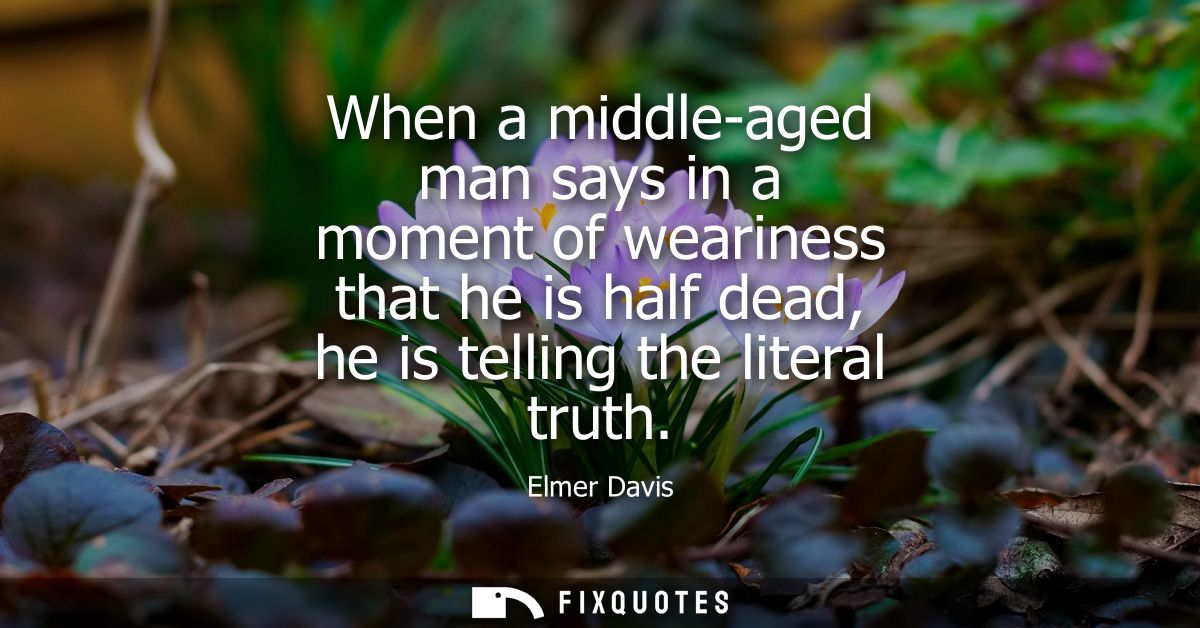
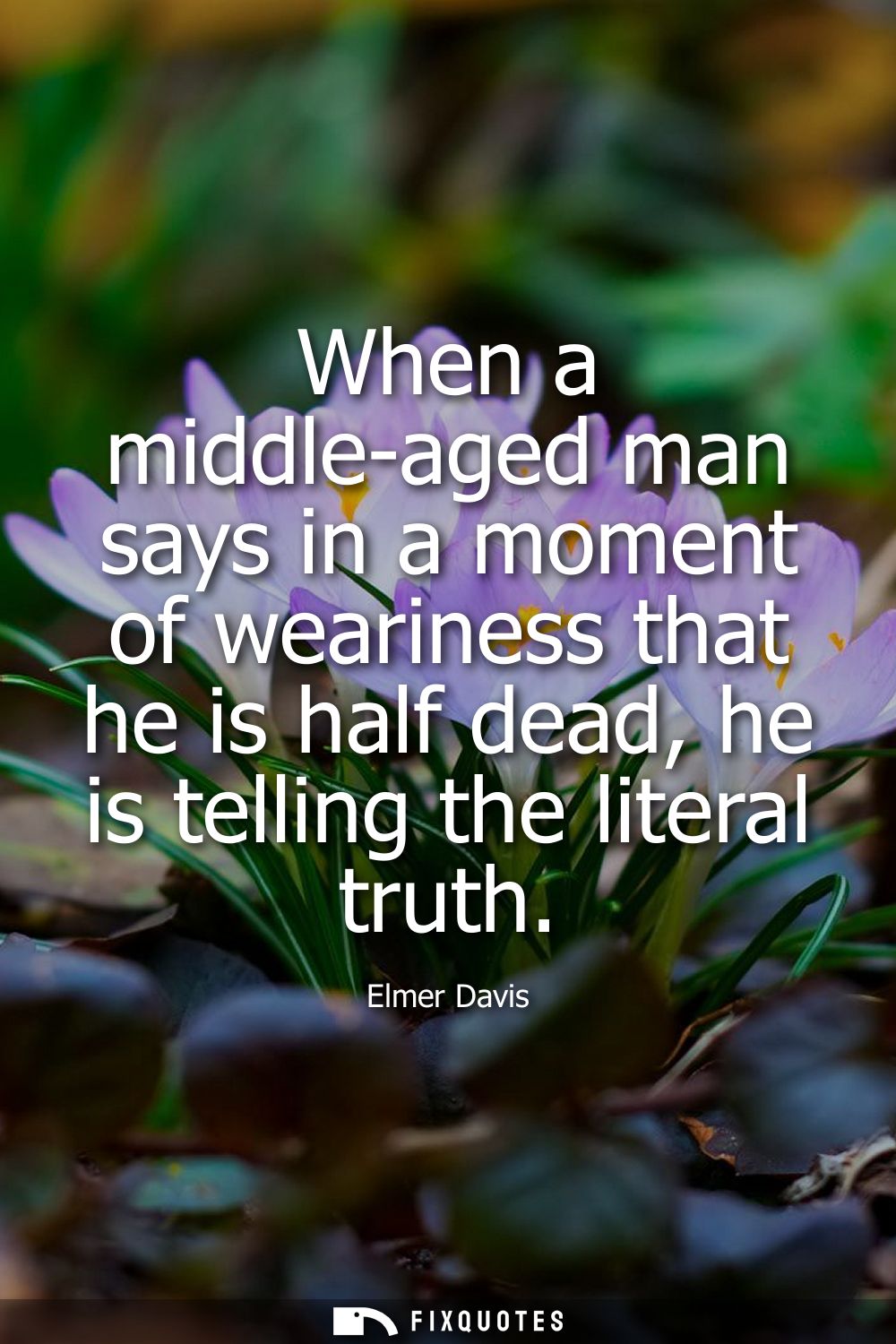
"When a middle-aged man says in a moment of weariness that he is half dead, he is telling the literal truth"
About this Quote
Davis was a journalist, and the sentence has a reporter's instinct for deflating rhetoric. The "moment of weariness" matters: fatigue is when our euphemisms slip and the private ledger briefly shows. He's also poking at a particular mid-century masculine posture, where emotional language is tolerated only if smuggled in as banter. "Half dead" becomes an allowed confession, and Davis replies: yes, and you know it.
Contextually, coming from a man who lived through world war, depression, and the rise of mass media, it reads like a cultural corrective to optimism as performance. Americans are trained to narrate life as progress; Davis reminds you that progress has a clock on it. The sting is not morbidity but precision: midlife dread made measurable, and therefore impossible to laugh off.
Quote Details
| Topic | Aging |
|---|---|
| Source | Help us find the source |
| Cite |
Citation Formats
APA Style (7th ed.)
Davis, Elmer. (2026, January 16). When a middle-aged man says in a moment of weariness that he is half dead, he is telling the literal truth. FixQuotes. https://fixquotes.com/quotes/when-a-middle-aged-man-says-in-a-moment-of-136076/
Chicago Style
Davis, Elmer. "When a middle-aged man says in a moment of weariness that he is half dead, he is telling the literal truth." FixQuotes. January 16, 2026. https://fixquotes.com/quotes/when-a-middle-aged-man-says-in-a-moment-of-136076/.
MLA Style (9th ed.)
"When a middle-aged man says in a moment of weariness that he is half dead, he is telling the literal truth." FixQuotes, 16 Jan. 2026, https://fixquotes.com/quotes/when-a-middle-aged-man-says-in-a-moment-of-136076/. Accessed 5 Apr. 2026.