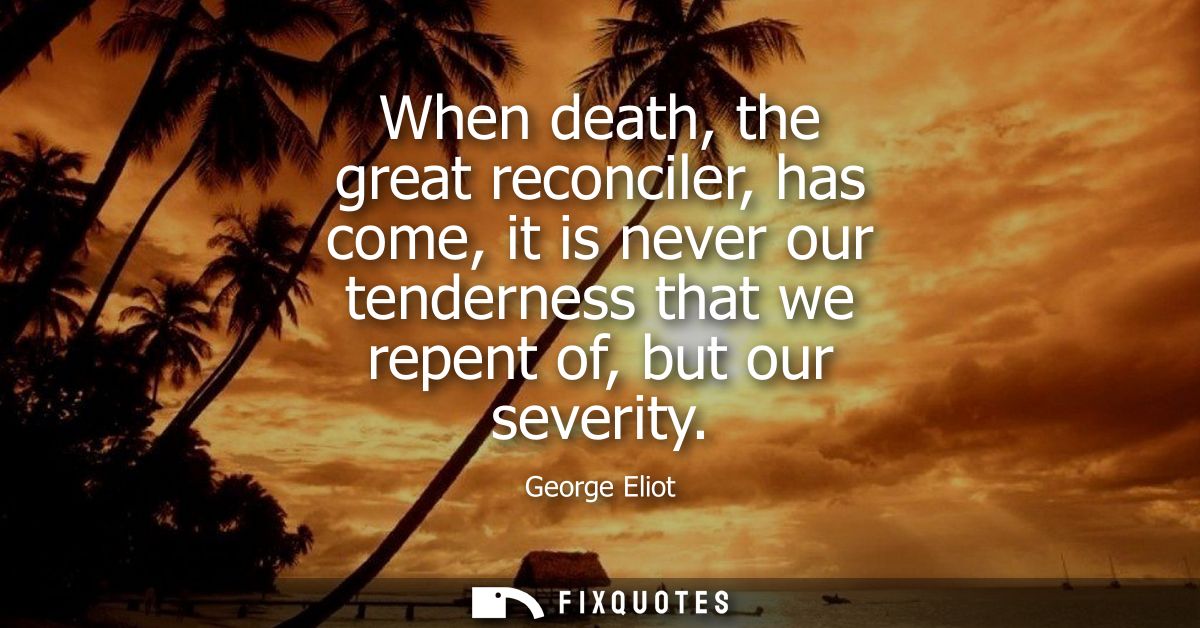
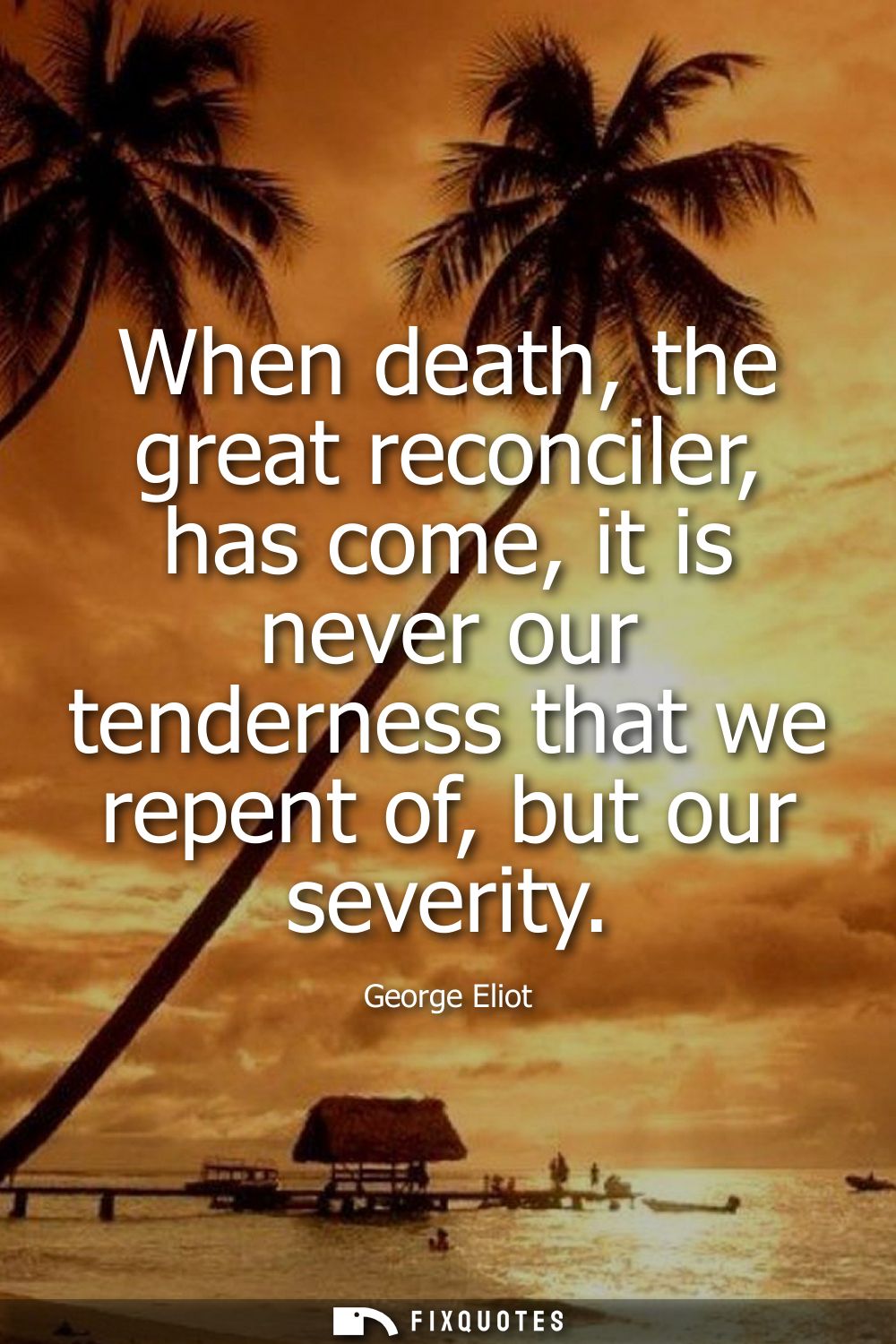
"When death, the great reconciler, has come, it is never our tenderness that we repent of, but our severity"
About this Quote
The sentence works because it stages repentance as a selective, almost clinical experience. We don’t regret our softness; we regret the moments we made love conditional, rationed mercy, performed righteousness at someone else’s expense. "Our" is doing serious work here: Eliot isn’t aiming at a single villain but at the ordinary person who believes their sharpness is necessary. That’s the subtext: severity is often moral theater, a way of securing authority, punishing disappointment, or protecting the ego from vulnerability. Tenderness, by contrast, is framed as the risk we wish we’d taken more often.
Contextually, Eliot’s novels are obsessed with the ethical consequences of everyday choices, the slow accrual of harm, the quiet heroism of sympathy. This line distills her moral psychology into one deathbed truth: when time runs out, it’s not the kindness that embarrasses us, it’s the coldness we called virtue.
Quote Details
| Topic | Mortality |
|---|---|
| Source | Help us find the source |
| Cite |
Citation Formats
APA Style (7th ed.)
Eliot, George. (2026, January 14). When death, the great reconciler, has come, it is never our tenderness that we repent of, but our severity. FixQuotes. https://fixquotes.com/quotes/when-death-the-great-reconciler-has-come-it-is-28269/
Chicago Style
Eliot, George. "When death, the great reconciler, has come, it is never our tenderness that we repent of, but our severity." FixQuotes. January 14, 2026. https://fixquotes.com/quotes/when-death-the-great-reconciler-has-come-it-is-28269/.
MLA Style (9th ed.)
"When death, the great reconciler, has come, it is never our tenderness that we repent of, but our severity." FixQuotes, 14 Jan. 2026, https://fixquotes.com/quotes/when-death-the-great-reconciler-has-come-it-is-28269/. Accessed 30 Mar. 2026.