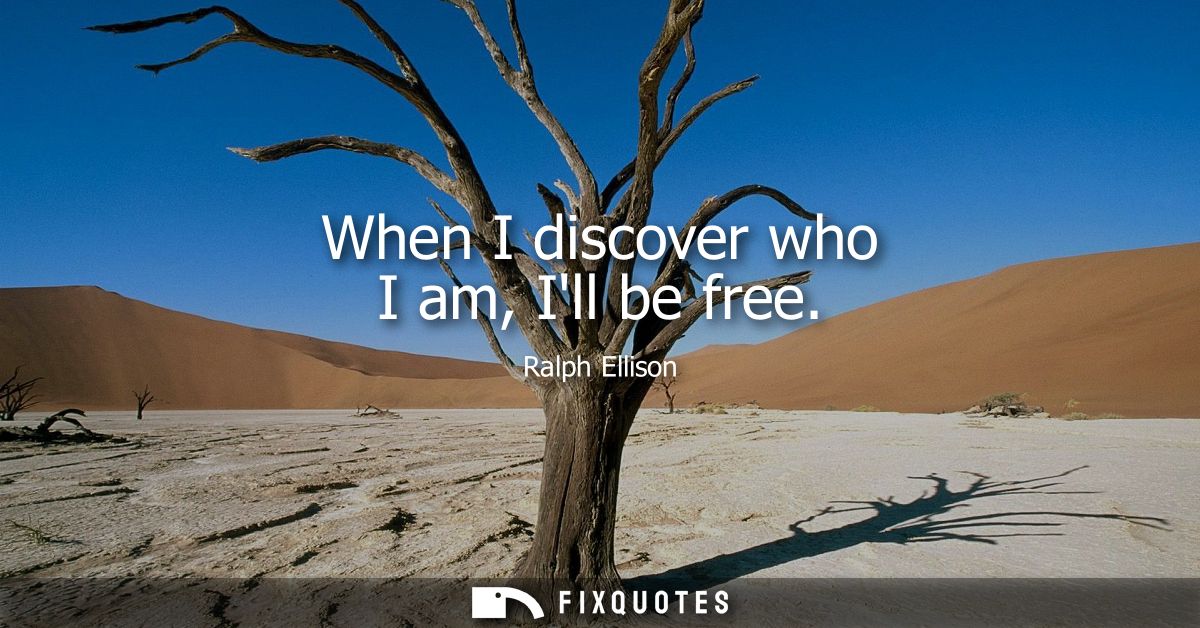
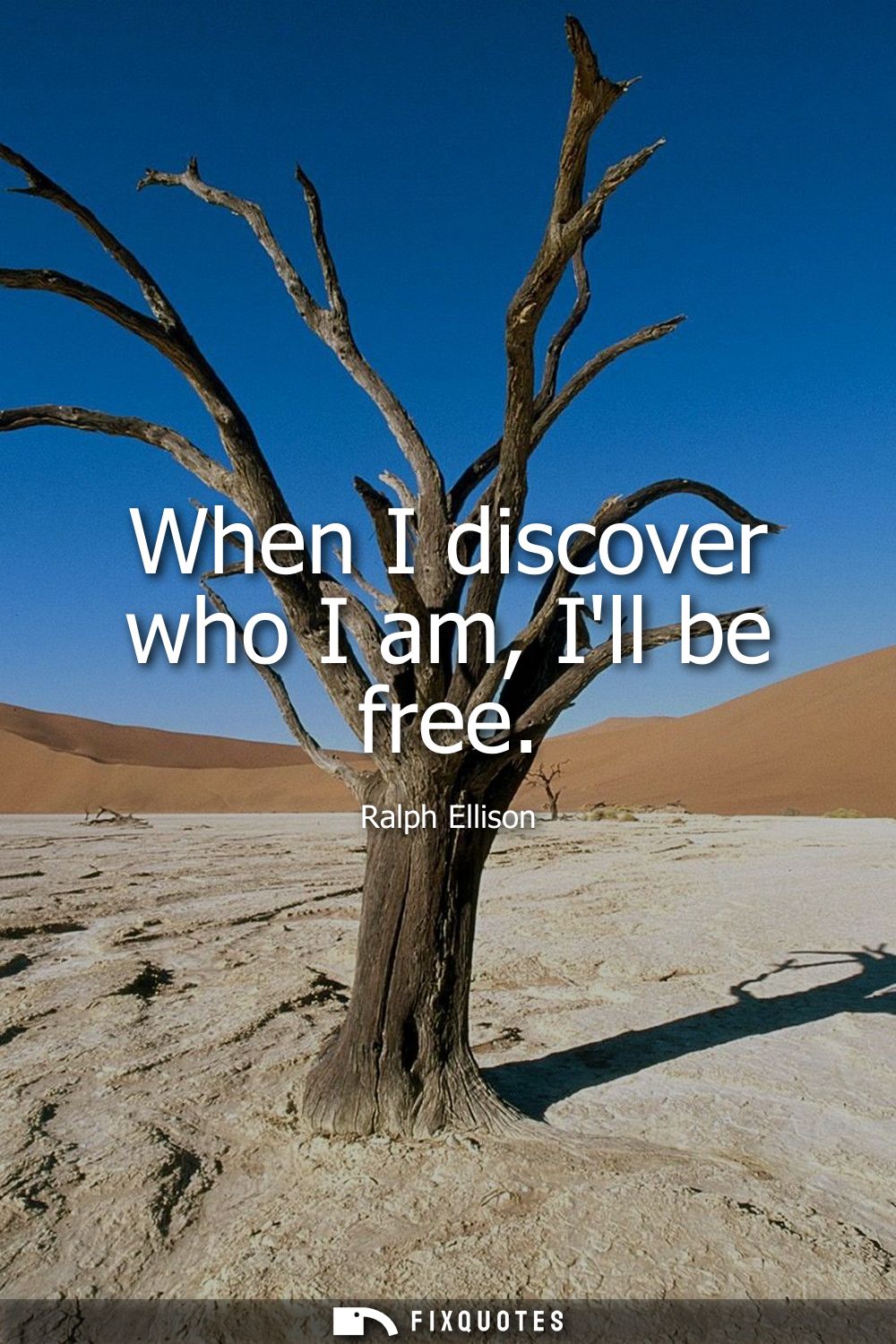
"When I discover who I am, I'll be free"
About this Quote
Freedom, Ellison suggests, isn’t a destination you reach by outrunning oppression; it’s a condition you fight to claim by naming yourself. “When I discover who I am, I’ll be free” sounds like an almost private vow, but the sentence is wired with public consequences. The “when” delays liberation, making it contingent on self-knowledge in a world designed to scramble your reflection. Ellison’s genius is that he turns identity into a battleground rather than a birthright.
In the context of Invisible Man, the line lands as both aspiration and indictment. The narrator’s problem isn’t a lack of personality; it’s a surplus of projections. He is “seen” constantly and recognized rarely, pressed into roles that flatter institutions: the grateful student, the useful spokesman, the symbolic Black body that others can read without listening. Ellison treats identity as something negotiated under coercion, where every available label comes with strings attached.
The subtext is quietly brutal: if your society controls the terms of your visibility, discovering “who I am” becomes an act of political resistance, not self-care. Ellison also sneaks in a warning about the seductive traps of collective identities that promise instant belonging. They can be shelter, but they can also become another script.
The line works because it refuses easy victory. “I’ll be free” isn’t triumphal; it’s conditional, almost haunted. Ellison leaves you with the discomforting idea that liberation can be postponed indefinitely if the world won’t let you author the story of yourself.
In the context of Invisible Man, the line lands as both aspiration and indictment. The narrator’s problem isn’t a lack of personality; it’s a surplus of projections. He is “seen” constantly and recognized rarely, pressed into roles that flatter institutions: the grateful student, the useful spokesman, the symbolic Black body that others can read without listening. Ellison treats identity as something negotiated under coercion, where every available label comes with strings attached.
The subtext is quietly brutal: if your society controls the terms of your visibility, discovering “who I am” becomes an act of political resistance, not self-care. Ellison also sneaks in a warning about the seductive traps of collective identities that promise instant belonging. They can be shelter, but they can also become another script.
The line works because it refuses easy victory. “I’ll be free” isn’t triumphal; it’s conditional, almost haunted. Ellison leaves you with the discomforting idea that liberation can be postponed indefinitely if the world won’t let you author the story of yourself.
Quote Details
| Topic | Self-Improvement |
|---|---|
| Source | Help us find the source |
| Cite |
Citation Formats
APA Style (7th ed.)
Ellison, Ralph. (2026, January 16). When I discover who I am, I'll be free. FixQuotes. https://fixquotes.com/quotes/when-i-discover-who-i-am-ill-be-free-109772/
Chicago Style
Ellison, Ralph. "When I discover who I am, I'll be free." FixQuotes. January 16, 2026. https://fixquotes.com/quotes/when-i-discover-who-i-am-ill-be-free-109772/.
MLA Style (9th ed.)
"When I discover who I am, I'll be free." FixQuotes, 16 Jan. 2026, https://fixquotes.com/quotes/when-i-discover-who-i-am-ill-be-free-109772/. Accessed 18 Feb. 2026.
More Quotes by Ralph
Add to List