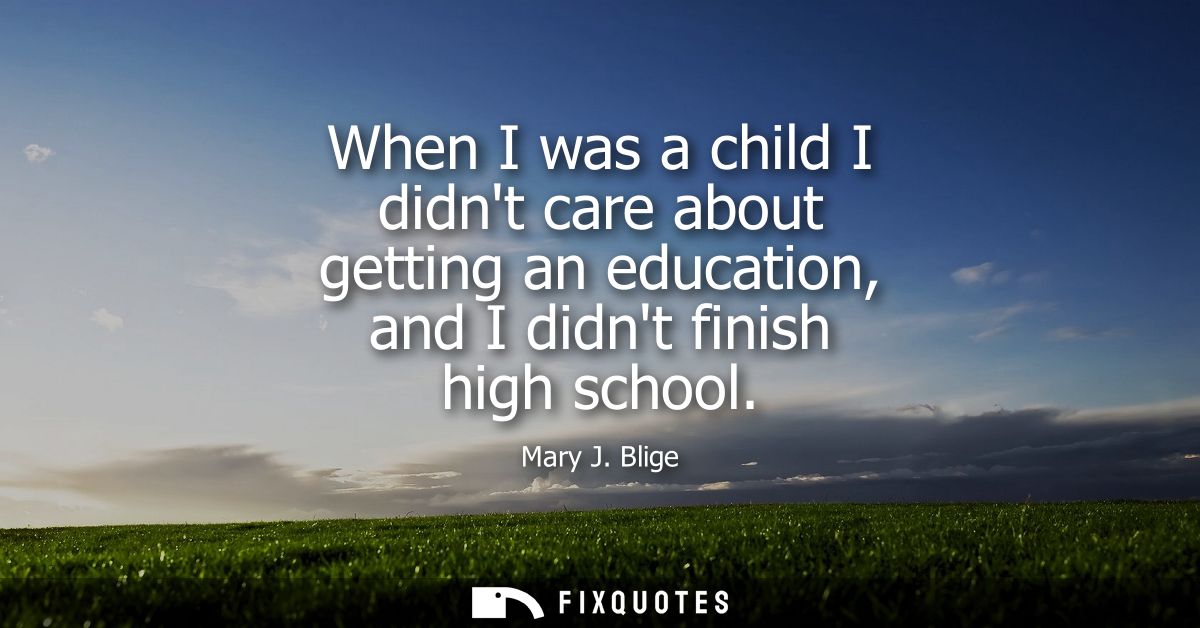
"When I was a child I didn't care about getting an education, and I didn't finish high school"
About this Quote
The subtext is classed and gendered even if it never names those pressures. "Didn't care" can be a child's language for what adults later recognize as scarcity, instability, trauma, or a school system that doesn’t feel designed for you. By phrasing it without excuses, Blige sidesteps the performance of respectability. She refuses the neat "I made one mistake but I’m still virtuous" script, which is exactly why the confession feels credible.
Context matters: Blige emerges from an era and industry where formal credentials often have less currency than survival skills, charisma, and relentless work. Her admission also plays against the tidy celebrity expectation of offering inspirational platitudes. Instead, she offers something harder and more useful: a reminder that talent can be real and still collide with circumstance, that ambition can arrive late, and that an education story can be complicated without being a cautionary tale.
Quote Details
| Topic | Learning |
|---|---|
| Source | Help us find the source |
| Cite |
Citation Formats
APA Style (7th ed.)
Blige, Mary J. (2026, January 16). When I was a child I didn't care about getting an education, and I didn't finish high school. FixQuotes. https://fixquotes.com/quotes/when-i-was-a-child-i-didnt-care-about-getting-an-95681/
Chicago Style
Blige, Mary J. "When I was a child I didn't care about getting an education, and I didn't finish high school." FixQuotes. January 16, 2026. https://fixquotes.com/quotes/when-i-was-a-child-i-didnt-care-about-getting-an-95681/.
MLA Style (9th ed.)
"When I was a child I didn't care about getting an education, and I didn't finish high school." FixQuotes, 16 Jan. 2026, https://fixquotes.com/quotes/when-i-was-a-child-i-didnt-care-about-getting-an-95681/. Accessed 12 Feb. 2026.