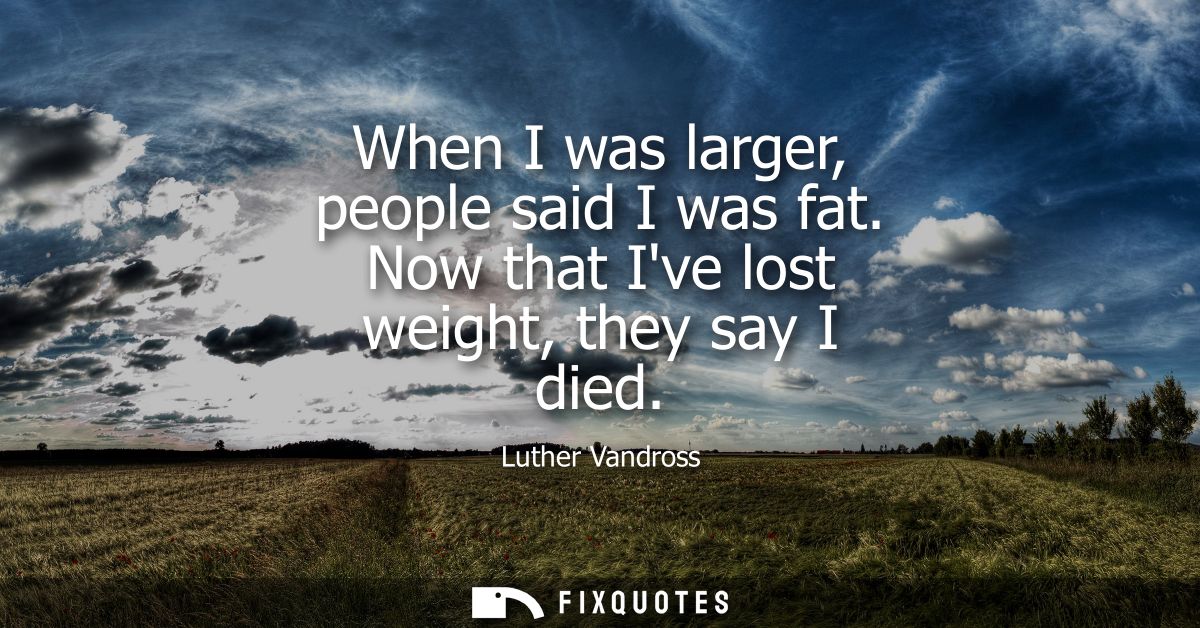
"When I was larger, people said I was fat. Now that I've lost weight, they say I died"
About this Quote
The subtext is a quiet accusation: people weren’t really worried about health, they were addicted to verdicts. Vandross frames criticism as a kind of sport that requires a target, so the target stays the same even when the facts change. “They say” is doing a lot of work, too. It’s a shrug toward the faceless chorus - tabloids, callers, casual acquaintances - a reminder that the cruelty is distributed, deniable, and therefore endless.
In context, it reads like a veteran performer’s hard-earned clarity about what gets consumed alongside the music. Vandross was a master of intimate, controlled emotion in his voice; here, he uses the same control to make a public point without begging for sympathy. The line doesn’t ask you to pity him. It asks why the culture insists on narrating artists’ bodies as morality tales, and why we keep confusing our commentary with concern.
Quote Details
| Topic | Witty One-Liners |
|---|---|
| Source | Help us find the source |
| Cite |
Citation Formats
APA Style (7th ed.)
Vandross, Luther. (2026, January 16). When I was larger, people said I was fat. Now that I've lost weight, they say I died. FixQuotes. https://fixquotes.com/quotes/when-i-was-larger-people-said-i-was-fat-now-that-131283/
Chicago Style
Vandross, Luther. "When I was larger, people said I was fat. Now that I've lost weight, they say I died." FixQuotes. January 16, 2026. https://fixquotes.com/quotes/when-i-was-larger-people-said-i-was-fat-now-that-131283/.
MLA Style (9th ed.)
"When I was larger, people said I was fat. Now that I've lost weight, they say I died." FixQuotes, 16 Jan. 2026, https://fixquotes.com/quotes/when-i-was-larger-people-said-i-was-fat-now-that-131283/. Accessed 4 Apr. 2026.