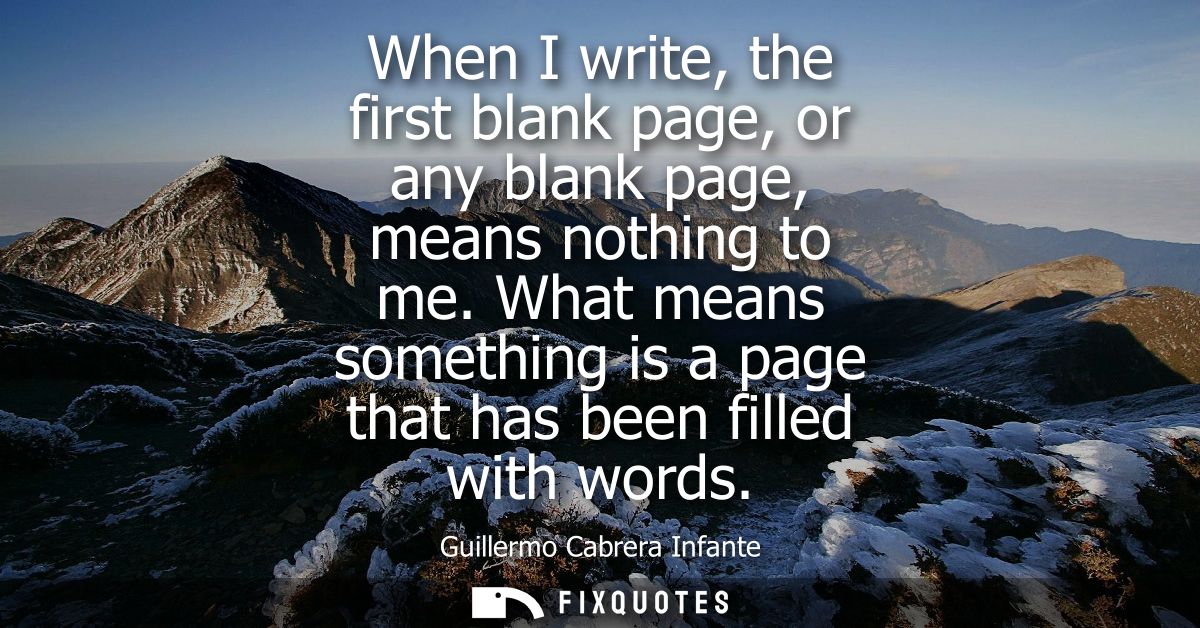
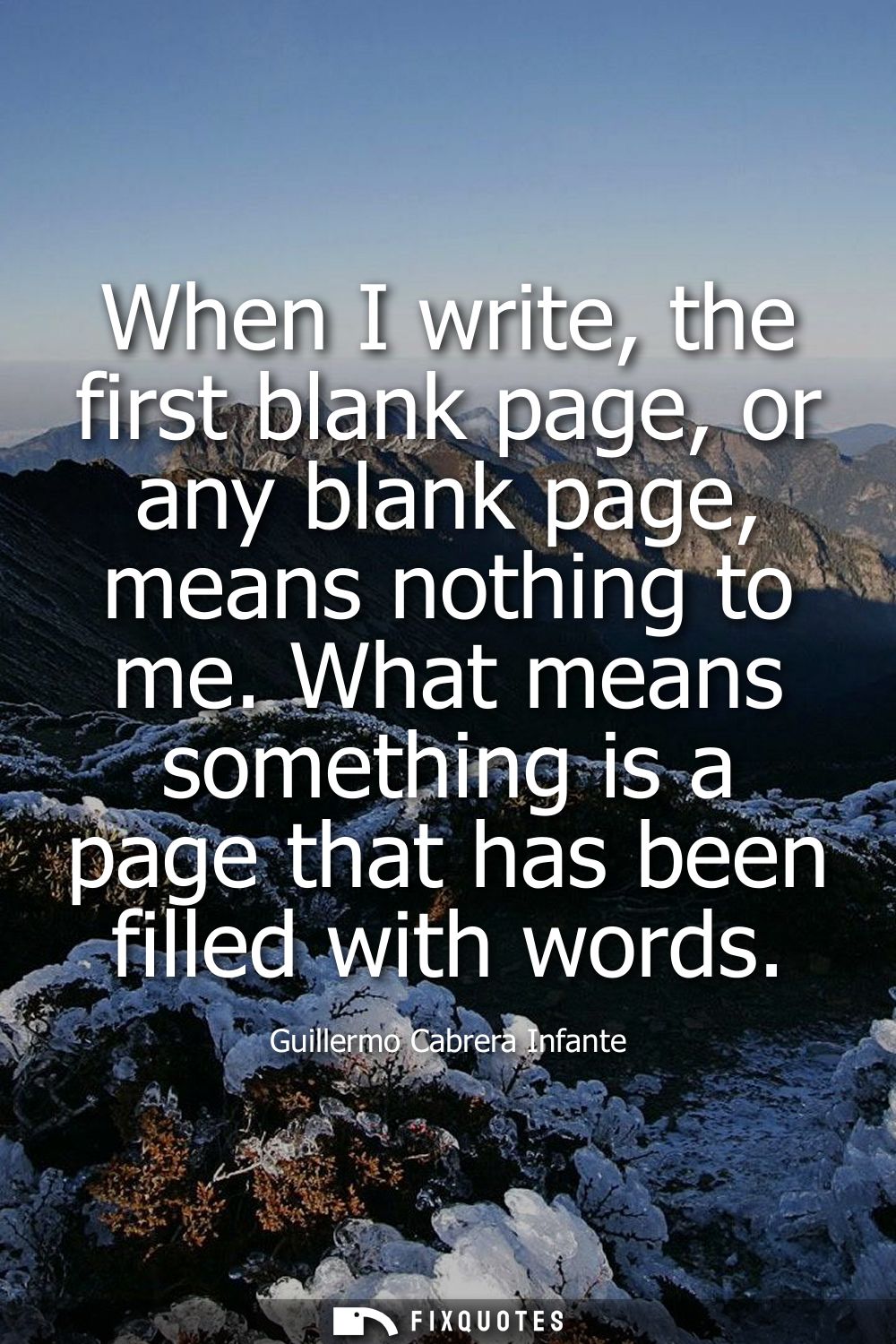
"When I write, the first blank page, or any blank page, means nothing to me. What means something is a page that has been filled with words"
About this Quote
The subtext is combative, even a little Cuban. Cabrera Infante’s life was shaped by ruptures - revolution, censorship, exile, the long distance between Havana and London. In that world, the blank page can read like erasure: what the state deletes, what history overwrites, what displacement makes unsayable. A filled page becomes a kind of proof of existence, a private counter-archive. Not “inspiration,” but evidence.
He also sneaks in a sly demystification of authorship. “The first blank page, or any blank page” collapses the beginning’s supposed magic. There is no pristine start, just the same demand each time: put words down and let them accrue consequence. Coming from a novelist famous for linguistic play - puns, riffs, the sonic pleasure of Spanish - this is not a utilitarian stance. It’s an insistence that the real drama is not staring into possibility; it’s wrestling meaning out of noise, then living with what you’ve made.
The intent is almost ethical: stop worshipping potential. Commit to the messy, accountable reality of sentences.
Quote Details
| Topic | Writing |
|---|---|
| Source | Help us find the source |
| Cite |
Citation Formats
APA Style (7th ed.)
Infante, Guillermo Cabrera. (2026, January 15). When I write, the first blank page, or any blank page, means nothing to me. What means something is a page that has been filled with words. FixQuotes. https://fixquotes.com/quotes/when-i-write-the-first-blank-page-or-any-blank-148485/
Chicago Style
Infante, Guillermo Cabrera. "When I write, the first blank page, or any blank page, means nothing to me. What means something is a page that has been filled with words." FixQuotes. January 15, 2026. https://fixquotes.com/quotes/when-i-write-the-first-blank-page-or-any-blank-148485/.
MLA Style (9th ed.)
"When I write, the first blank page, or any blank page, means nothing to me. What means something is a page that has been filled with words." FixQuotes, 15 Jan. 2026, https://fixquotes.com/quotes/when-i-write-the-first-blank-page-or-any-blank-148485/. Accessed 30 Mar. 2026.