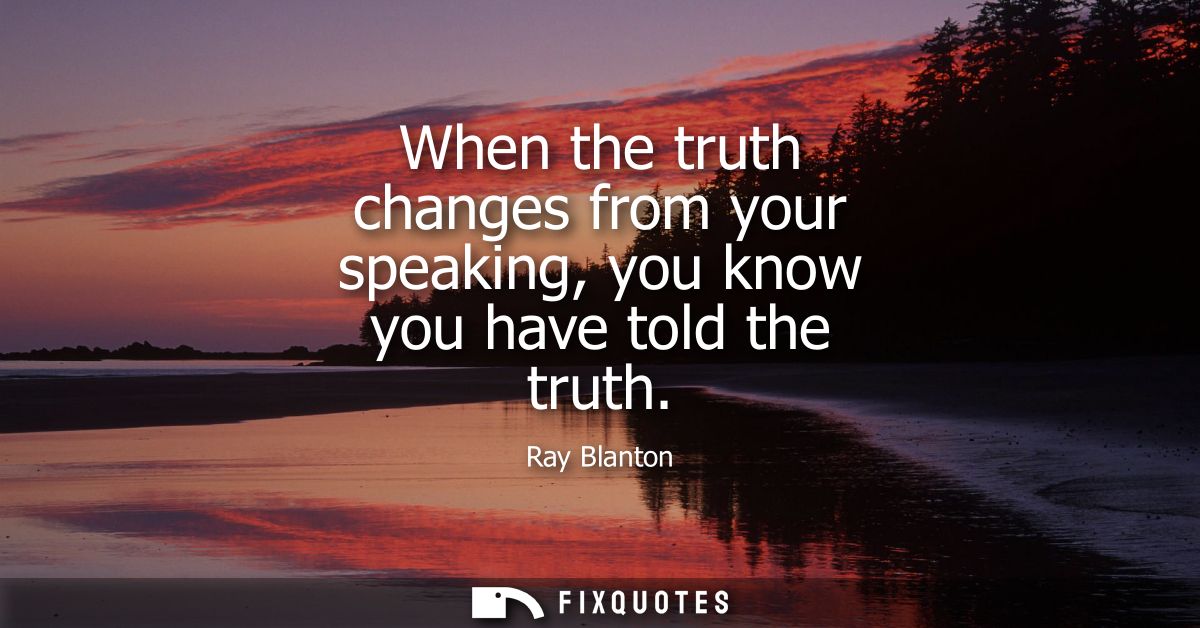
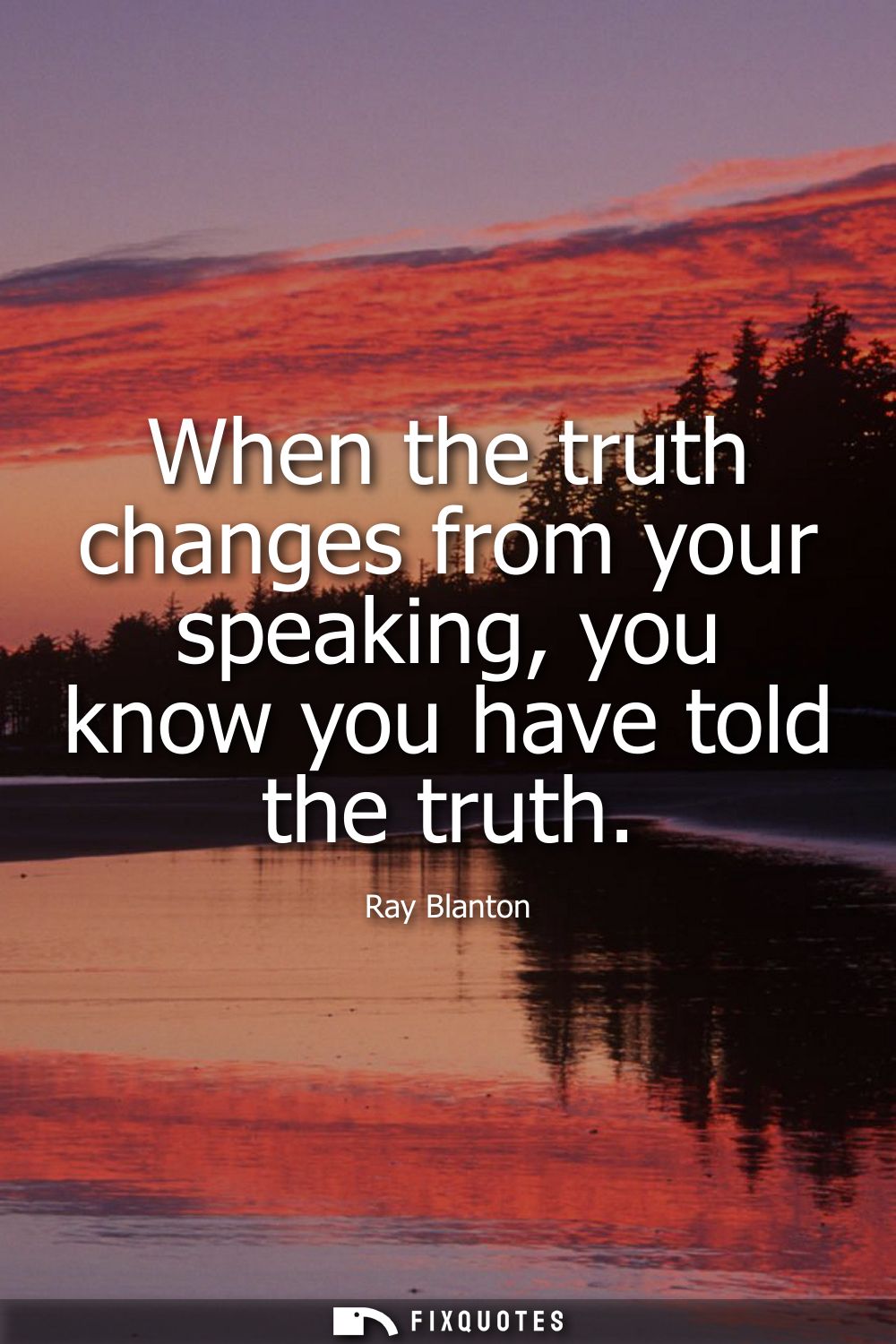
"When the truth changes from your speaking, you know you have told the truth"
About this Quote
The phrasing also carries a slippery, politician’s alibi. “Changes” is doing suspiciously broad work. Does the truth change because you revealed hidden information? Or because you’ve successfully reframed the narrative and made everyone repeat your version? Blanton’s sentence quietly blurs those possibilities, letting persuasion masquerade as honesty. It’s a neat trick: if people react, if the room shifts, if headlines follow, then you “know” you were truthful. In practice that’s indistinguishable from saying: if it lands, it’s true.
Context matters because Blanton wasn’t a philosopher; he was a mid-century Southern power broker who rose in an era when “truth” in politics often meant control of the story, control of the courthouse, control of who counts. Read that way, the quote becomes an accidental confession of political reality: public truth is not discovered, it’s negotiated, asserted, and enforced. The subtext isn’t moral courage. It’s the boast of someone who believes words don’t just describe power - they are power.
Quote Details
| Topic | Truth |
|---|---|
| Source | Help us find the source |
| Cite |
Citation Formats
APA Style (7th ed.)
Blanton, Ray. (2026, January 16). When the truth changes from your speaking, you know you have told the truth. FixQuotes. https://fixquotes.com/quotes/when-the-truth-changes-from-your-speaking-you-137148/
Chicago Style
Blanton, Ray. "When the truth changes from your speaking, you know you have told the truth." FixQuotes. January 16, 2026. https://fixquotes.com/quotes/when-the-truth-changes-from-your-speaking-you-137148/.
MLA Style (9th ed.)
"When the truth changes from your speaking, you know you have told the truth." FixQuotes, 16 Jan. 2026, https://fixquotes.com/quotes/when-the-truth-changes-from-your-speaking-you-137148/. Accessed 27 Mar. 2026.