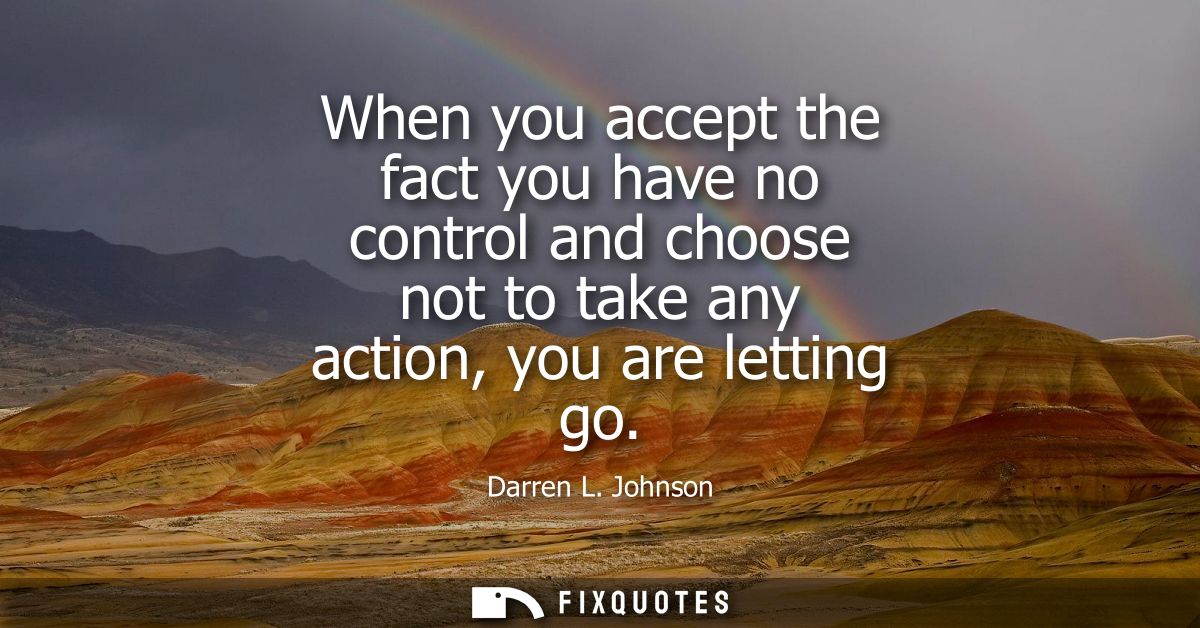
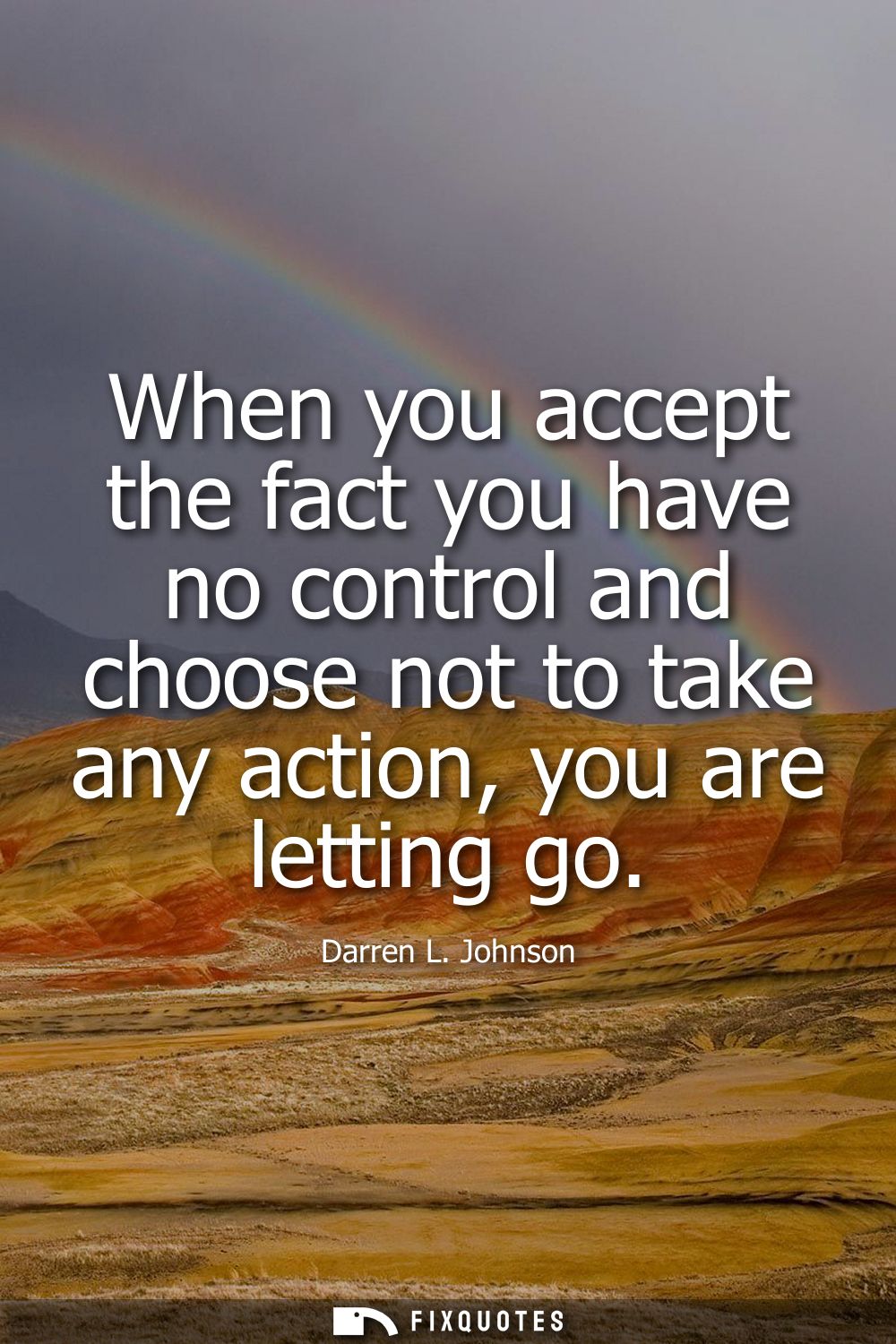
"When you accept the fact you have no control and choose not to take any action, you are letting go"
About this Quote
The subtext is therapeutic and contemporary: the language echoes mindfulness, recovery culture, and the broader self-help idea that the only real sovereignty is over your response. “No control” isn’t just about external events; it nods to relationships, grief, chronic stress, even addiction - domains where control fantasies are costly. The quote’s implied antagonist is compulsive fixing: the need to intervene, explain, chase closure, keep spinning the wheel because movement feels safer than stillness.
At the same time, it’s an intentionally softened ethic. “Choose not to take any action” can read as permission to step away from what’s genuinely out of reach - but it can also become a convenient alibi when action is uncomfortable rather than impossible. The line works because it flatters the reader with a paradox: by relinquishing control, you regain it. Letting go becomes less about losing and more about opting out of a rigged game.
Quote Details
| Topic | Letting Go |
|---|---|
| Source | Help us find the source |
| Cite | Cite this Quote |
Citation Formats
APA Style (7th ed.)
Johnson, Darren L. (2026, January 16). When you accept the fact you have no control and choose not to take any action, you are letting go. FixQuotes. https://fixquotes.com/quotes/when-you-accept-the-fact-you-have-no-control-and-86670/
Chicago Style
Johnson, Darren L. "When you accept the fact you have no control and choose not to take any action, you are letting go." FixQuotes. January 16, 2026. https://fixquotes.com/quotes/when-you-accept-the-fact-you-have-no-control-and-86670/.
MLA Style (9th ed.)
"When you accept the fact you have no control and choose not to take any action, you are letting go." FixQuotes, 16 Jan. 2026, https://fixquotes.com/quotes/when-you-accept-the-fact-you-have-no-control-and-86670/. Accessed 4 Feb. 2026.