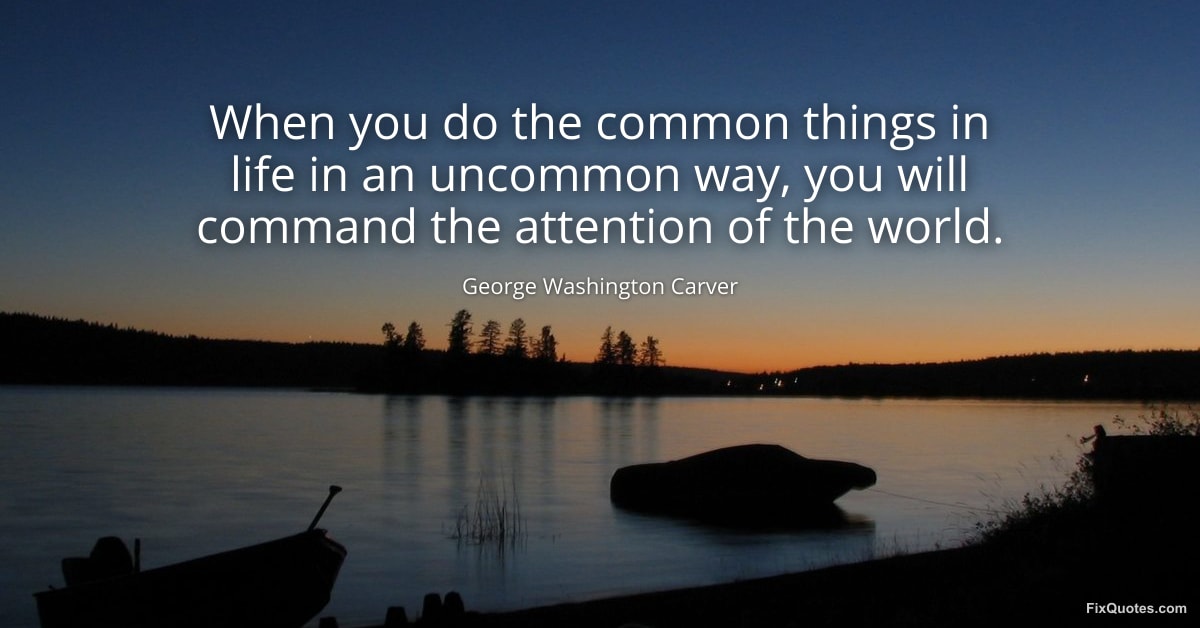
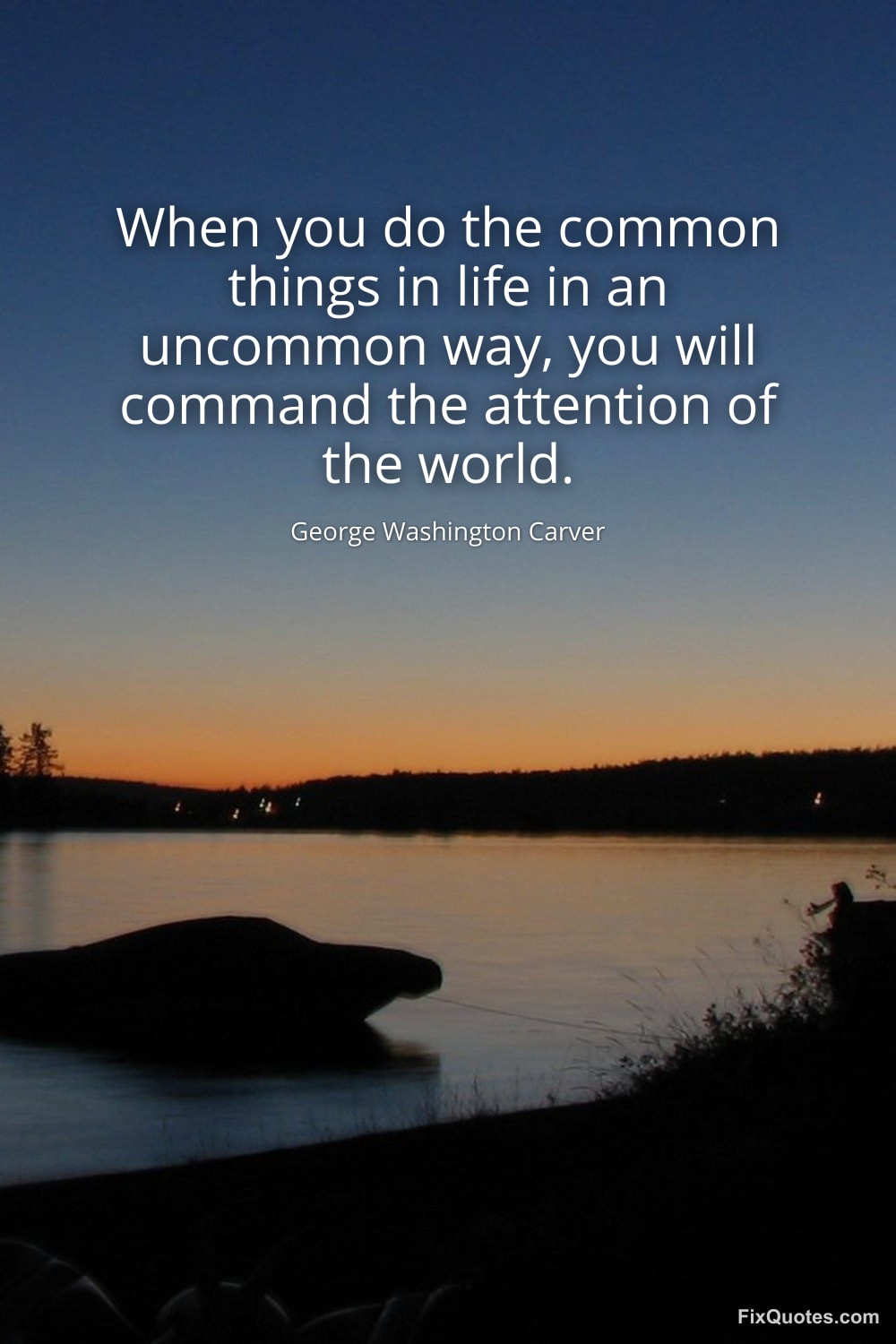
"When you do the common things in life in an uncommon way, you will command the attention of the world"
About this Quote
The subtext is both aspirational and defensive. Carver is insisting that excellence can’t be dismissed as novelty if it’s woven into the mundane. Do the ordinary “uncommonly” and you create a spectacle of competence that forces recognition. That word, “command,” matters: it’s not “earn” or “receive.” It carries a quiet audacity, a refusal to beg for legitimacy in a culture designed to ration it.
Context turns the advice into a survival tactic. Carver’s work at Tuskegee was aimed at improving the lives of poor Southern farmers through practical science. He’s telling audiences that innovation isn’t just breakthroughs in elite spaces; it’s craftsmanship, method, and imaginative rigor applied to the daily grind. Attention, in his framing, becomes a lever: a way to translate overlooked labor into influence, and influence into change.
Quote Details
| Topic | Motivational |
|---|---|
| Source | Help us find the source |
| Cite |
Citation Formats
APA Style (7th ed.)
Carver, George Washington. (2026, January 18). When you do the common things in life in an uncommon way, you will command the attention of the world. FixQuotes. https://fixquotes.com/quotes/when-you-do-the-common-things-in-life-in-an-16215/
Chicago Style
Carver, George Washington. "When you do the common things in life in an uncommon way, you will command the attention of the world." FixQuotes. January 18, 2026. https://fixquotes.com/quotes/when-you-do-the-common-things-in-life-in-an-16215/.
MLA Style (9th ed.)
"When you do the common things in life in an uncommon way, you will command the attention of the world." FixQuotes, 18 Jan. 2026, https://fixquotes.com/quotes/when-you-do-the-common-things-in-life-in-an-16215/. Accessed 5 Feb. 2026.