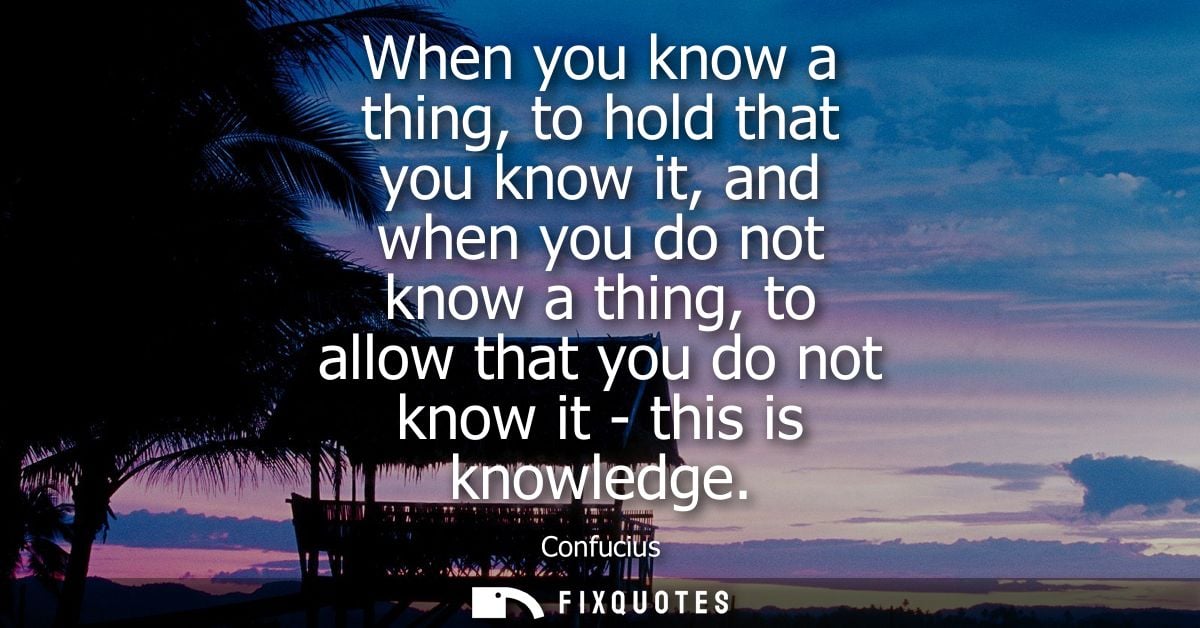
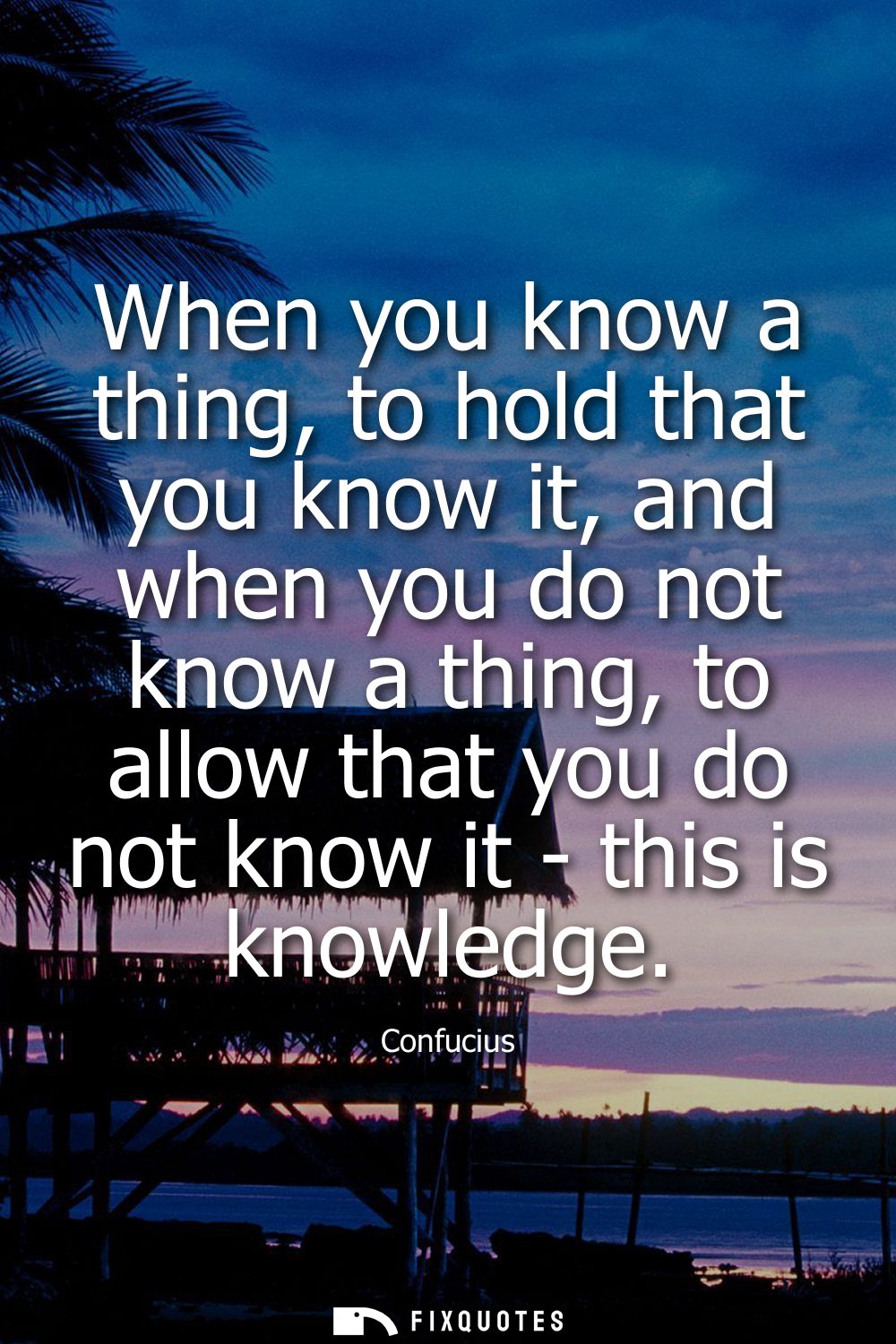
"When you know a thing, to hold that you know it, and when you do not know a thing, to allow that you do not know it - this is knowledge"
About this Quote
The intent is practical and political. In Confucius’ world, status and authority were tightly braided to speech: officials advised rulers, students competed for prestige, reputations traveled by word of mouth. Pretending to know wasn’t a harmless ego trip; it was a civic hazard. Bad counsel, misapplied ritual, and face-saving certainty could ripple into real governance failures. So the quote quietly elevates epistemic humility into a public virtue.
The subtext cuts against two temptations at once. One is vanity: the need to appear competent even when you’re guessing. The other is cowardice: hiding behind “I don’t know” to avoid responsibility. Confucius doesn’t reward ignorance; he rewards accurate self-assessment. “To hold that you know it” implies commitment and accountability, not vibes. If you claim knowledge, you’re on the hook to act rightly. If you don’t know, admitting it becomes the first step in learning and in seeking proper counsel.
That’s why it works rhetorically: it defines wisdom as integrity under scrutiny, a calibration of certainty. It’s an ethics of saying the true size of your understanding - and refusing to inflate it for applause.
Quote Details
| Topic | Knowledge |
|---|---|
| Source | Analects (Lunyu), Book 2, Chapter 17 — Confucius. Common translation: "To know what you know, and to know what you do not know, that is true knowledge." (classical source: Analects 2.17; e.g., James Legge translation) |
| Cite |
Citation Formats
APA Style (7th ed.)
Confucius. (2026, January 15). When you know a thing, to hold that you know it, and when you do not know a thing, to allow that you do not know it - this is knowledge. FixQuotes. https://fixquotes.com/quotes/when-you-know-a-thing-to-hold-that-you-know-it-35936/
Chicago Style
Confucius. "When you know a thing, to hold that you know it, and when you do not know a thing, to allow that you do not know it - this is knowledge." FixQuotes. January 15, 2026. https://fixquotes.com/quotes/when-you-know-a-thing-to-hold-that-you-know-it-35936/.
MLA Style (9th ed.)
"When you know a thing, to hold that you know it, and when you do not know a thing, to allow that you do not know it - this is knowledge." FixQuotes, 15 Jan. 2026, https://fixquotes.com/quotes/when-you-know-a-thing-to-hold-that-you-know-it-35936/. Accessed 12 Feb. 2026.