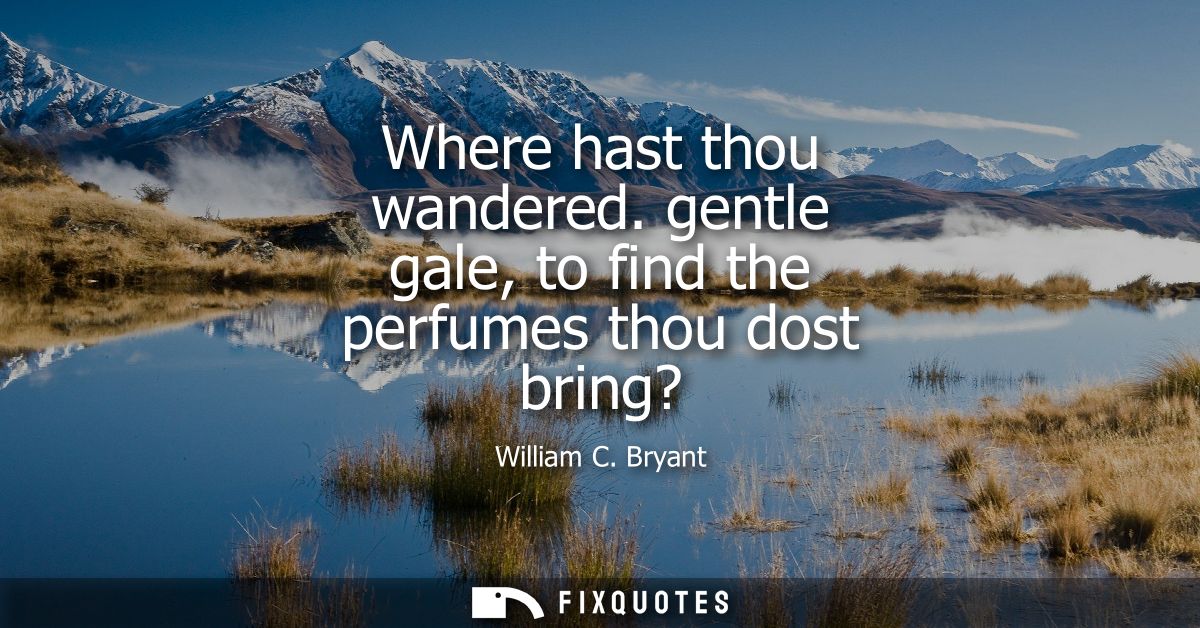
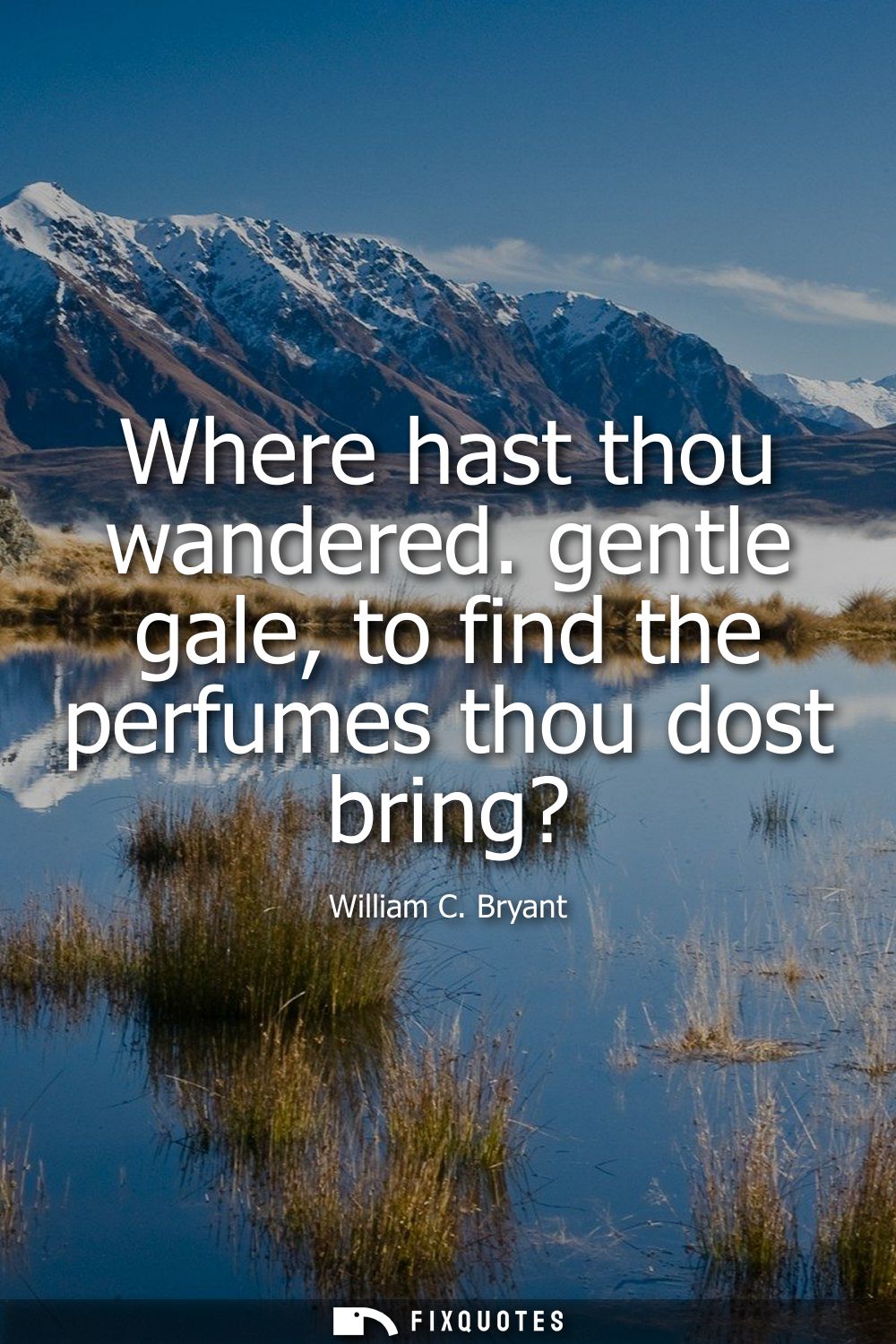
"Where hast thou wandered, gentle gale, to find the perfumes thou dost bring?"
About this Quote
The verb “wandered” matters. It suggests freedom rather than function, a drifting intelligence rather than a mechanical weather system. That choice softens the scene into longing: the speaker doesn’t merely notice scent on the air; he wants to know the wind’s backstory, the secret geography of where beauty originates. “Perfumes” carries a double charge, too. It’s sensual, immediate, almost bodily, but it also implies refinement and artifice, as though the natural world is performing culture for us. The question quietly collapses that boundary.
Contextually, Bryant sits at the early crest of American Romanticism, when poets were trying to make the New World feel spiritually legible without borrowing Europe’s ruins and cathedrals. If you can’t point to ancient monuments, you elevate atmosphere, season, and sensation into your heritage. The subtext is a kind of devotional homesickness: the desire for a source, a garden, a “where” behind the pleasure. By addressing the gale, Bryant turns an ordinary breeze into evidence that the world has hidden corridors - and that poetry is the act of asking for their address.
Quote Details
| Topic | Nature |
|---|---|
| Source | Help us find the source |
| Cite |
Citation Formats
APA Style (7th ed.)
Bryant, William C. (2026, February 17). Where hast thou wandered, gentle gale, to find the perfumes thou dost bring? FixQuotes. https://fixquotes.com/quotes/where-hast-thou-wandered-gentle-gale-to-find-the-96502/
Chicago Style
Bryant, William C. "Where hast thou wandered, gentle gale, to find the perfumes thou dost bring?" FixQuotes. February 17, 2026. https://fixquotes.com/quotes/where-hast-thou-wandered-gentle-gale-to-find-the-96502/.
MLA Style (9th ed.)
"Where hast thou wandered, gentle gale, to find the perfumes thou dost bring?" FixQuotes, 17 Feb. 2026, https://fixquotes.com/quotes/where-hast-thou-wandered-gentle-gale-to-find-the-96502/. Accessed 5 Apr. 2026.