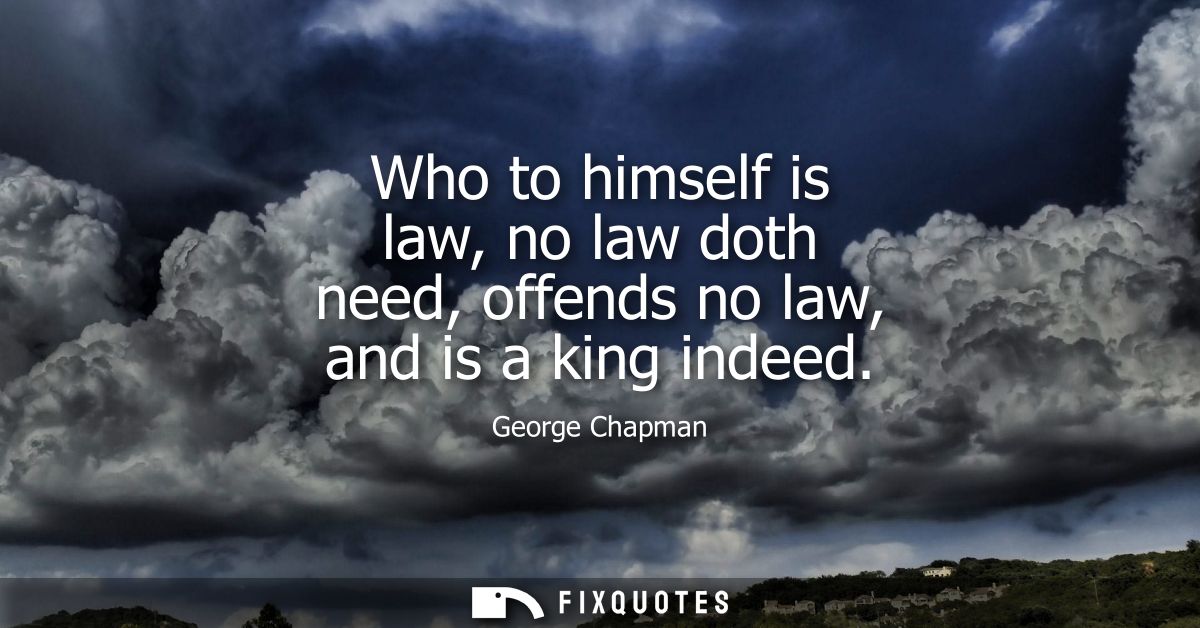
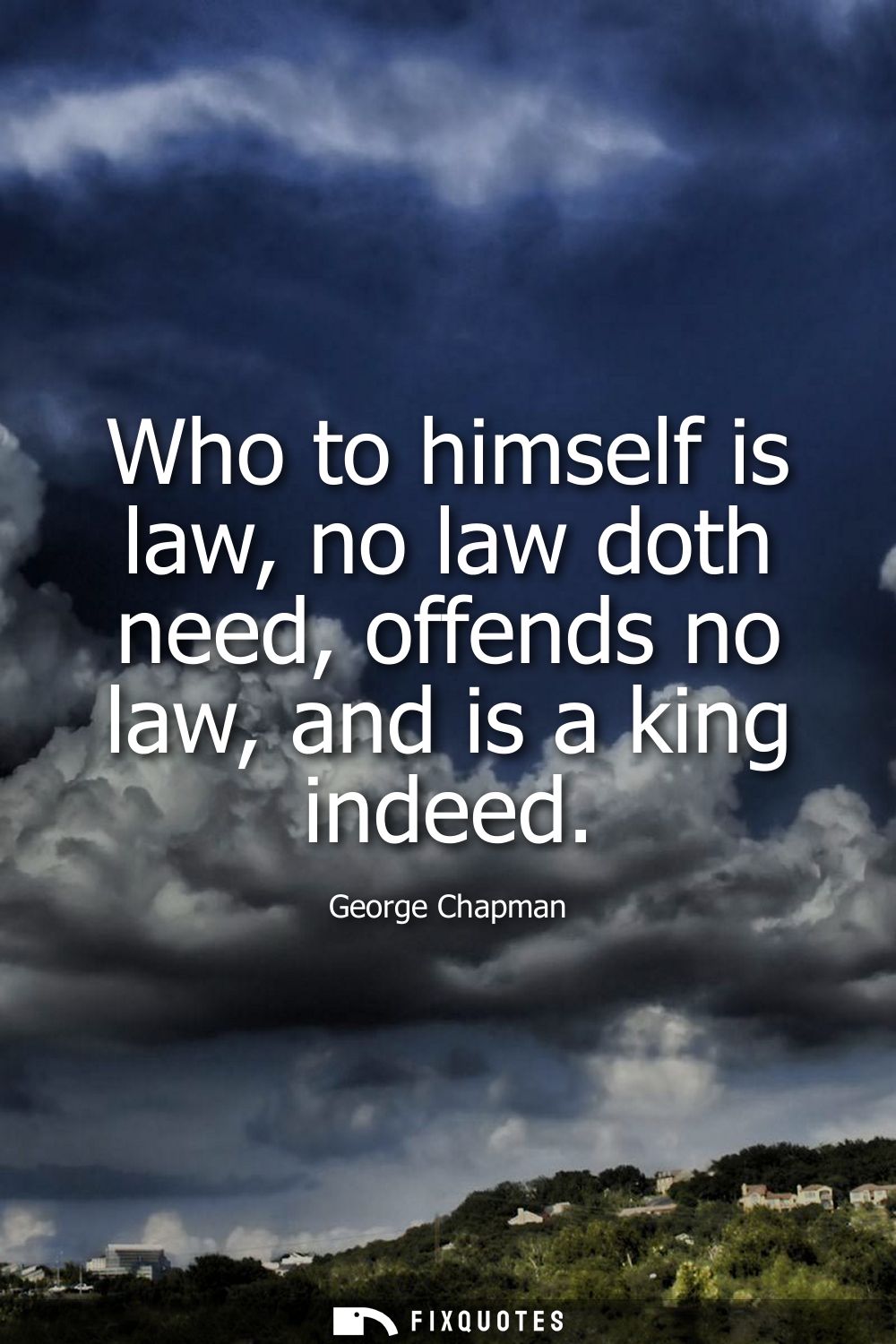
"Who to himself is law, no law doth need, offends no law, and is a king indeed"
About this Quote
The subtext is quietly political. Writing in an England anxious about order, succession, and the fragile legitimacy of power, Chapman offers a daring consolation: kingship can be ethical rather than hereditary. Yet he also hedges. By defining the “king indeed” as someone who “offends no law,” he reassures the state that inward freedom won’t translate into public disorder. The ideal subject becomes so self-possessed that he becomes the regime’s dream citizen: autonomous, yes, but predictably lawful.
What makes it work is the braid of paradox and aspiration. Chapman lifts the reader into sovereignty, then pins that sovereignty to restraint. The rhetoric is compact and ceremonial, echoing proverbial wisdom while smuggling in a humanist ethic: virtue as self-mastery. In an era when “law” often meant the will of powerful men, Chapman’s line proposes a radical metric for legitimacy: not the power to command others, but the power to command oneself.
Quote Details
| Topic | Ethics & Morality |
|---|---|
| Source | Help us find the source |
| Cite |
Citation Formats
APA Style (7th ed.)
Chapman, George. (2026, January 15). Who to himself is law, no law doth need, offends no law, and is a king indeed. FixQuotes. https://fixquotes.com/quotes/who-to-himself-is-law-no-law-doth-need-offends-no-158304/
Chicago Style
Chapman, George. "Who to himself is law, no law doth need, offends no law, and is a king indeed." FixQuotes. January 15, 2026. https://fixquotes.com/quotes/who-to-himself-is-law-no-law-doth-need-offends-no-158304/.
MLA Style (9th ed.)
"Who to himself is law, no law doth need, offends no law, and is a king indeed." FixQuotes, 15 Jan. 2026, https://fixquotes.com/quotes/who-to-himself-is-law-no-law-doth-need-offends-no-158304/. Accessed 12 Feb. 2026.