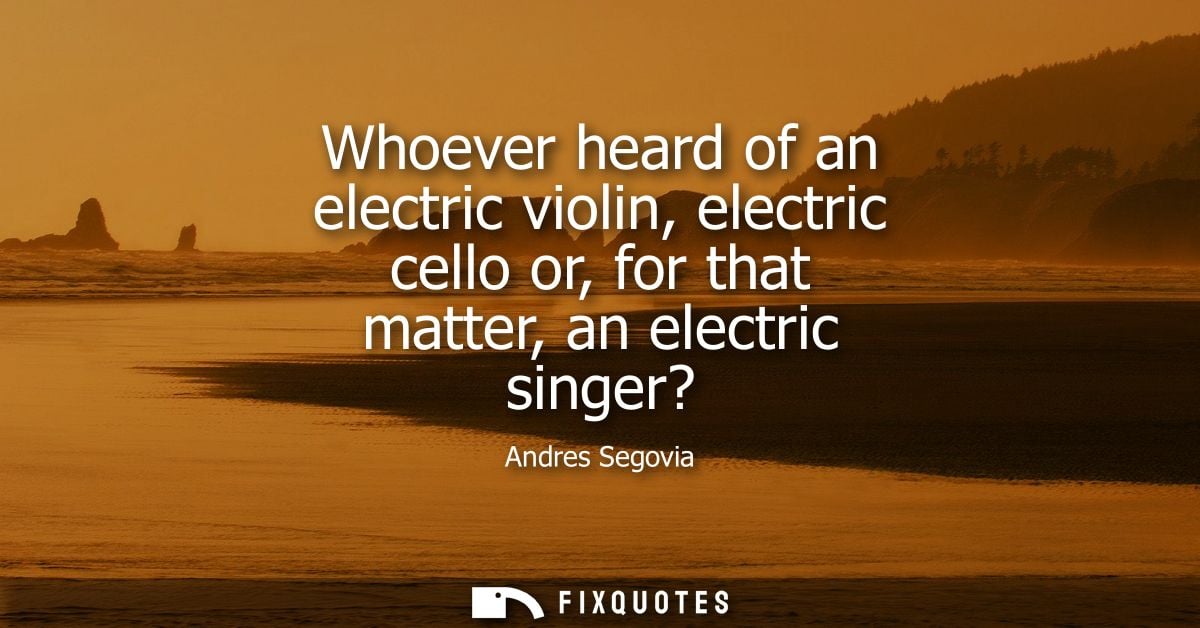
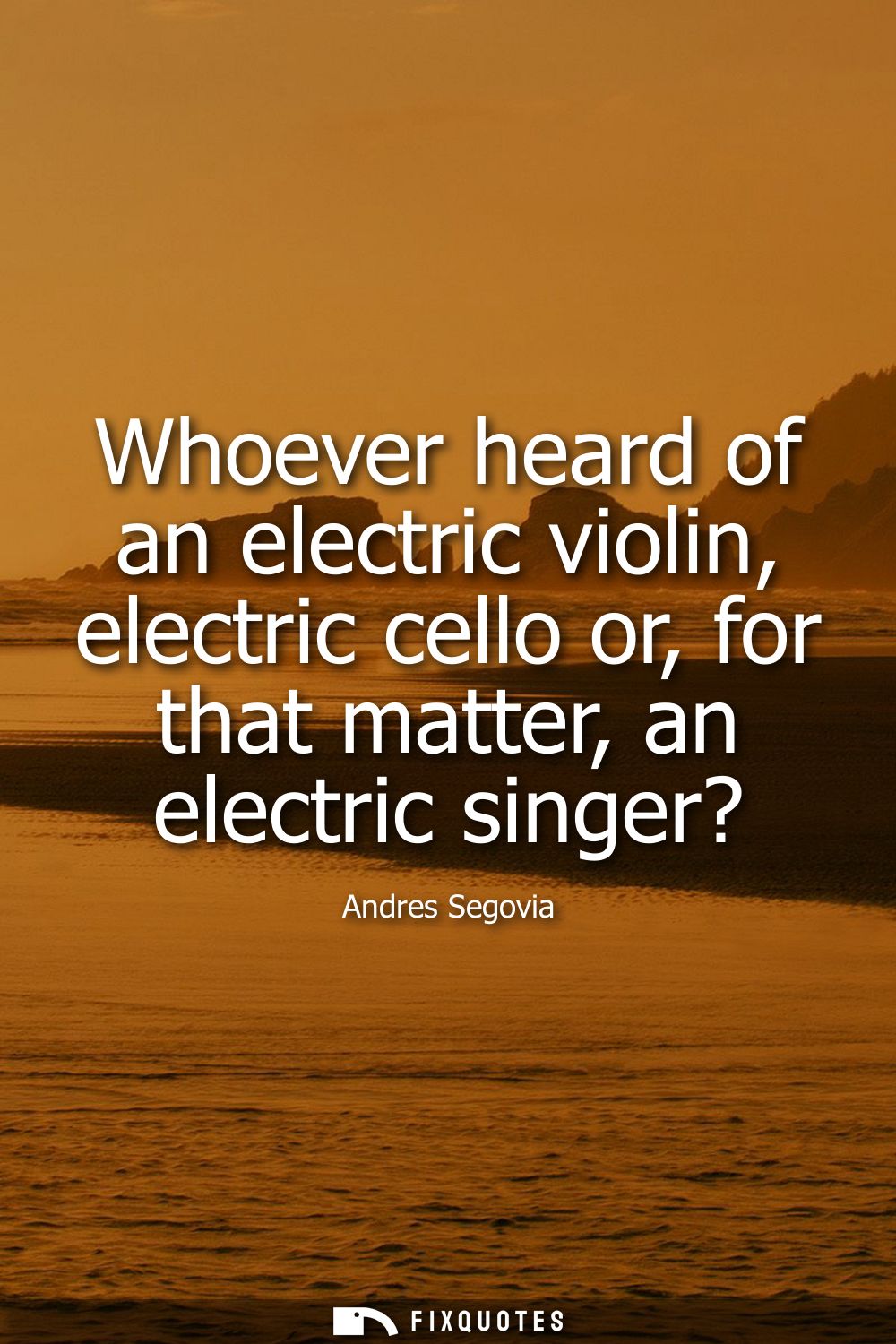
"Whoever heard of an electric violin, electric cello or, for that matter, an electric singer?"
About this Quote
The context is mid-century anxiety over the guitar’s identity. Segovia spent his life hauling the instrument into concert halls that treated it like a parlor toy. Amplification threatened to drag it back toward the tavern, the dance bandstand, the noisy marketplace. His question is a defensive cultural move: protect the guitar’s hard-won “serious” status by policing its volume and its associations. Electricity here isn’t just current; it’s modernity, mass culture, and the unsettling idea that sound can be engineered rather than earned.
There’s also a quiet self-portrait in the line. Segovia believed tone is moral: touch, wood, room, and restraint. An electric guitar short-circuits that ethos by making power portable. History’s punchline is that we did, in fact, get electric singers - via microphones, studio processing, Auto-Tune - and the world didn’t end. It just got louder, stranger, and more democratic than Segovia wanted.
Quote Details
| Topic | Music |
|---|---|
| Source | Help us find the source |
| Cite |
Citation Formats
APA Style (7th ed.)
Segovia, Andres. (2026, January 17). Whoever heard of an electric violin, electric cello or, for that matter, an electric singer? FixQuotes. https://fixquotes.com/quotes/whoever-heard-of-an-electric-violin-electric-38227/
Chicago Style
Segovia, Andres. "Whoever heard of an electric violin, electric cello or, for that matter, an electric singer?" FixQuotes. January 17, 2026. https://fixquotes.com/quotes/whoever-heard-of-an-electric-violin-electric-38227/.
MLA Style (9th ed.)
"Whoever heard of an electric violin, electric cello or, for that matter, an electric singer?" FixQuotes, 17 Jan. 2026, https://fixquotes.com/quotes/whoever-heard-of-an-electric-violin-electric-38227/. Accessed 12 Feb. 2026.