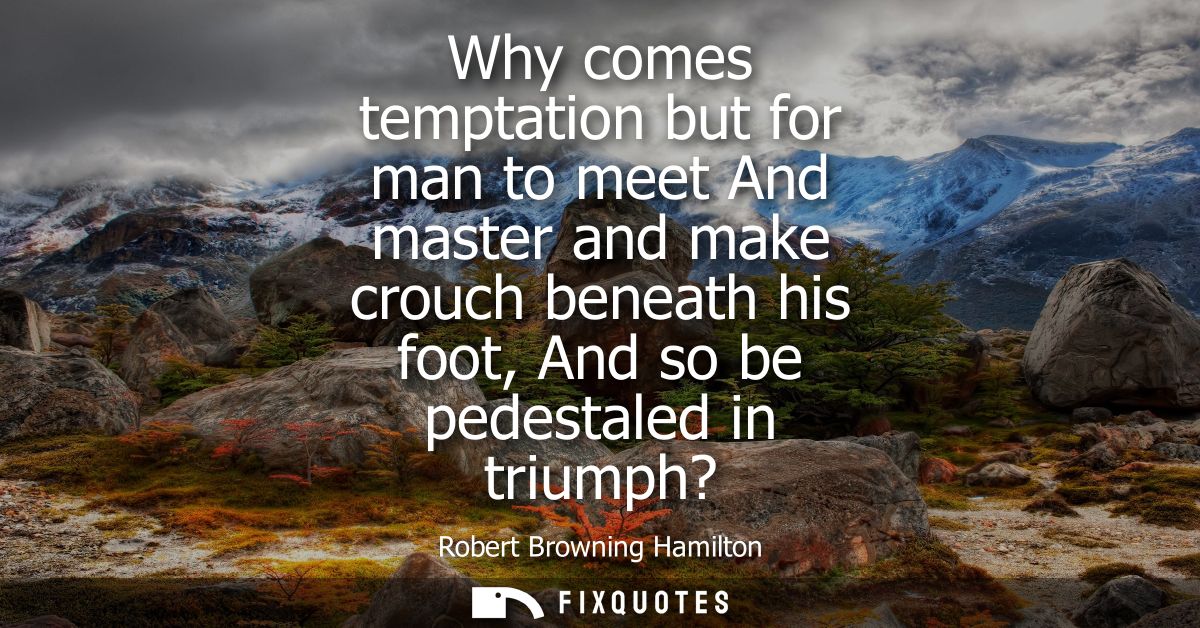
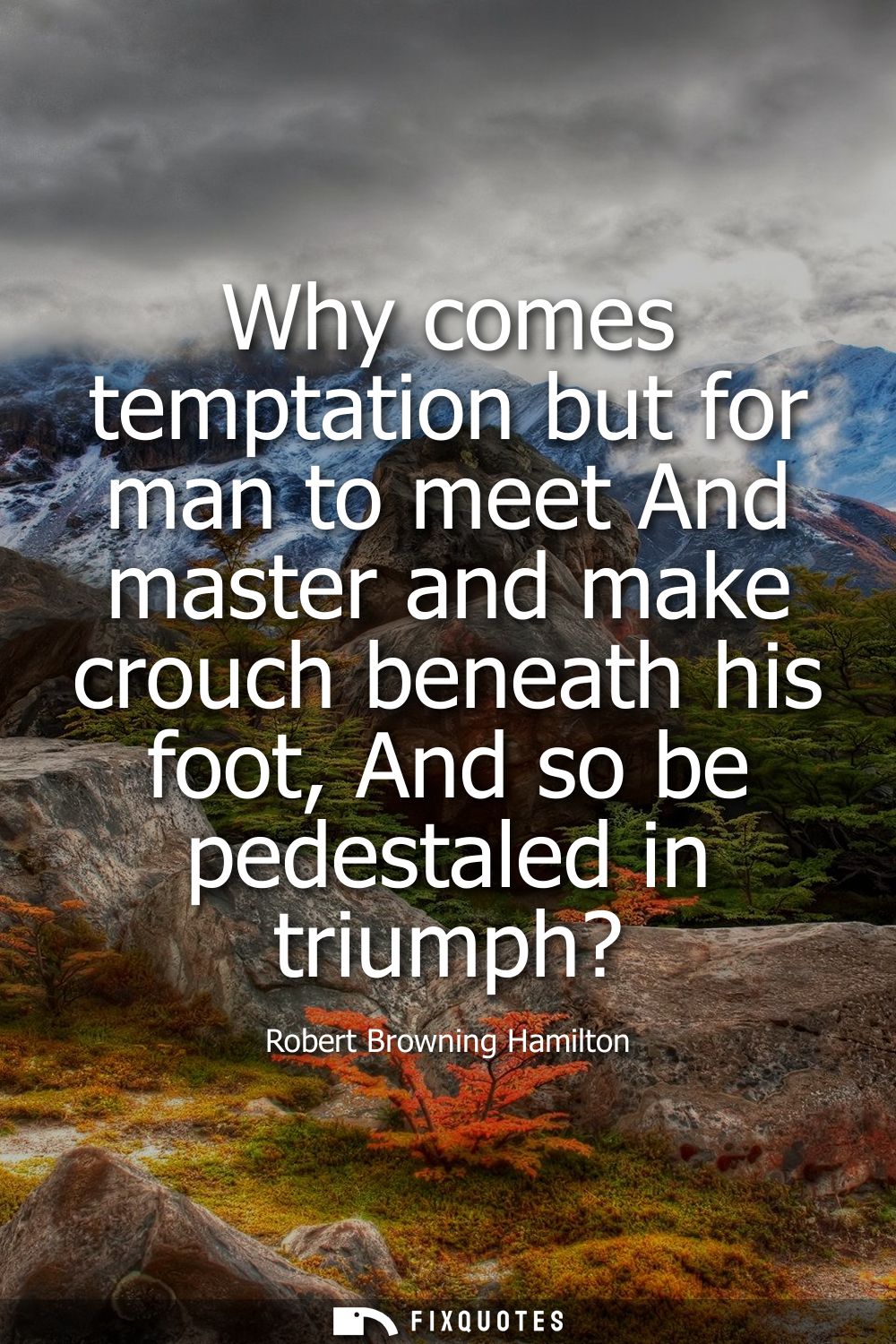
"Why comes temptation but for man to meet And master and make crouch beneath his foot, And so be pedestaled in triumph?"
About this Quote
Temptation shows up here not as a trap but as a stage direction. Hamilton frames moral struggle as choreography: temptation arrives so a man can "meet / And master" it, then force it to "crouch beneath his foot". The verbs are physical, almost athletic, turning inner conflict into a public spectacle of dominance. That’s the point. This isn’t a tender account of conscience; it’s a script for self-mythology.
The subtext is a bracingly muscular theology of character. Temptation isn’t evidence of weakness; it’s proof you’ve been given material for a victory narrative. The line "And so be pedestaled in triumph" reveals the psychological payoff: not merely being good, but being seen (by God, by others, by oneself) as the kind of person who conquers. Virtue becomes status. Even the passive construction "be pedestaled" implies an audience ready to elevate the winner. Temptation is useful because it manufactures deservingness.
Context matters. Writing in the long shadow of Victorian moral seriousness, Hamilton leans into an ethic of self-mastery: the ideal man as disciplined, upright, and legible to the world. The gendering is explicit - "for man" - and so is the hierarchy: temptation is something to subjugate, not understand. It’s a worldview that flatters willpower and distrusts complexity, which helps explain its lasting appeal. It offers a clean bargain: suffer the fight, earn the pedestal.
The subtext is a bracingly muscular theology of character. Temptation isn’t evidence of weakness; it’s proof you’ve been given material for a victory narrative. The line "And so be pedestaled in triumph" reveals the psychological payoff: not merely being good, but being seen (by God, by others, by oneself) as the kind of person who conquers. Virtue becomes status. Even the passive construction "be pedestaled" implies an audience ready to elevate the winner. Temptation is useful because it manufactures deservingness.
Context matters. Writing in the long shadow of Victorian moral seriousness, Hamilton leans into an ethic of self-mastery: the ideal man as disciplined, upright, and legible to the world. The gendering is explicit - "for man" - and so is the hierarchy: temptation is something to subjugate, not understand. It’s a worldview that flatters willpower and distrusts complexity, which helps explain its lasting appeal. It offers a clean bargain: suffer the fight, earn the pedestal.
Quote Details
| Topic | Self-Discipline |
|---|
More Quotes by Robert
Add to List