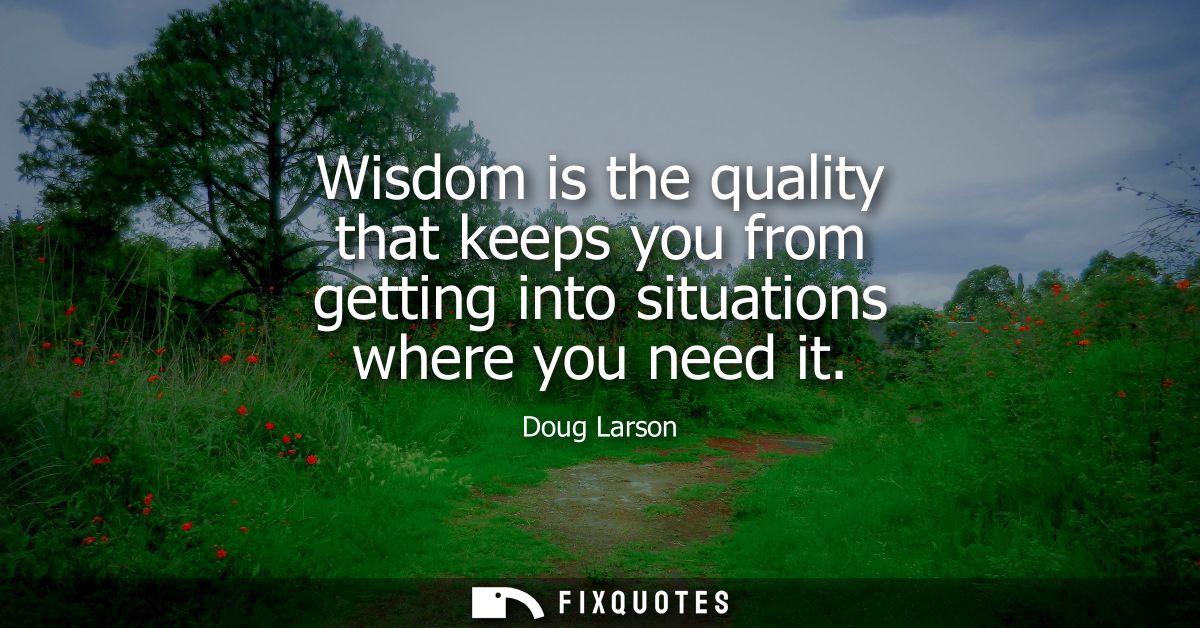
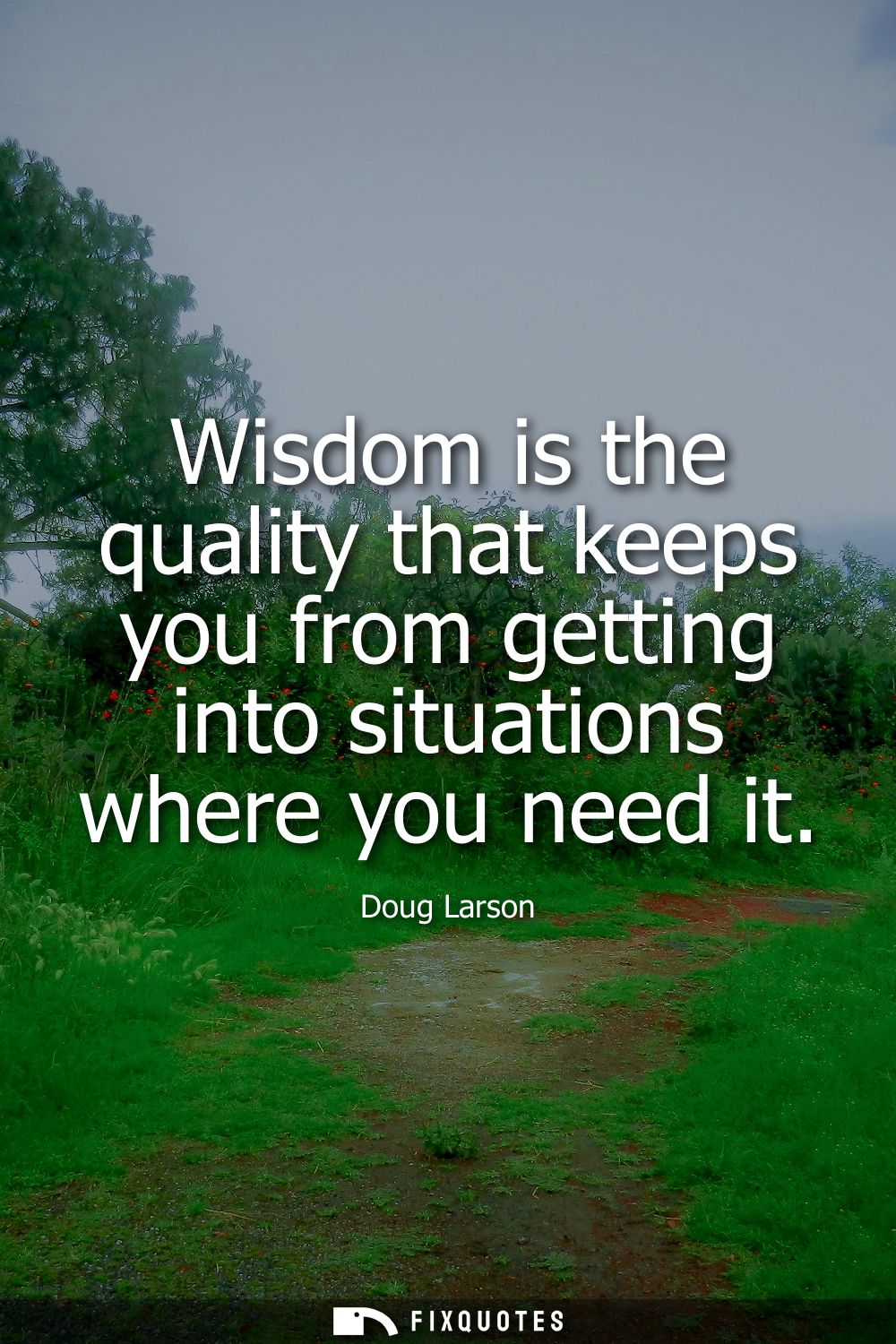
"Wisdom is the quality that keeps you from getting into situations where you need it"
About this Quote
The intent is gently corrosive. It punctures the self-flattering fantasy that being wise means handling chaos with grace, when most “mature” people are just veterans of avoidable disasters. The subtext: a lot of what we call wisdom is actually hindsight in a nicer outfit. It also needles a culture that loves redemption arcs and heroic recoveries; Larson suggests the real flex is boring competence, the kind that makes for bad stories and good lives.
As a cartoonist, Larson writes in the language of the single-panel: compressed, quotable, and slightly cynical about human behavior. The humor isn’t nihilism; it’s pragmatic skepticism. Wisdom isn’t a halo, it’s a habit of risk management: recognizing the trap, the ego-bait, the sunk-cost spiral, and taking the unglamorous exit before you can turn your mistake into a personality.
Quote Details
| Topic | Wisdom |
|---|---|
| Source | Help us find the source |
| Cite |
Citation Formats
APA Style (7th ed.)
Larson, Doug. (2026, January 17). Wisdom is the quality that keeps you from getting into situations where you need it. FixQuotes. https://fixquotes.com/quotes/wisdom-is-the-quality-that-keeps-you-from-getting-34816/
Chicago Style
Larson, Doug. "Wisdom is the quality that keeps you from getting into situations where you need it." FixQuotes. January 17, 2026. https://fixquotes.com/quotes/wisdom-is-the-quality-that-keeps-you-from-getting-34816/.
MLA Style (9th ed.)
"Wisdom is the quality that keeps you from getting into situations where you need it." FixQuotes, 17 Jan. 2026, https://fixquotes.com/quotes/wisdom-is-the-quality-that-keeps-you-from-getting-34816/. Accessed 26 Mar. 2026.