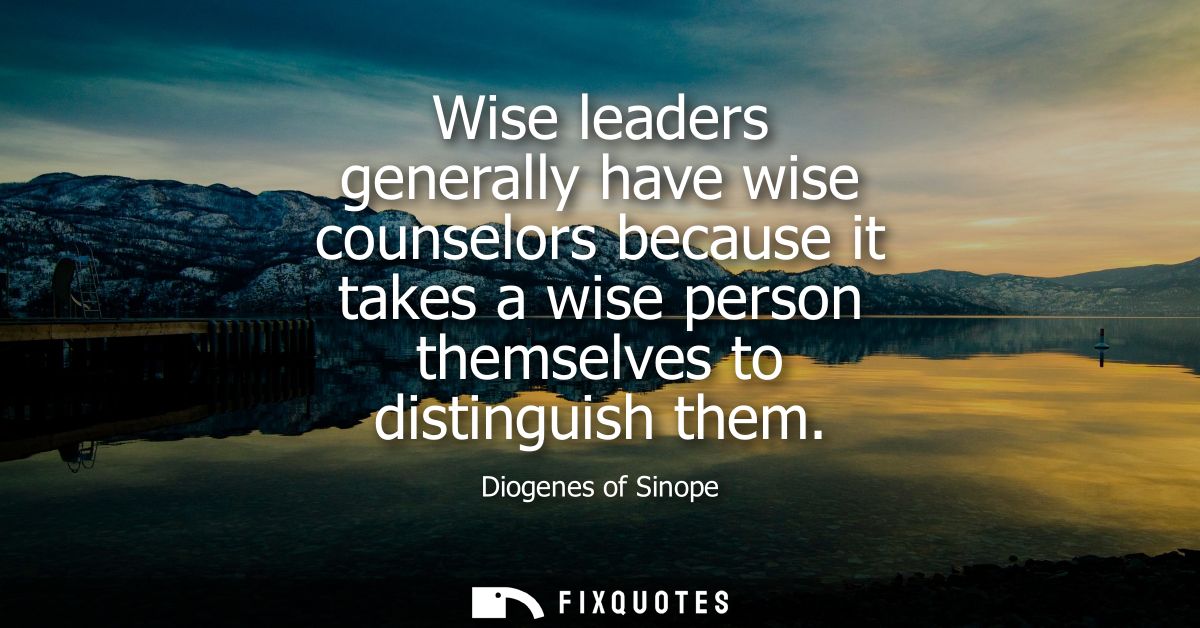
"Wise leaders generally have wise counselors because it takes a wise person themselves to distinguish them"
About this Quote
The subtext is a quiet indictment of vanity. A mediocre leader will prefer agreeable counselors, mistaking flattery for insight and volume for competence. Diogenes is pointing to a selection mechanism: advisors don’t simply shape leaders; leaders curate advisors. The quality of counsel becomes a mirror of the ruler’s own discernment, not a convenient external supplement.
Context matters: Diogenes, the Cynic who made a career out of puncturing status and posing as a kind of moral streetlight, distrusted power’s tendency to stage-manage truth. In a Greek world where “having philosophers around” could function as a prestige accessory for elites, he’s warning that intellectual ornamentation isn’t counsel. If you want the benefits of wise advisors, you can’t outsource judgment to them; you have to be the sort of person who can spot wisdom when it arrives without a trumpet, and tolerate it when it stings.
Quote Details
| Topic | Leadership |
|---|---|
| Source | Help us find the source |
| Cite |
Citation Formats
APA Style (7th ed.)
Sinope, Diogenes of. (2026, January 16). Wise leaders generally have wise counselors because it takes a wise person themselves to distinguish them. FixQuotes. https://fixquotes.com/quotes/wise-leaders-generally-have-wise-counselors-120510/
Chicago Style
Sinope, Diogenes of. "Wise leaders generally have wise counselors because it takes a wise person themselves to distinguish them." FixQuotes. January 16, 2026. https://fixquotes.com/quotes/wise-leaders-generally-have-wise-counselors-120510/.
MLA Style (9th ed.)
"Wise leaders generally have wise counselors because it takes a wise person themselves to distinguish them." FixQuotes, 16 Jan. 2026, https://fixquotes.com/quotes/wise-leaders-generally-have-wise-counselors-120510/. Accessed 11 Mar. 2026.