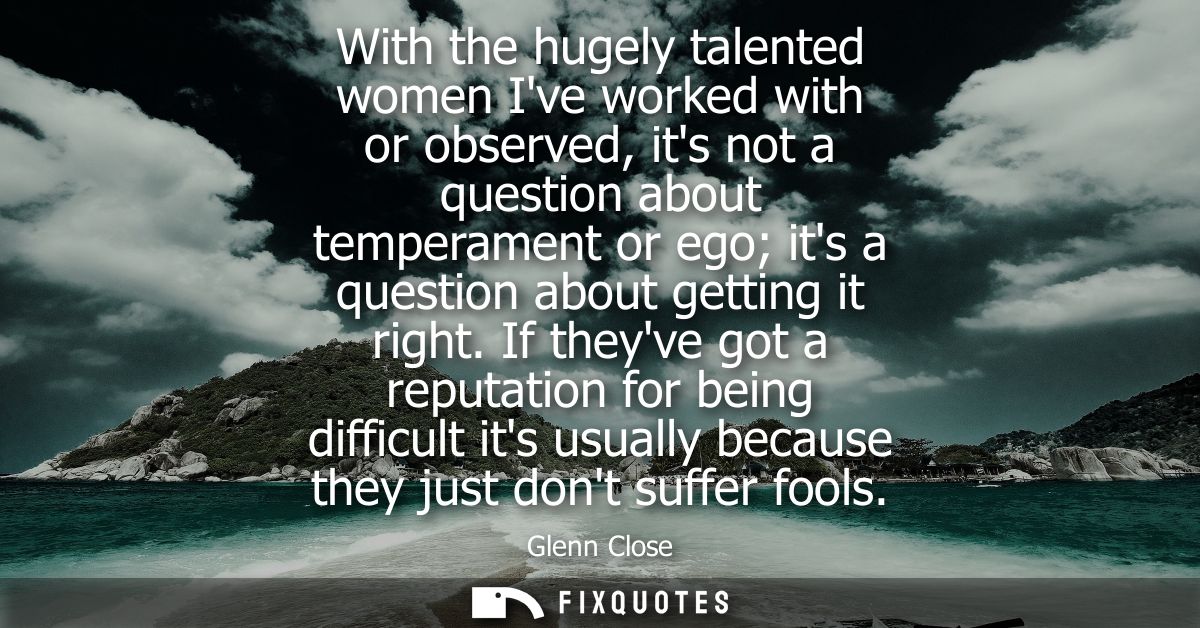
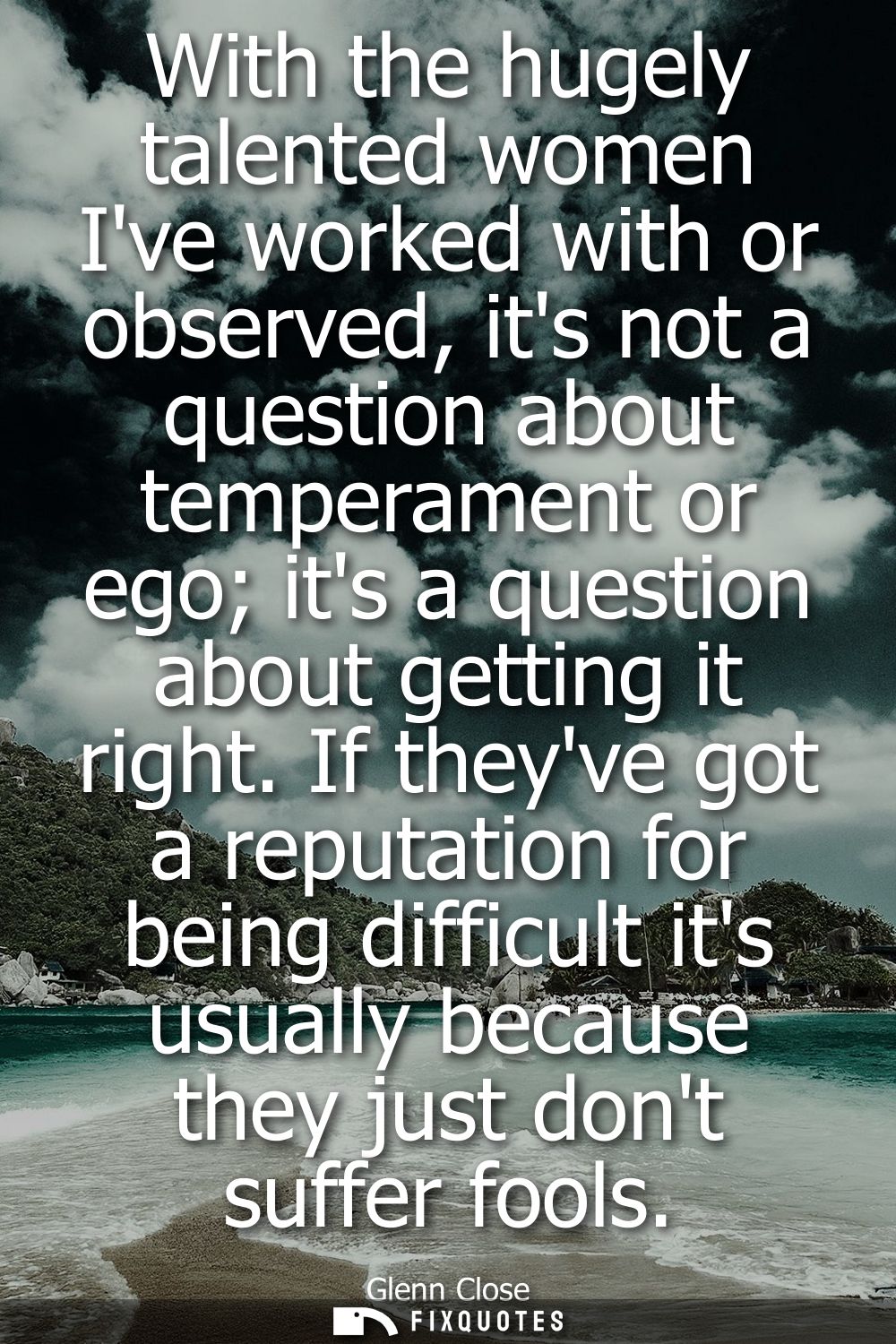
"With the hugely talented women I've worked with or observed, it's not a question about temperament or ego; it's a question about getting it right. If they've got a reputation for being difficult, it's usually because they just don't suffer fools"
About this Quote
The line works because it’s both defense and indictment. “Getting it right” sounds humble, almost craft-nerdy, but it carries a threat: if you can’t meet the work, you can’t hide behind vibes. Then she drops the real knife: “they just don’t suffer fools.” That phrase rebrands so-called abrasiveness as discernment, suggesting that what’s punished isn’t rudeness, but refusal - refusal to babysit incompetence, to soften feedback, to perform likability as part of the job.
Close’s context matters. She’s not an outsider throwing rocks; she’s a prestige fixture who’s watched how power circulates on sets and in press narratives. Her credibility lets her say the quiet part out loud: excellence from women is frequently recoded as attitude. The subtext is a warning to the industry and a permission slip to younger artists: if demanding competence gets you labeled, the label may be the point, a tool to discipline ambition.
Quote Details
| Topic | Work Ethic |
|---|---|
| Source | Help us find the source |
| Cite |
Citation Formats
APA Style (7th ed.)
Close, Glenn. (2026, February 16). With the hugely talented women I've worked with or observed, it's not a question about temperament or ego; it's a question about getting it right. If they've got a reputation for being difficult, it's usually because they just don't suffer fools. FixQuotes. https://fixquotes.com/quotes/with-the-hugely-talented-women-ive-worked-with-or-167522/
Chicago Style
Close, Glenn. "With the hugely talented women I've worked with or observed, it's not a question about temperament or ego; it's a question about getting it right. If they've got a reputation for being difficult, it's usually because they just don't suffer fools." FixQuotes. February 16, 2026. https://fixquotes.com/quotes/with-the-hugely-talented-women-ive-worked-with-or-167522/.
MLA Style (9th ed.)
"With the hugely talented women I've worked with or observed, it's not a question about temperament or ego; it's a question about getting it right. If they've got a reputation for being difficult, it's usually because they just don't suffer fools." FixQuotes, 16 Feb. 2026, https://fixquotes.com/quotes/with-the-hugely-talented-women-ive-worked-with-or-167522/. Accessed 7 Apr. 2026.