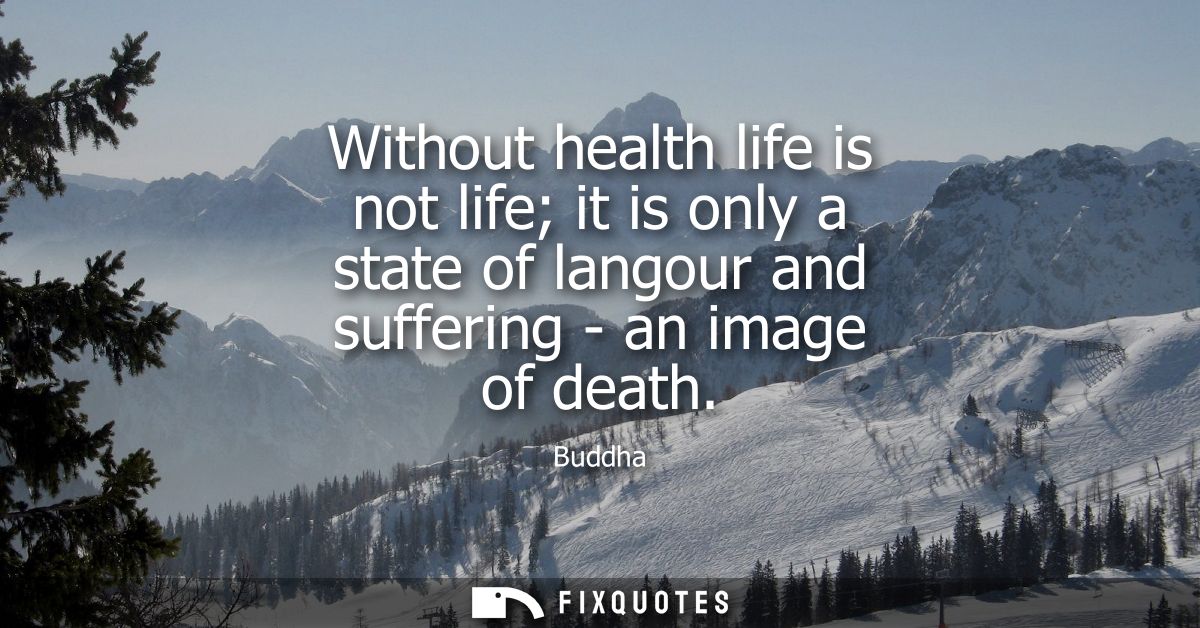
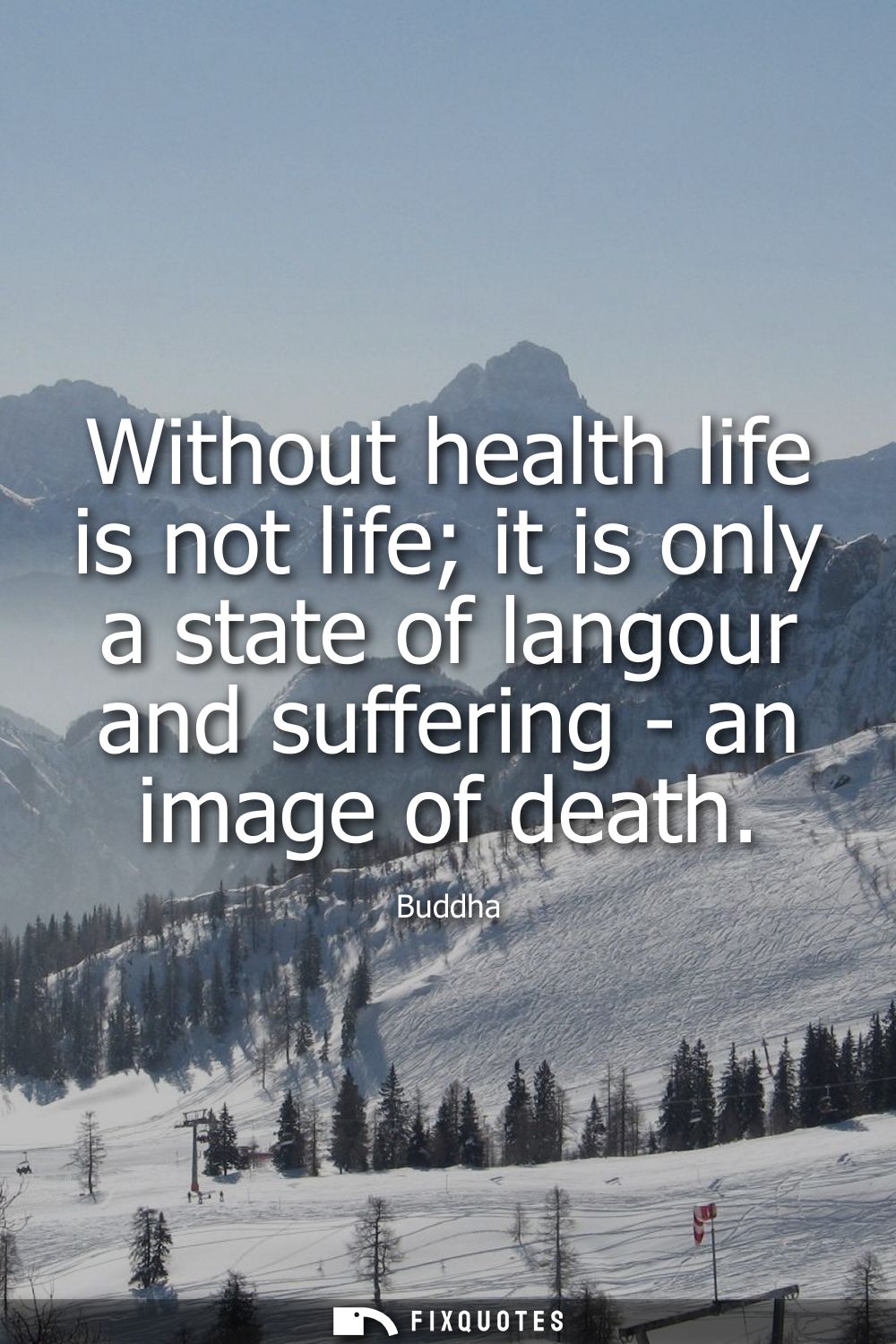
"Without health life is not life; it is only a state of langour and suffering - an image of death"
About this Quote
The subtext is classic Buddhist strategy: radical realism in service of awakening. “Langour and suffering” doesn’t just mean sickness; it signals the Buddha’s central diagnosis of dukkha, the unsatisfactoriness baked into conditioned existence. Illness is the loudest version of what’s always true: we are vulnerable, dependent, and ultimately unprotected from decay. Calling it “an image of death” is rhetorical compression. He turns sickness into a rehearsal, a daily memento mori that dissolves the fantasy of control.
Context matters. Early Buddhist teaching emerges from a world where disease, injury, and famine weren’t abstract anxieties but routine. The Buddha’s authority isn’t merely spiritual; it’s clinical. He presents himself as a physician of the mind, and this line is the hard opening move: before you chase meaning, admit the terms of embodiment. Enlightenment begins not with optimism, but with accuracy.
Quote Details
| Topic | Health |
|---|---|
| Source | Help us find the source |
| Cite |
Citation Formats
APA Style (7th ed.)
Buddha. (2026, January 15). Without health life is not life; it is only a state of langour and suffering - an image of death. FixQuotes. https://fixquotes.com/quotes/without-health-life-is-not-life-it-is-only-a-33542/
Chicago Style
Buddha. "Without health life is not life; it is only a state of langour and suffering - an image of death." FixQuotes. January 15, 2026. https://fixquotes.com/quotes/without-health-life-is-not-life-it-is-only-a-33542/.
MLA Style (9th ed.)
"Without health life is not life; it is only a state of langour and suffering - an image of death." FixQuotes, 15 Jan. 2026, https://fixquotes.com/quotes/without-health-life-is-not-life-it-is-only-a-33542/. Accessed 3 Apr. 2026.