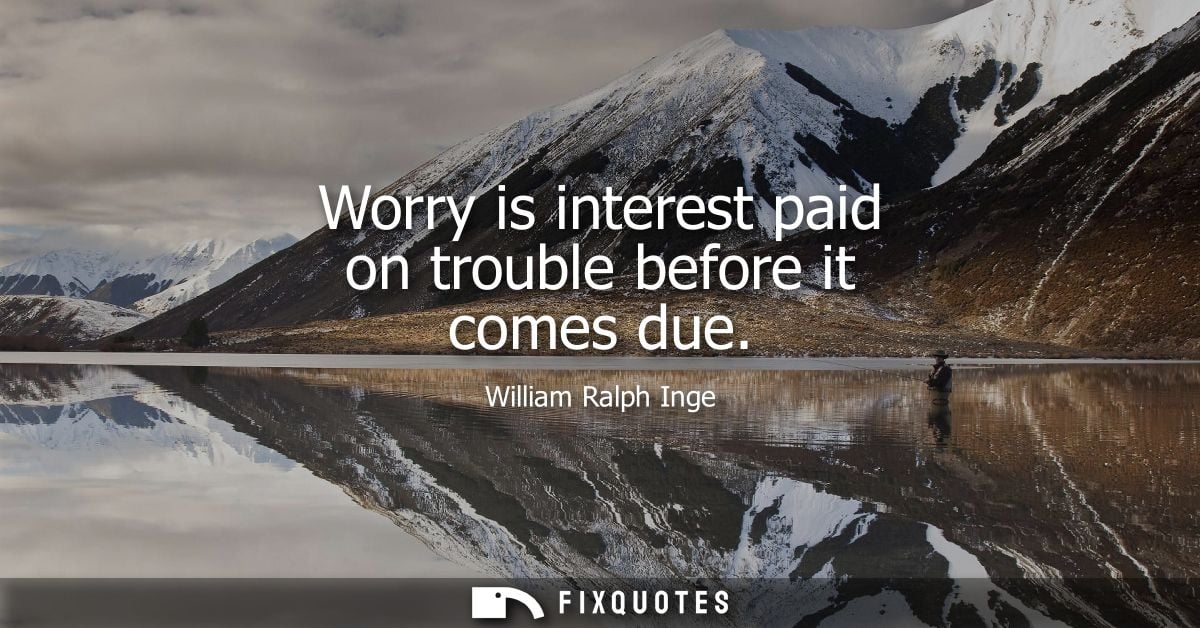
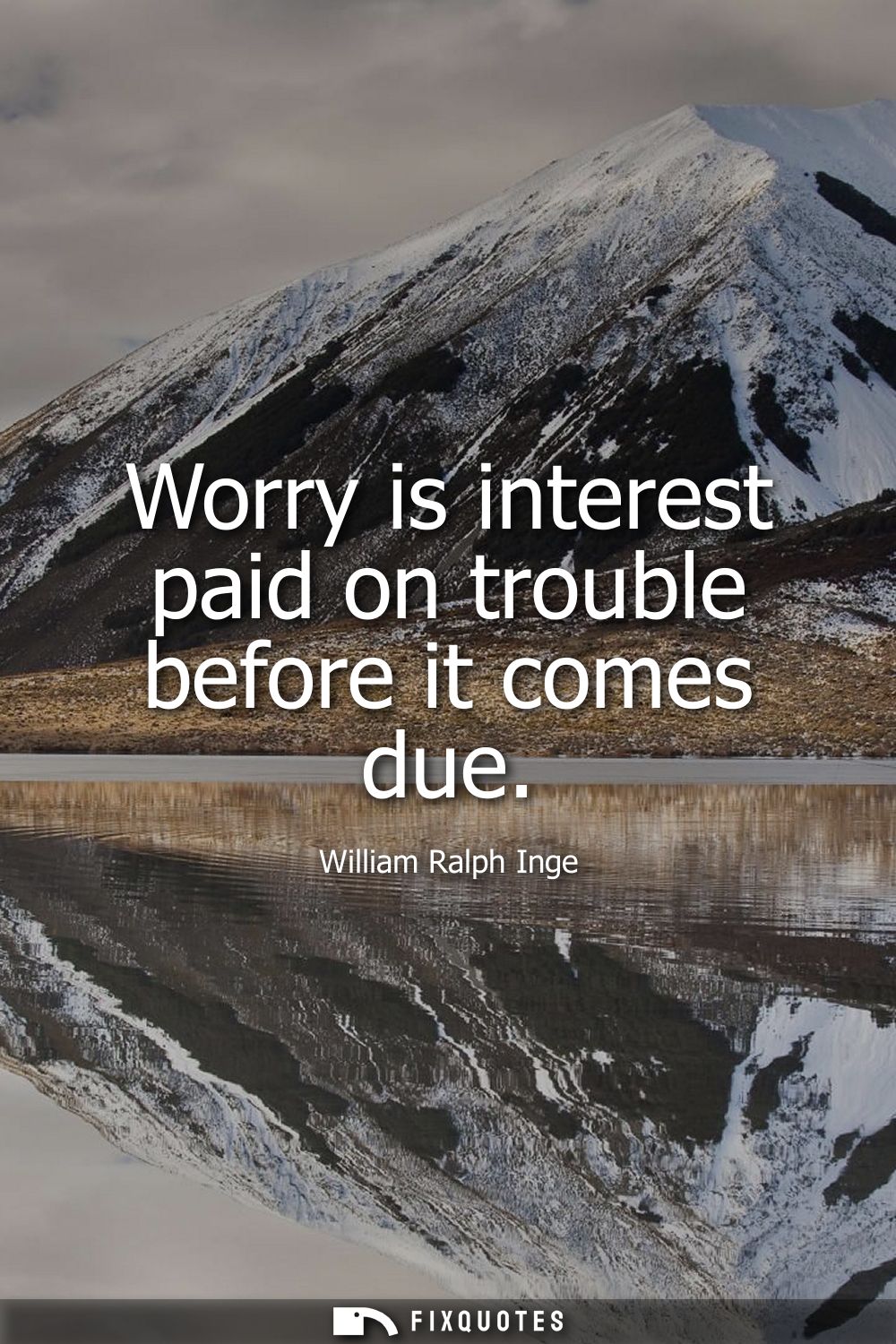
"Worry is interest paid on trouble before it comes due"
About this Quote
Worry, Inge suggests, is a financial transaction with a terrible exchange rate: you hand over peace in the present to cover a bill that may never arrive. The metaphor is doing quiet heavy lifting. “Interest” implies not just cost but compounding cost, the way anxiety breeds new anxieties, turning a single possibility into a growing ledger of imagined crises. “Before it comes due” adds the moral sting: the worrier isn’t merely cautious; they’re paying early, voluntarily, even piously, as if suffering ahead of time earns a discount on fate.
That’s where Inge’s clerical sensibility sneaks in. A clergyman isn’t only diagnosing a habit; he’s policing a spiritual economy. Worry becomes a kind of misguided devotion, an attempt to control the future through self-inflicted penance. The subtext: you’re trying to buy certainty with anguish, and the market doesn’t accept that currency. It’s also an implicit rebuke to a certain Protestant-flavored respectability that mistakes grim anticipation for responsibility.
Historically, Inge’s lifetime runs through industrial acceleration, imperial anxiety, and world wars, an era when “trouble” wasn’t hypothetical. That makes the line sharper, not softer: if anyone had reasons to worry, it was his generation. The quote’s intent isn’t to deny danger but to separate prudent preparation from the emotional tax of rehearsal. By framing worry as debt, Inge makes it legible to modern life: an overdraft on attention, charged daily, with no guarantee of relief when the actual bill finally lands.
That’s where Inge’s clerical sensibility sneaks in. A clergyman isn’t only diagnosing a habit; he’s policing a spiritual economy. Worry becomes a kind of misguided devotion, an attempt to control the future through self-inflicted penance. The subtext: you’re trying to buy certainty with anguish, and the market doesn’t accept that currency. It’s also an implicit rebuke to a certain Protestant-flavored respectability that mistakes grim anticipation for responsibility.
Historically, Inge’s lifetime runs through industrial acceleration, imperial anxiety, and world wars, an era when “trouble” wasn’t hypothetical. That makes the line sharper, not softer: if anyone had reasons to worry, it was his generation. The quote’s intent isn’t to deny danger but to separate prudent preparation from the emotional tax of rehearsal. By framing worry as debt, Inge makes it legible to modern life: an overdraft on attention, charged daily, with no guarantee of relief when the actual bill finally lands.
Quote Details
| Topic | Anxiety |
|---|---|
| Source | Help us find the source |
| Cite |
Citation Formats
APA Style (7th ed.)
Inge, William Ralph. (2026, January 18). Worry is interest paid on trouble before it comes due. FixQuotes. https://fixquotes.com/quotes/worry-is-interest-paid-on-trouble-before-it-comes-13220/
Chicago Style
Inge, William Ralph. "Worry is interest paid on trouble before it comes due." FixQuotes. January 18, 2026. https://fixquotes.com/quotes/worry-is-interest-paid-on-trouble-before-it-comes-13220/.
MLA Style (9th ed.)
"Worry is interest paid on trouble before it comes due." FixQuotes, 18 Jan. 2026, https://fixquotes.com/quotes/worry-is-interest-paid-on-trouble-before-it-comes-13220/. Accessed 13 Feb. 2026.
More Quotes by William
Add to List