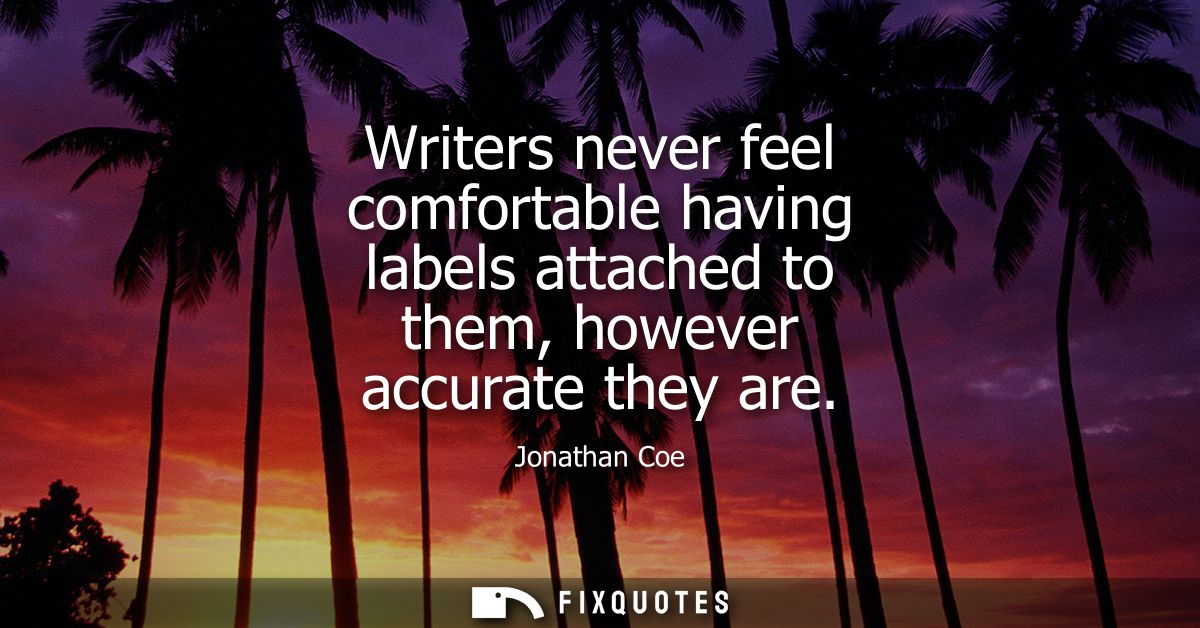
"Writers never feel comfortable having labels attached to them, however accurate they are"
About this Quote
The intent feels defensive and strategic. Coe has often been positioned as a diagnostician of modern Britain, a novelist with political bite and formal play. That reputation sells books and secures column inches, but it also narrows the emotional bandwidth his novels are allowed to have. The subtext is professional claustrophobia: once a writer is branded, every new book is reviewed as either a confirmation of the brand or a betrayal of it. Comfort is impossible because the label isn’t just attached to the work; it’s stapled to the person, turning a shifting practice into a fixed identity.
There’s also a quiet critique of cultural gatekeeping. Labels are how institutions - publishers, prizes, media - manage risk and sort talent into legible product lines. Coe’s “however accurate” is the knife twist: even when the tag fits, it still misrepresents, because it pretends that the writer’s future has already been decided by their past.
Quote Details
| Topic | Writing |
|---|---|
| Source | Help us find the source |
| Cite |
Citation Formats
APA Style (7th ed.)
Coe, Jonathan. (2026, January 17). Writers never feel comfortable having labels attached to them, however accurate they are. FixQuotes. https://fixquotes.com/quotes/writers-never-feel-comfortable-having-labels-75280/
Chicago Style
Coe, Jonathan. "Writers never feel comfortable having labels attached to them, however accurate they are." FixQuotes. January 17, 2026. https://fixquotes.com/quotes/writers-never-feel-comfortable-having-labels-75280/.
MLA Style (9th ed.)
"Writers never feel comfortable having labels attached to them, however accurate they are." FixQuotes, 17 Jan. 2026, https://fixquotes.com/quotes/writers-never-feel-comfortable-having-labels-75280/. Accessed 27 Mar. 2026.