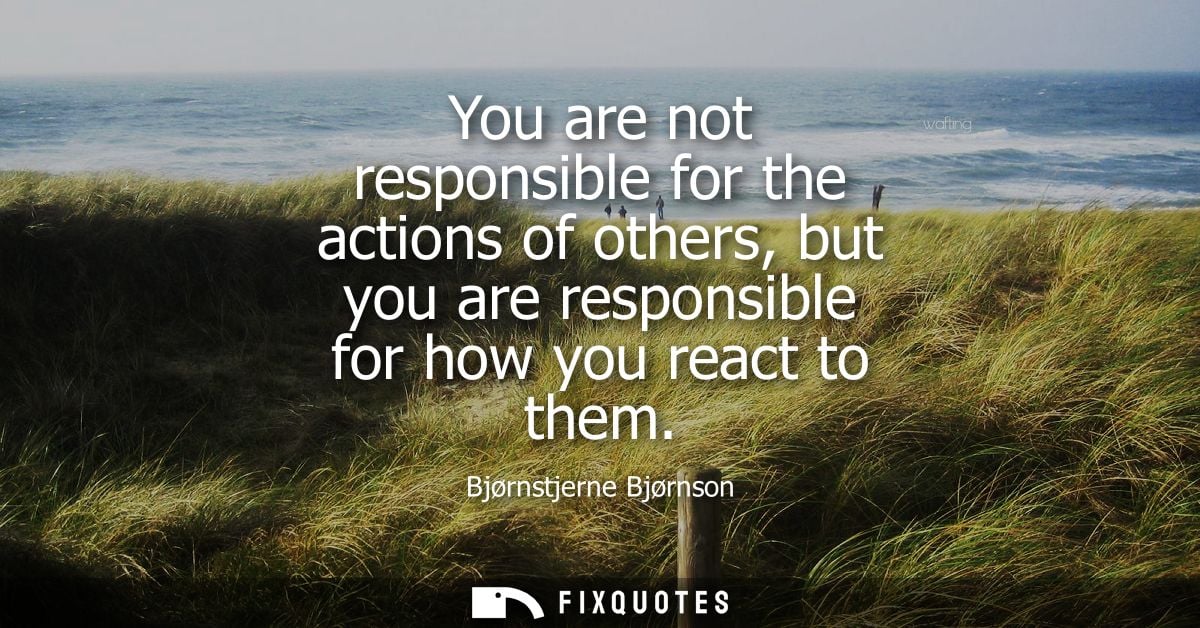
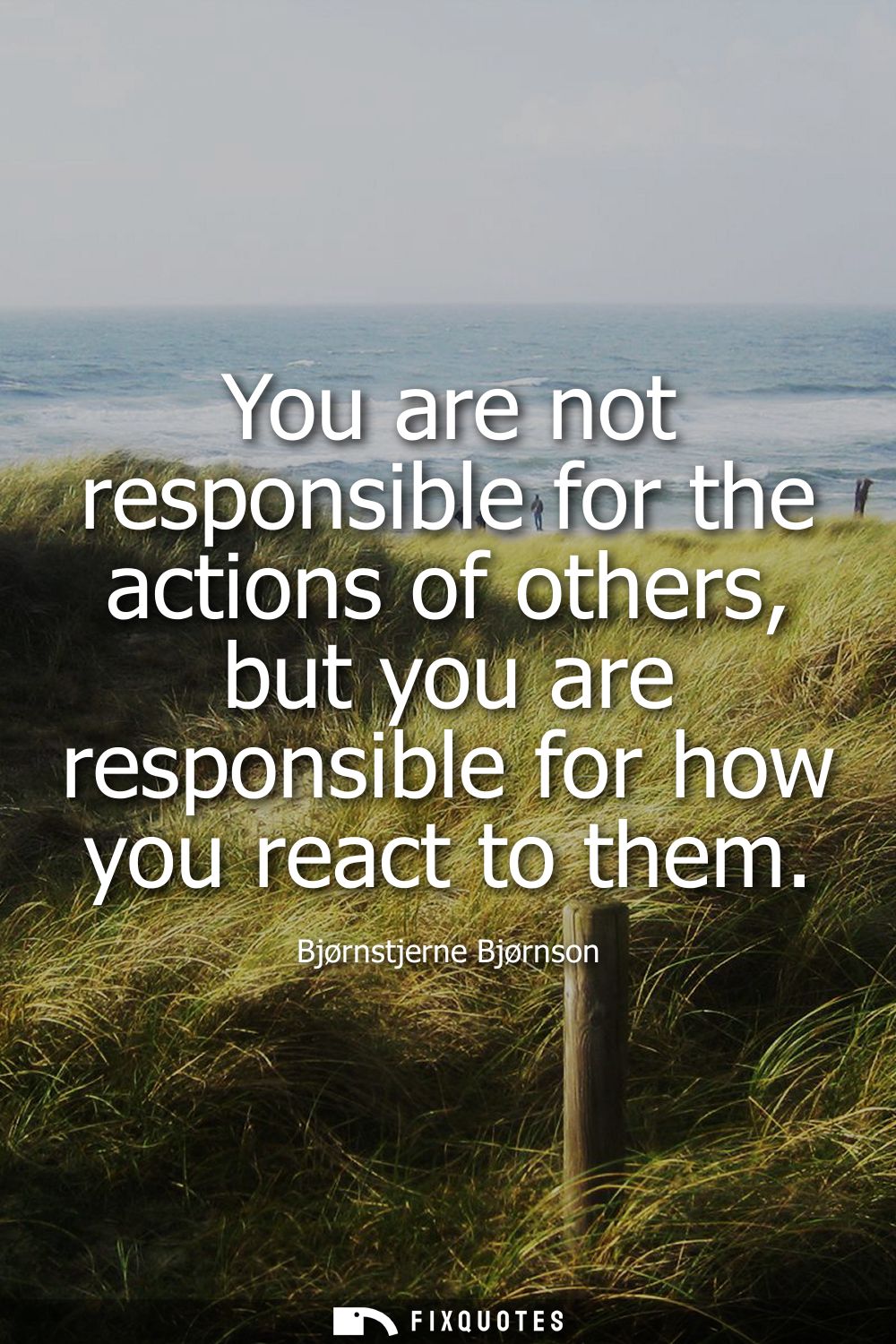
"You are not responsible for the actions of others, but you are responsible for how you react to them"
About this Quote
The subtext is quietly confrontational. It rebukes two popular alibis at once: the fatalist’s shrug (“What could I do?”) and the moralist’s outrage (“Look what they made me become”). By denying you ownership of others’ actions, he denies you the cheap power of martyrdom. By assigning you ownership of your reaction, he denies you the cheap comfort of innocence. That tension is why it works: it offers relief and accountability in the same breath.
Read in a poet’s key, “react” isn’t just behavior; it’s interpretation. The real battleground is meaning-making: whether you answer cruelty with imitation, provocation with escalation, injustice with paralysis, or injury with something that doesn’t reproduce the original harm. In a culture that loves to outsource blame, Bjornson’s line is a demand for ethical craftsmanship: you don’t get to choose the weather, but you do choose what you build in it.
Quote Details
| Topic | Self-Improvement |
|---|---|
| Source | Help us find the source |
| Cite |
Citation Formats
APA Style (7th ed.)
Bjørnson, Bjørnstjerne. (2026, January 15). You are not responsible for the actions of others, but you are responsible for how you react to them. FixQuotes. https://fixquotes.com/quotes/you-are-not-responsible-for-the-actions-of-others-172209/
Chicago Style
Bjørnson, Bjørnstjerne. "You are not responsible for the actions of others, but you are responsible for how you react to them." FixQuotes. January 15, 2026. https://fixquotes.com/quotes/you-are-not-responsible-for-the-actions-of-others-172209/.
MLA Style (9th ed.)
"You are not responsible for the actions of others, but you are responsible for how you react to them." FixQuotes, 15 Jan. 2026, https://fixquotes.com/quotes/you-are-not-responsible-for-the-actions-of-others-172209/. Accessed 3 Apr. 2026.