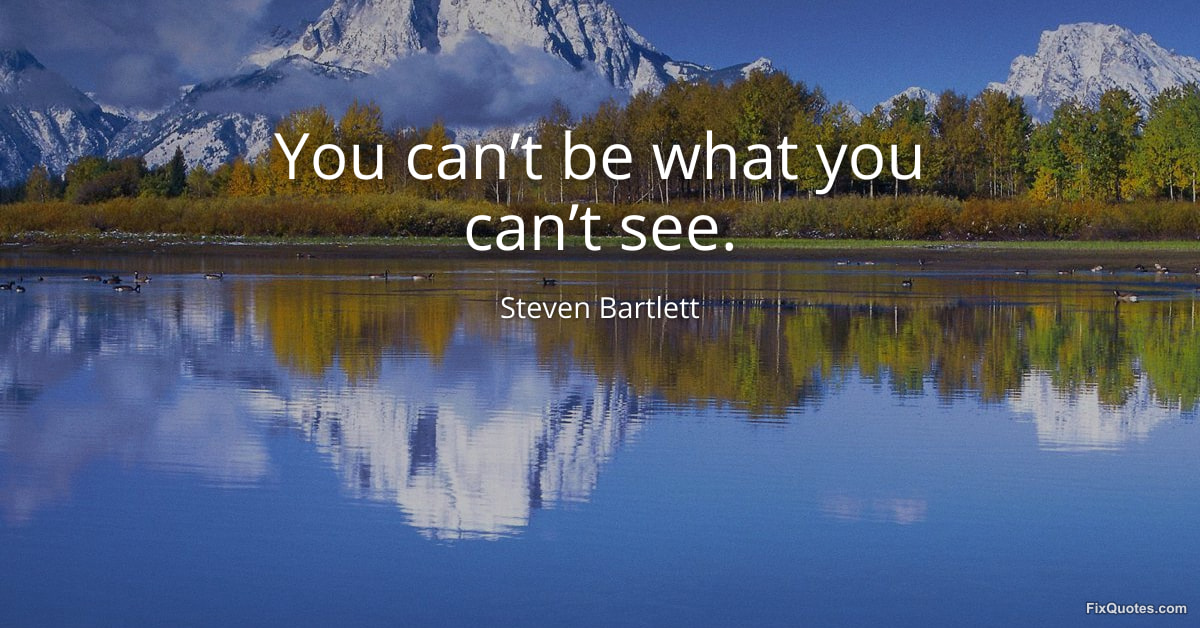
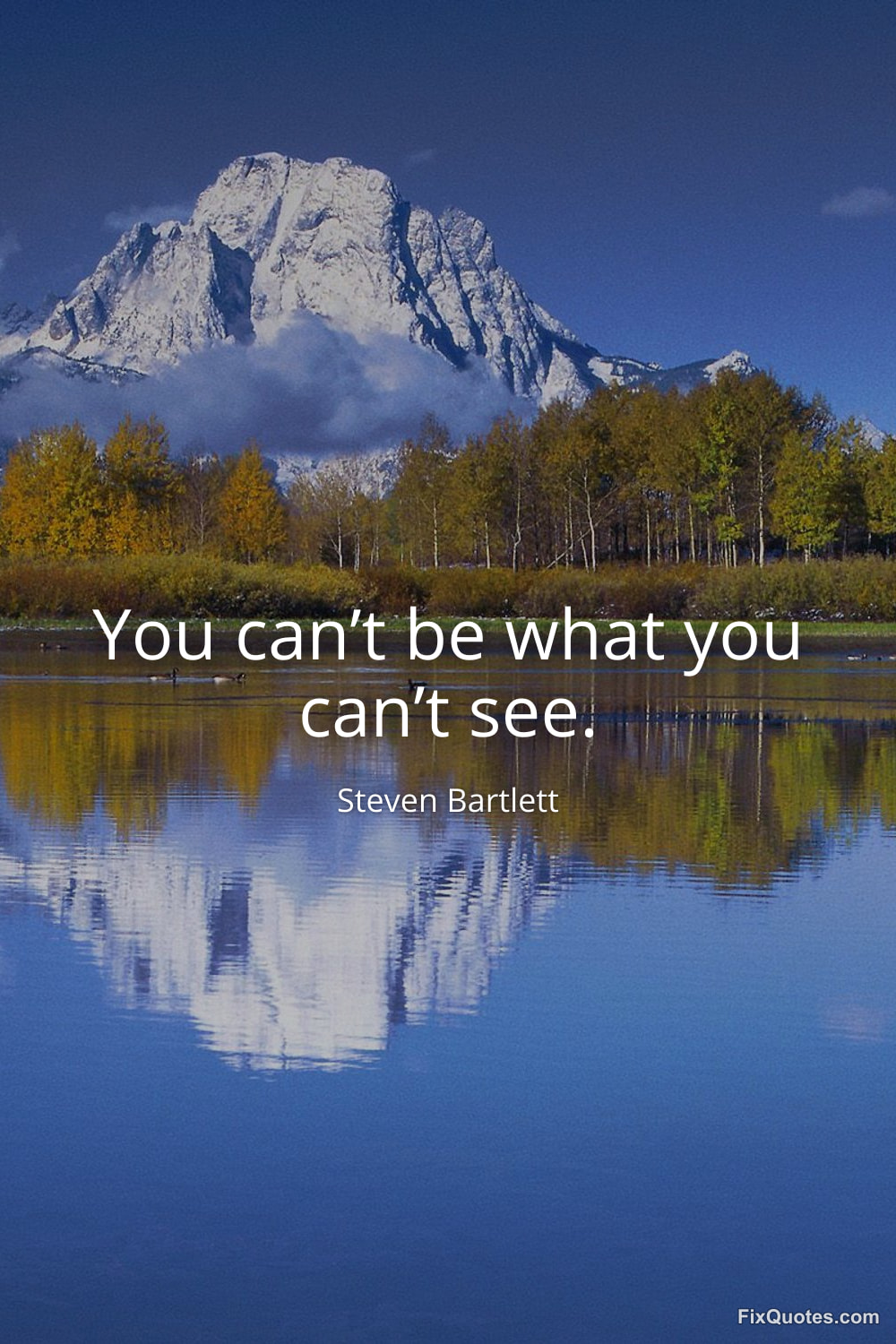
"You can't be what you can't see"
About this Quote
A startup-founder mantra disguised as a pocket-sized civil rights argument, "You can't be what you can't see" works because it makes ambition feel less like personal willpower and more like infrastructure. Steven Bartlett isn’t scolding individuals for lacking hustle; he’s indicting the environment that decides which futures look plausible. The line is short, binary, and a little ruthless: no visibility, no becoming. It’s the language of entrepreneurs and social reformers meeting in the same elevator.
The intent is motivational, but the subtext is political. "See" isn’t just eyesight; it’s representation, proximity, proof. Role models function like venture capital for the imagination: they de-risk a dream. When a kid sees someone who shares their background running a company, leading a lab, or commanding a room, the path stops feeling like a fairy tale and starts feeling like a route. Bartlett’s framing also quietly rebukes the bootstrap myth that treats success as purely internal. If outcomes depend on what’s visible, then gatekeepers, media narratives, hiring pipelines, and who gets platformed are doing more shaping than we like to admit.
Context matters: Bartlett rose in a culture where "personal brand", podcasts, and founder storytelling are not accessories but engines. Visibility is currency now, and the quote doubles as advice for the aspiring (curate your inputs) and a directive to institutions (change what’s on the billboards). It flatters the listener with possibility while assigning responsibility to the world that decides what possibilities appear.
The intent is motivational, but the subtext is political. "See" isn’t just eyesight; it’s representation, proximity, proof. Role models function like venture capital for the imagination: they de-risk a dream. When a kid sees someone who shares their background running a company, leading a lab, or commanding a room, the path stops feeling like a fairy tale and starts feeling like a route. Bartlett’s framing also quietly rebukes the bootstrap myth that treats success as purely internal. If outcomes depend on what’s visible, then gatekeepers, media narratives, hiring pipelines, and who gets platformed are doing more shaping than we like to admit.
Context matters: Bartlett rose in a culture where "personal brand", podcasts, and founder storytelling are not accessories but engines. Visibility is currency now, and the quote doubles as advice for the aspiring (curate your inputs) and a directive to institutions (change what’s on the billboards). It flatters the listener with possibility while assigning responsibility to the world that decides what possibilities appear.
Quote Details
| Topic | Self-Improvement |
|---|---|
| Source | Steven Bartlett, The Diary of a CEO: The 33 Laws of Business and Life (2021) (phrase used by Bartlett in discussing representation/role models) |
| Cite |
Citation Formats
APA Style (7th ed.)
Bartlett, Steven. (2026, February 16). You can't be what you can't see. FixQuotes. https://fixquotes.com/quotes/you-cant-be-what-you-cant-see-184290/
Chicago Style
Bartlett, Steven. "You can't be what you can't see." FixQuotes. February 16, 2026. https://fixquotes.com/quotes/you-cant-be-what-you-cant-see-184290/.
MLA Style (9th ed.)
"You can't be what you can't see." FixQuotes, 16 Feb. 2026, https://fixquotes.com/quotes/you-cant-be-what-you-cant-see-184290/. Accessed 27 Mar. 2026.
More Quotes by Steven
Add to List