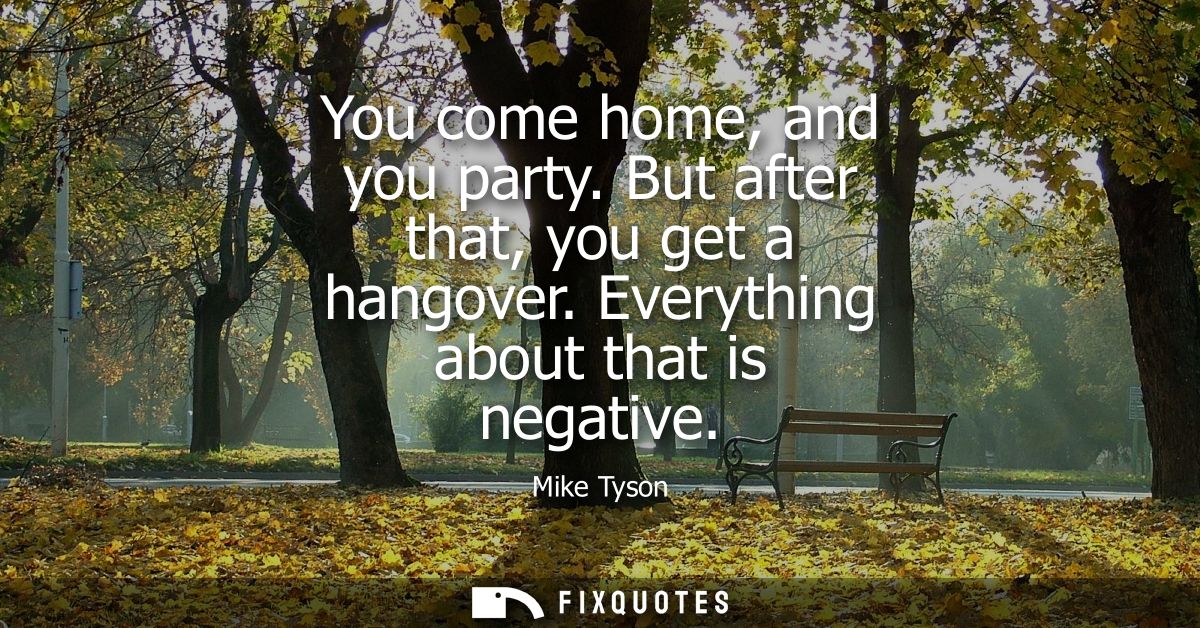
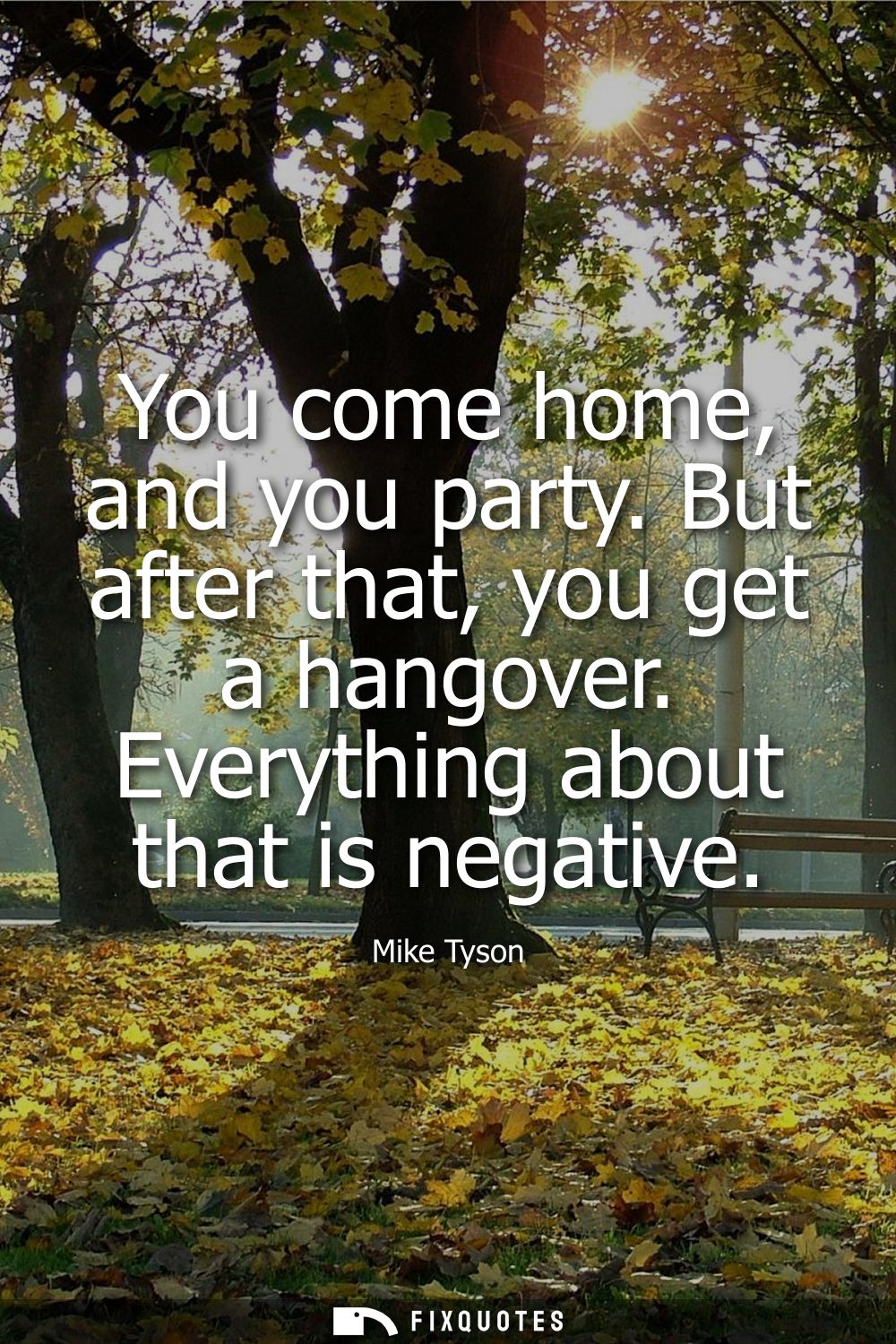
"You come home, and you party. But after that, you get a hangover. Everything about that is negative"
About this Quote
The intent isn’t to scold other people so much as to narrate his own pattern in miniature: pleasure as adrenaline, aftermath as inevitability. When he says, “You come home,” he’s not describing comfort. Home is the stop where consequences catch up. The party is public - noise, attention, temporary permission to be reckless. The hangover is private - the body’s receipt, the next morning’s silence. That last line, “Everything about that is negative,” is almost comically totalizing, but that’s why it hits: it’s the voice of someone who’s done negotiating with himself.
Culturally, it’s Tyson in late-stage myth management: the former unstoppable spectacle reframing excess as a rigged game where the house always wins. Coming from an athlete whose career was built on intensity and impulse, the quote reads less like temperance and more like tactical clarity. The punchline is that the hangover isn’t just alcohol. It’s reputation, lost time, fractured relationships - the whole tab that arrives after the lights go out.
Quote Details
| Topic | Health |
|---|---|
| Source | Help us find the source |
| Cite |
Citation Formats
APA Style (7th ed.)
Tyson, Mike. (2026, January 18). You come home, and you party. But after that, you get a hangover. Everything about that is negative. FixQuotes. https://fixquotes.com/quotes/you-come-home-and-you-party-but-after-that-you-20282/
Chicago Style
Tyson, Mike. "You come home, and you party. But after that, you get a hangover. Everything about that is negative." FixQuotes. January 18, 2026. https://fixquotes.com/quotes/you-come-home-and-you-party-but-after-that-you-20282/.
MLA Style (9th ed.)
"You come home, and you party. But after that, you get a hangover. Everything about that is negative." FixQuotes, 18 Jan. 2026, https://fixquotes.com/quotes/you-come-home-and-you-party-but-after-that-you-20282/. Accessed 9 Feb. 2026.