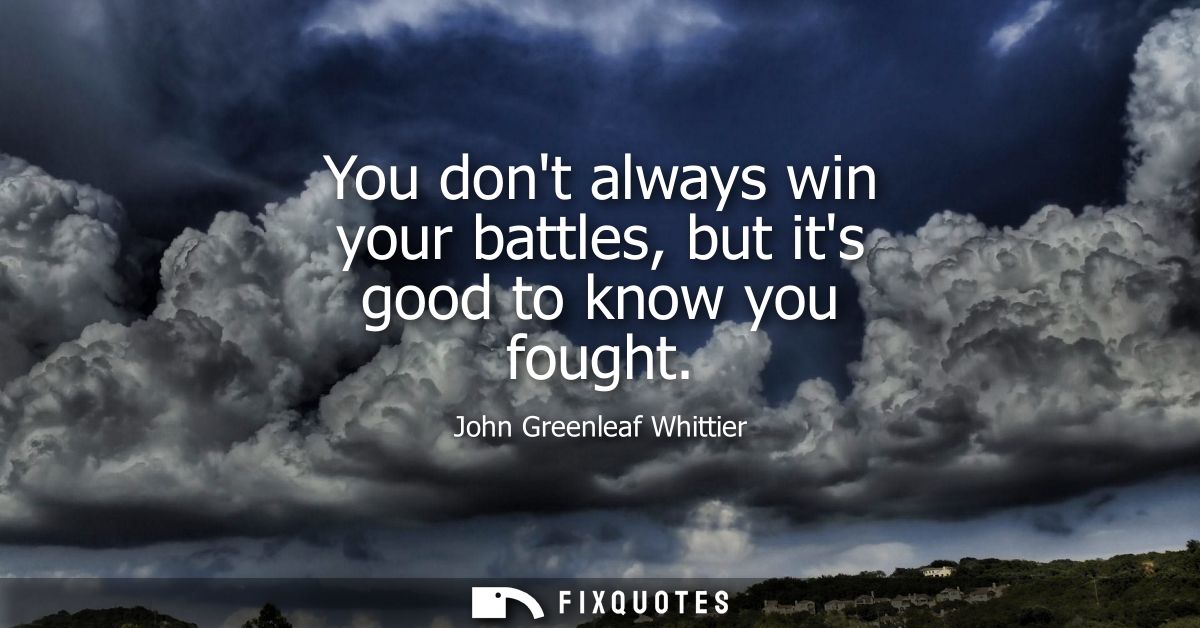
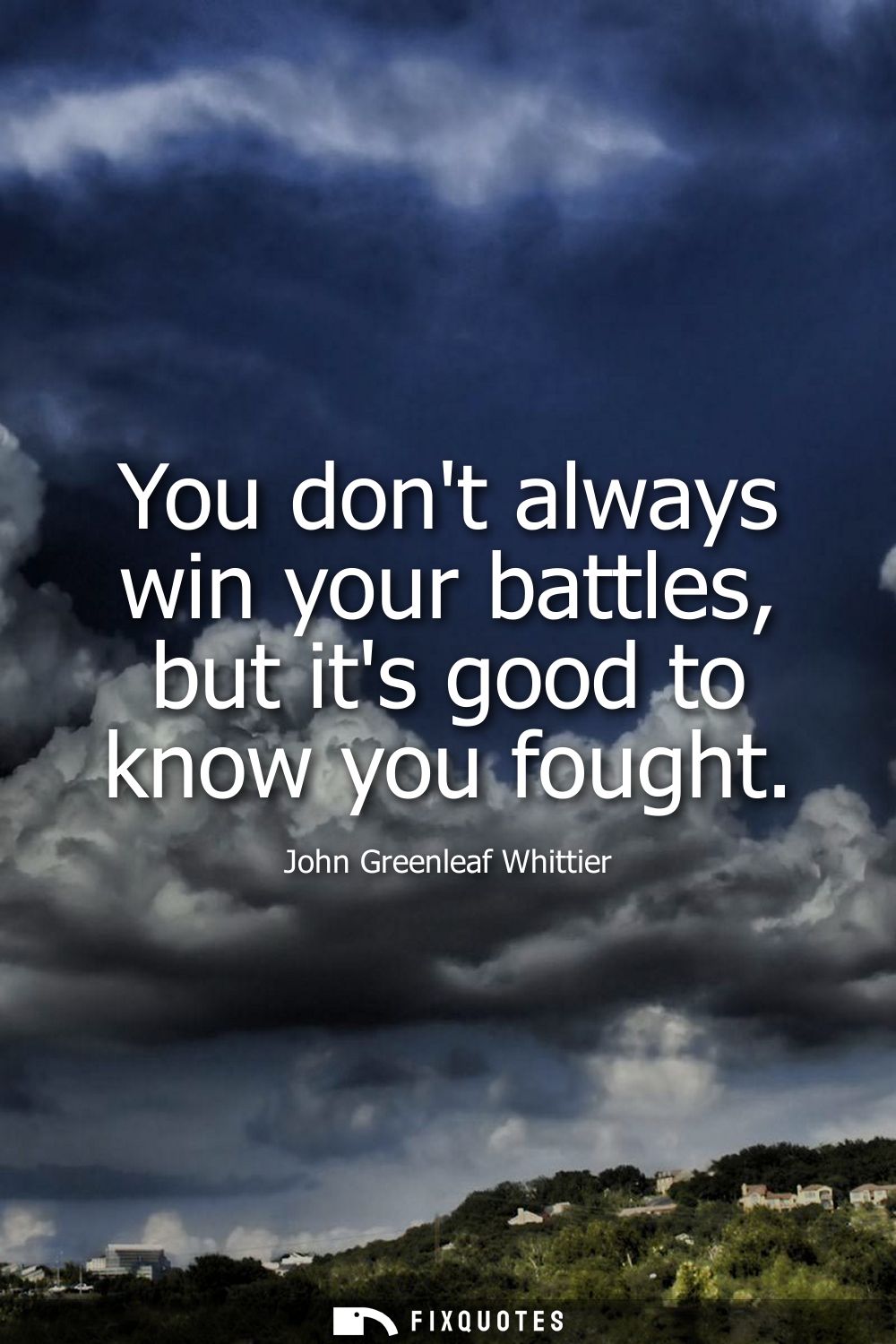
"You don't always win your battles, but it's good to know you fought"
About this Quote
Whittier wasn’t writing from the safe distance of pure lyricism. As a Quaker abolitionist-poet, he spent decades in a cause where losses were routine, progress was incremental, and compromise could feel like betrayal. In that context, "battles" reads as both metaphor and fact: legislative fights, cultural fights, spiritual fights. The subtext is a warning against two temptations that kill movements: cynicism (why try if we might lose?) and vanity (only victories count). He’s proposing a sturdier ethic for reformers and ordinary people alike, one calibrated for endurance.
There’s also a quiet rebuke to the modern fixation on outcomes as personal worth. Whittier suggests that dignity survives the loss if you can honestly say you fought. Not won, fought. That distinction is the point.
Quote Details
| Topic | Never Give Up |
|---|---|
| Source | Later attribution: Staying the Course (Sheila E. Sapp, 2018) modern compilationISBN: 9798216289180 · ID: jlp2EQAAQBAJ
Evidence:
... You don't always win your battles, but it's good to know you fought.—John Greenleaf Whittier The Young brothers aren't here today. Several students reported they hid from the bus and went back home. They really don't need to miss any ... |
| Cite |
Citation Formats
APA Style (7th ed.)
Whittier, John Greenleaf. (2026, February 8). You don't always win your battles, but it's good to know you fought. FixQuotes. https://fixquotes.com/quotes/you-dont-always-win-your-battles-but-its-good-to-106752/
Chicago Style
Whittier, John Greenleaf. "You don't always win your battles, but it's good to know you fought." FixQuotes. February 8, 2026. https://fixquotes.com/quotes/you-dont-always-win-your-battles-but-its-good-to-106752/.
MLA Style (9th ed.)
"You don't always win your battles, but it's good to know you fought." FixQuotes, 8 Feb. 2026, https://fixquotes.com/quotes/you-dont-always-win-your-battles-but-its-good-to-106752/. Accessed 10 Mar. 2026.