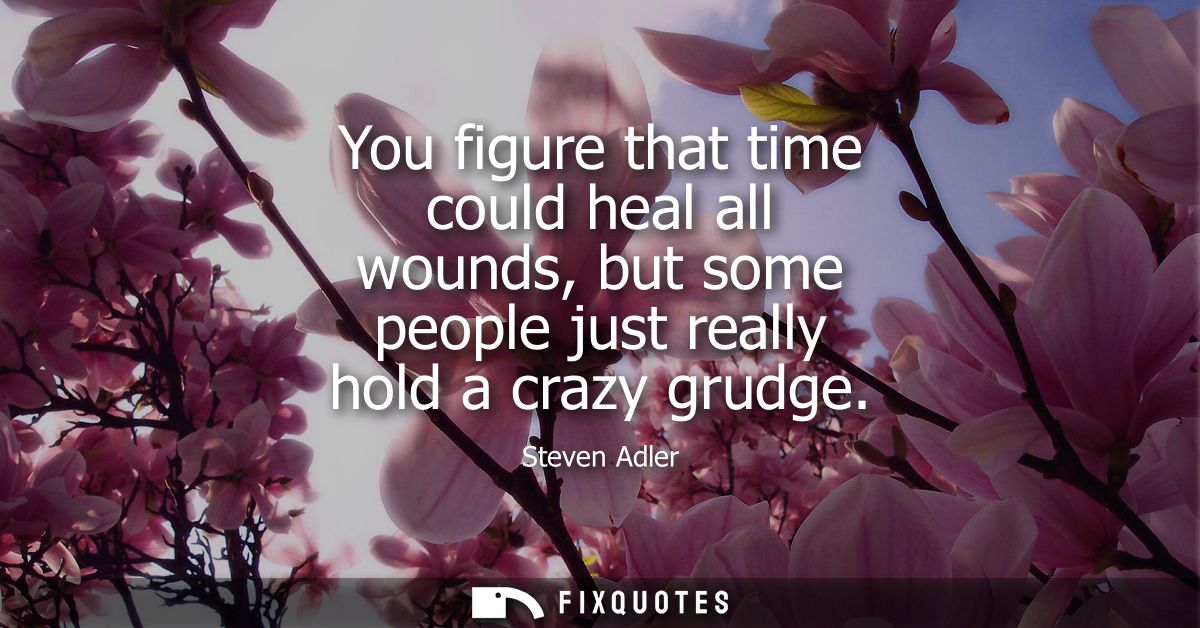
"You figure that time could heal all wounds, but some people just really hold a crazy grudge"
About this Quote
Steven Adler’s line lands because it starts in the language of self-help myth and ends in the mess of human pettiness. “Time could heal all wounds” is the platitude you’re supposed to grow into, the comforting idea that distance automatically turns trauma into trivia. Then he yanks the rug: “but some people just really hold a crazy grudge.” The pivot is doing all the work. It’s not philosophical; it’s street-level realism, the kind that comes from watching relationships rot in slow motion while the outside world assumes the calendar is doing therapy for you.
As a musician with a public biography tangled up in loyalty, fallout, and the long afterlife of band politics, Adler’s intent reads less like general advice and more like a weary field report. In rock culture, grudges aren’t just personal; they’re currency. They become memoir chapters, lawsuit fuel, reunion-tour leverage, Reddit lore. The word “crazy” is strategic, too: it’s dismissive and defensive at once, a way to label someone else’s refusal to move on as irrational while quietly admitting how powerful resentment can be.
The subtext is a small rebuke to the audience’s hunger for neat redemption arcs. People love the narrative of forgiveness as inevitable maturation. Adler reminds you that time doesn’t heal; people decide to. And some decide not to, because grudges can offer identity, control, even a twisted kind of stability. The line doesn’t romanticize bitterness; it shrugs at it, which is arguably harsher. It frames resentment as banal, not tragic: not an epic wound, just a choice someone keeps making.
As a musician with a public biography tangled up in loyalty, fallout, and the long afterlife of band politics, Adler’s intent reads less like general advice and more like a weary field report. In rock culture, grudges aren’t just personal; they’re currency. They become memoir chapters, lawsuit fuel, reunion-tour leverage, Reddit lore. The word “crazy” is strategic, too: it’s dismissive and defensive at once, a way to label someone else’s refusal to move on as irrational while quietly admitting how powerful resentment can be.
The subtext is a small rebuke to the audience’s hunger for neat redemption arcs. People love the narrative of forgiveness as inevitable maturation. Adler reminds you that time doesn’t heal; people decide to. And some decide not to, because grudges can offer identity, control, even a twisted kind of stability. The line doesn’t romanticize bitterness; it shrugs at it, which is arguably harsher. It frames resentment as banal, not tragic: not an epic wound, just a choice someone keeps making.
Quote Details
| Topic | Forgiveness |
|---|---|
| Source | Help us find the source |
More Quotes by Steven
Add to List