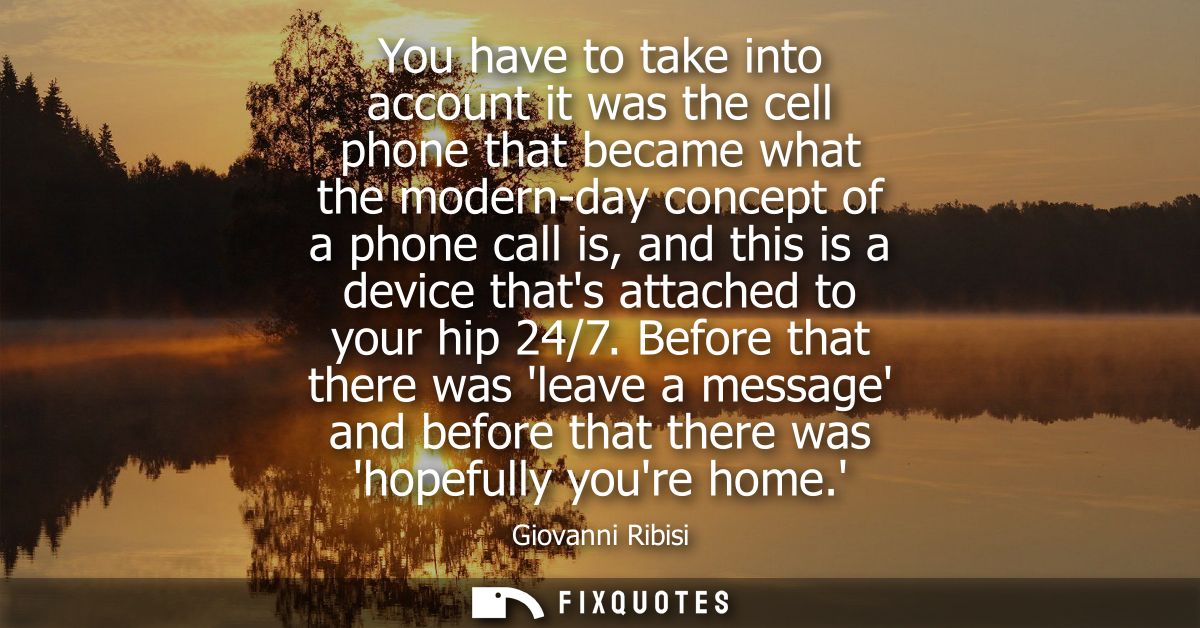
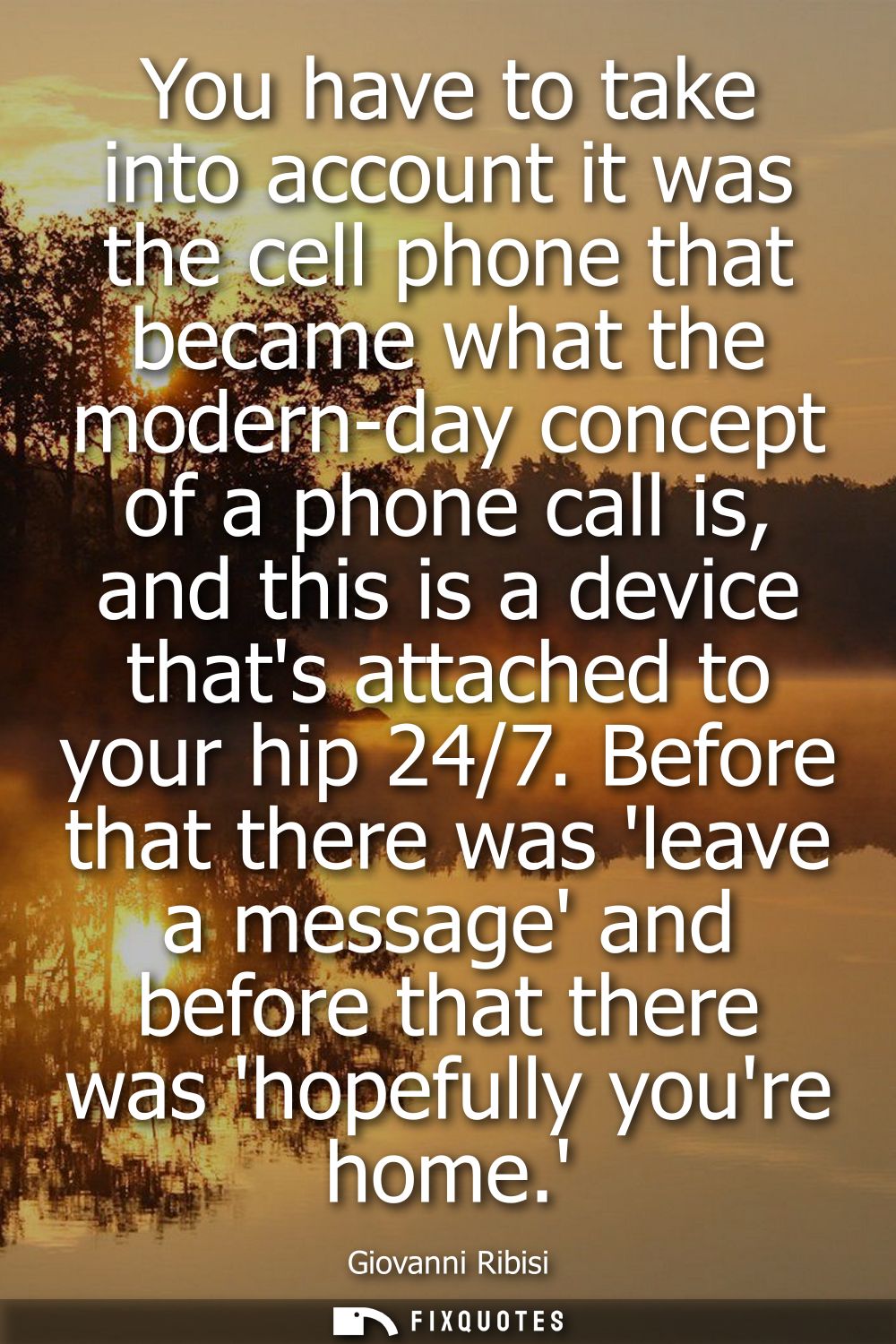
"You have to take into account it was the cell phone that became what the modern-day concept of a phone call is, and this is a device that's attached to your hip 24/7. Before that there was 'leave a message' and before that there was 'hopefully you're home'"
About this Quote
The line about a device “attached to your hip 24/7” is doing double duty. It evokes bodily intimacy (the phone as prosthetic) and soft surveillance (the expectation that you can be reached is built into the object’s physical closeness). It’s not accusatory, but it carries a low-grade dread: if the phone is always on you, then “missing” a call stops looking like circumstance and starts looking like a choice.
His timeline - “leave a message” to “hopefully you’re home” - is a neat little archaeology of friction. Each earlier era had social permission for absence baked in. You could be unreachable without having to justify it. Ribisi’s intent seems less to romanticize the past than to mark what got lost: the grace period between desire and response. The context, coming from an actor who lives in an industry of constant scheduling and rapid feedback, sharpens the point. In a world where everything is bookable, confirmable, and trackable, “hopefully” becomes an endangered emotion.
Quote Details
| Topic | Technology |
|---|---|
| Source | Help us find the source |
| Cite |
Citation Formats
APA Style (7th ed.)
Ribisi, Giovanni. (2026, February 16). You have to take into account it was the cell phone that became what the modern-day concept of a phone call is, and this is a device that's attached to your hip 24/7. Before that there was 'leave a message' and before that there was 'hopefully you're home'. FixQuotes. https://fixquotes.com/quotes/you-have-to-take-into-account-it-was-the-cell-140932/
Chicago Style
Ribisi, Giovanni. "You have to take into account it was the cell phone that became what the modern-day concept of a phone call is, and this is a device that's attached to your hip 24/7. Before that there was 'leave a message' and before that there was 'hopefully you're home'." FixQuotes. February 16, 2026. https://fixquotes.com/quotes/you-have-to-take-into-account-it-was-the-cell-140932/.
MLA Style (9th ed.)
"You have to take into account it was the cell phone that became what the modern-day concept of a phone call is, and this is a device that's attached to your hip 24/7. Before that there was 'leave a message' and before that there was 'hopefully you're home'." FixQuotes, 16 Feb. 2026, https://fixquotes.com/quotes/you-have-to-take-into-account-it-was-the-cell-140932/. Accessed 31 Mar. 2026.