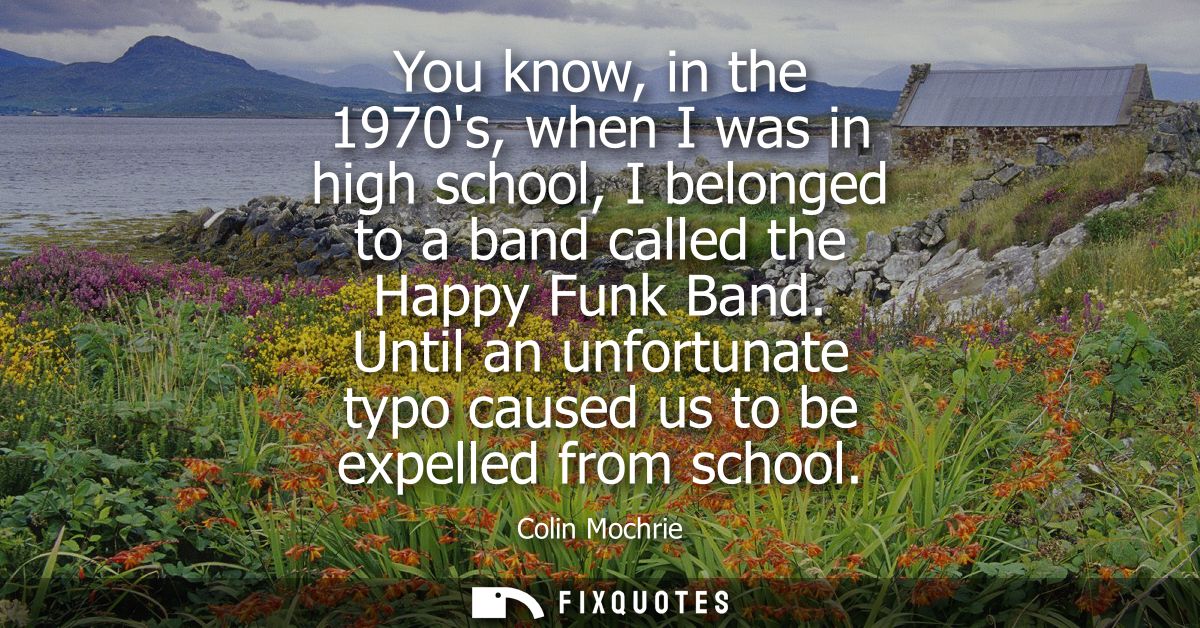
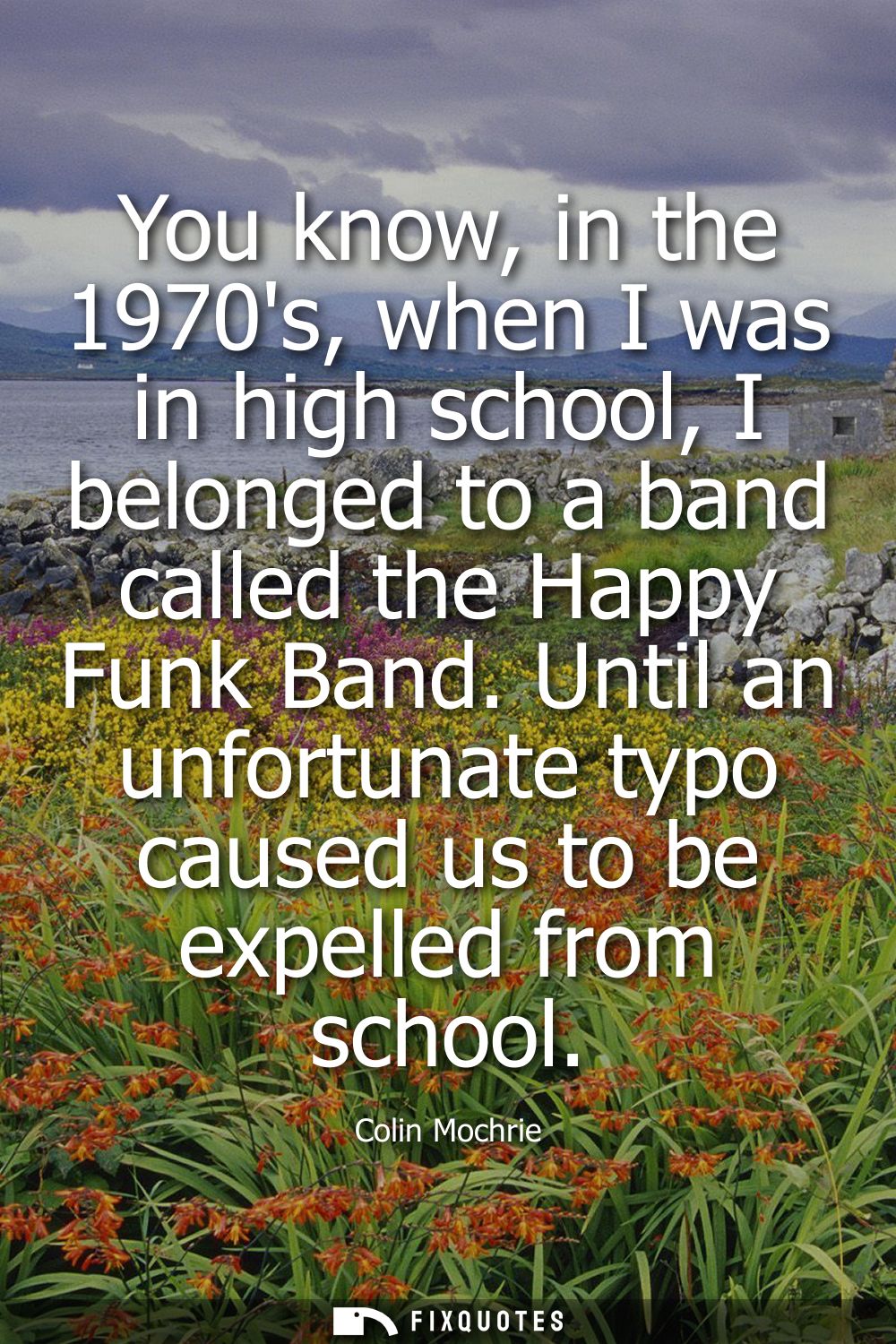
"You know, in the 1970's, when I was in high school, I belonged to a band called the Happy Funk Band, until an unfortunate typo caused us to be expelled from school"
About this Quote
The line is a textbook example of comedic negative space. He never says the vulgar word; he doesn’t have to. The humor lives in the audience’s complicity, in that quick internal leap from innocent to obscene. It’s also a neat piece of brand management: Mochrie, the improviser famous for being mischievous but not mean, gets to flirt with profanity while keeping his hands clean. The “you know” and the casual specificity (“in the 1970’s,” “high school”) sell it as autobiography, which makes the absurd consequence land harder.
Contextually, it’s a PG-friendly way to reference how one letter can change social meaning and social punishment. A typo is mundane; expulsion is dramatic. That mismatch is the engine. Underneath, there’s a sly comment about institutions policing language more eagerly than intent, and about how adolescent identity can be derailed by something as dumb as a sign, a flyer, a program. The joke isn’t just that the band name got dirtier; it’s that everyone immediately agrees it should.
Quote Details
| Topic | Witty One-Liners |
|---|---|
| Source | Help us find the source |
| Cite |
Citation Formats
APA Style (7th ed.)
Mochrie, Colin. (2026, February 16). You know, in the 1970's, when I was in high school, I belonged to a band called the Happy Funk Band, until an unfortunate typo caused us to be expelled from school. FixQuotes. https://fixquotes.com/quotes/you-know-in-the-1970s-when-i-was-in-high-school-i-140451/
Chicago Style
Mochrie, Colin. "You know, in the 1970's, when I was in high school, I belonged to a band called the Happy Funk Band, until an unfortunate typo caused us to be expelled from school." FixQuotes. February 16, 2026. https://fixquotes.com/quotes/you-know-in-the-1970s-when-i-was-in-high-school-i-140451/.
MLA Style (9th ed.)
"You know, in the 1970's, when I was in high school, I belonged to a band called the Happy Funk Band, until an unfortunate typo caused us to be expelled from school." FixQuotes, 16 Feb. 2026, https://fixquotes.com/quotes/you-know-in-the-1970s-when-i-was-in-high-school-i-140451/. Accessed 11 Mar. 2026.