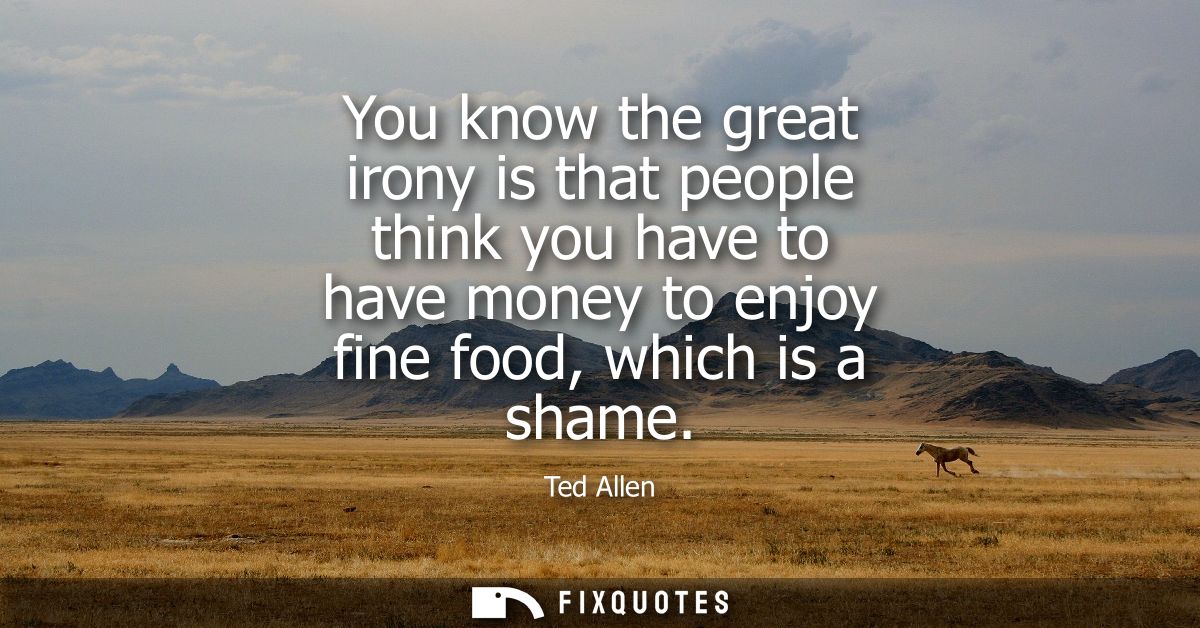
"You know, the great irony is that people think you have to have money to enjoy fine food, which is a shame"
About this Quote
The intent is quietly democratic. Allen isn’t denying that inequality shapes what ends up on your plate; he’s targeting a narrower, more corrosive myth: that pleasure, skill, and discernment are purchasable traits. “Which is a shame” is doing a lot of work. It signals emotional stakes, not just culinary ones. When people believe fine food requires wealth, they also surrender curiosity, confidence, and the right to develop taste. That’s not just about restaurants; it’s about agency in everyday life.
In the context of food TV and lifestyle media, the quote reads as a correction to the very genre that often sells aspiration by price tag. Allen’s persona has always been about translating “expert” culture into something approachable. The subtext is an invitation: learn a technique, buy what you can afford, pay attention, and you’re already closer to “fine” than the market wants you to think. Fine food, in this framing, is less a receipt than a practice.
Quote Details
| Topic | Food |
|---|---|
| Source | Help us find the source |
| Cite |
Citation Formats
APA Style (7th ed.)
Allen, Ted. (2026, February 18). You know, the great irony is that people think you have to have money to enjoy fine food, which is a shame. FixQuotes. https://fixquotes.com/quotes/you-know-the-great-irony-is-that-people-think-you-65900/
Chicago Style
Allen, Ted. "You know, the great irony is that people think you have to have money to enjoy fine food, which is a shame." FixQuotes. February 18, 2026. https://fixquotes.com/quotes/you-know-the-great-irony-is-that-people-think-you-65900/.
MLA Style (9th ed.)
"You know, the great irony is that people think you have to have money to enjoy fine food, which is a shame." FixQuotes, 18 Feb. 2026, https://fixquotes.com/quotes/you-know-the-great-irony-is-that-people-think-you-65900/. Accessed 10 Mar. 2026.